Application of NiMotion PMM series integrated low-voltage servo motor in three-axis motion platform

1. Introduction of integrated servo motor
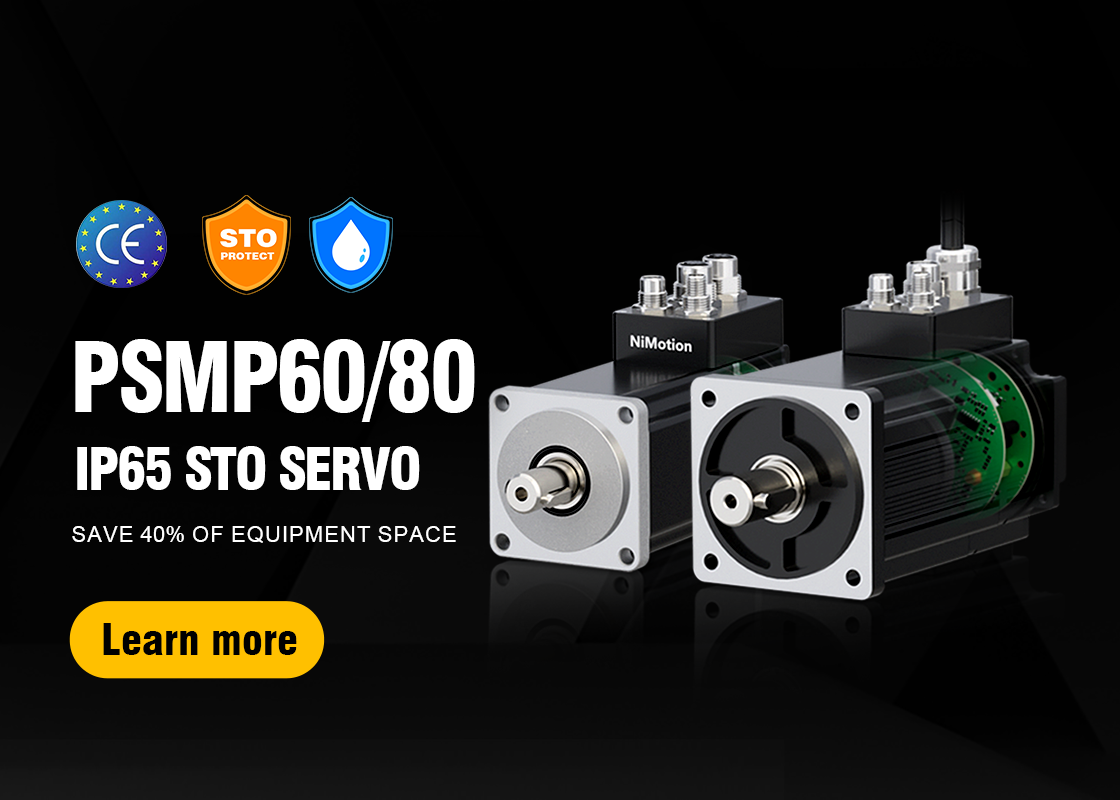
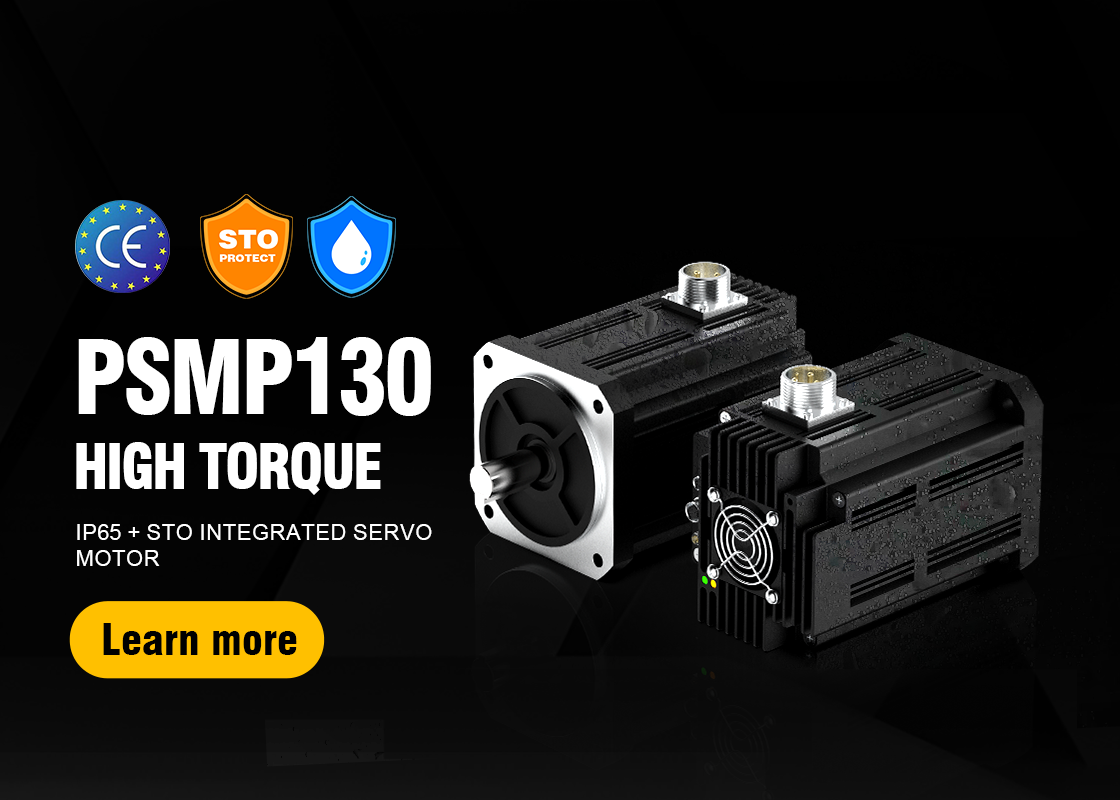
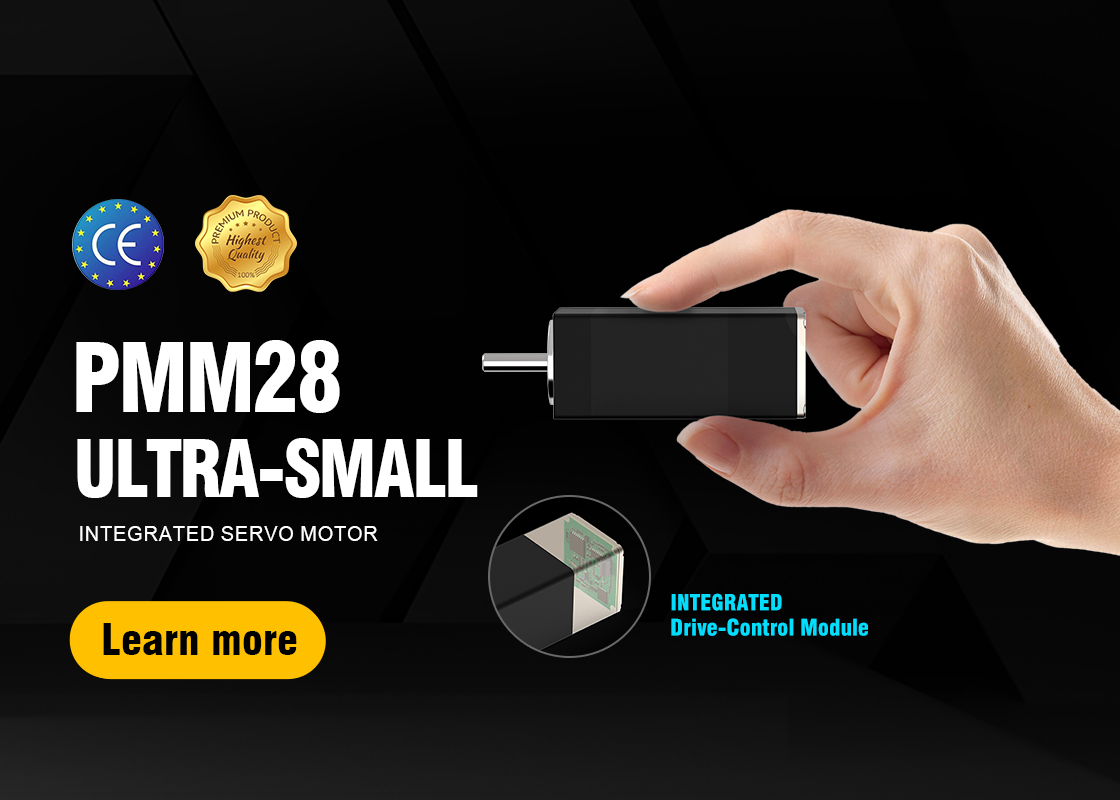
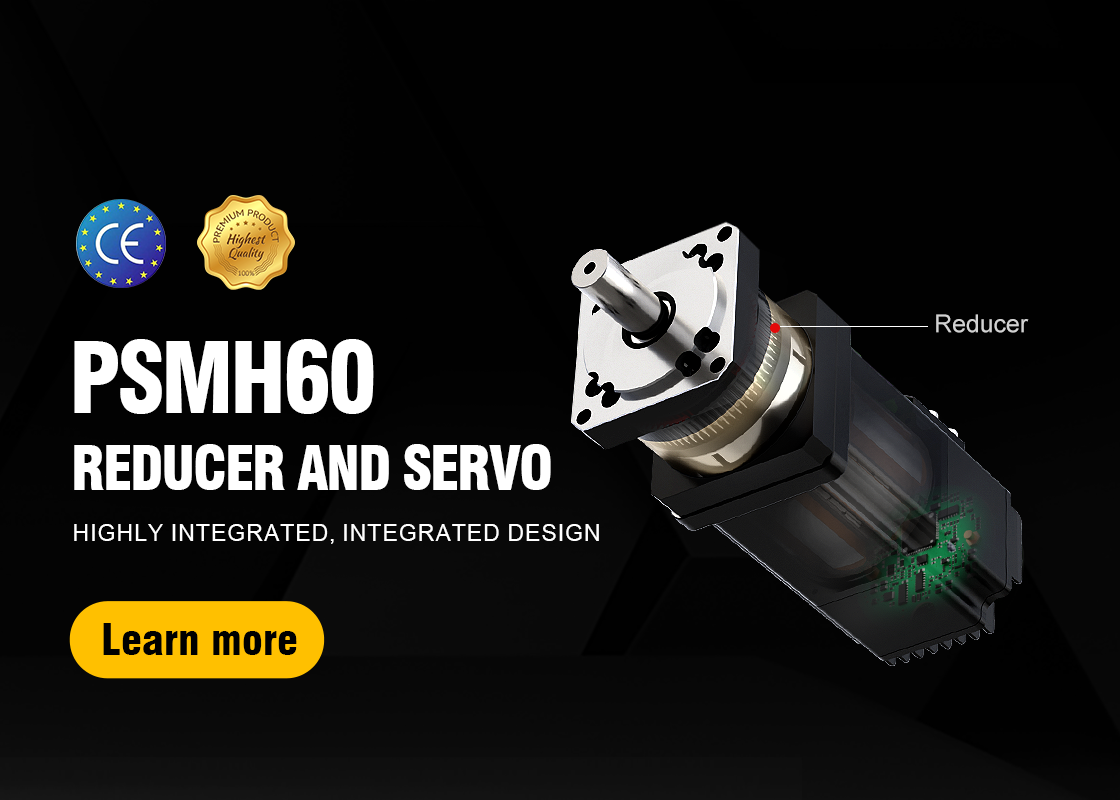
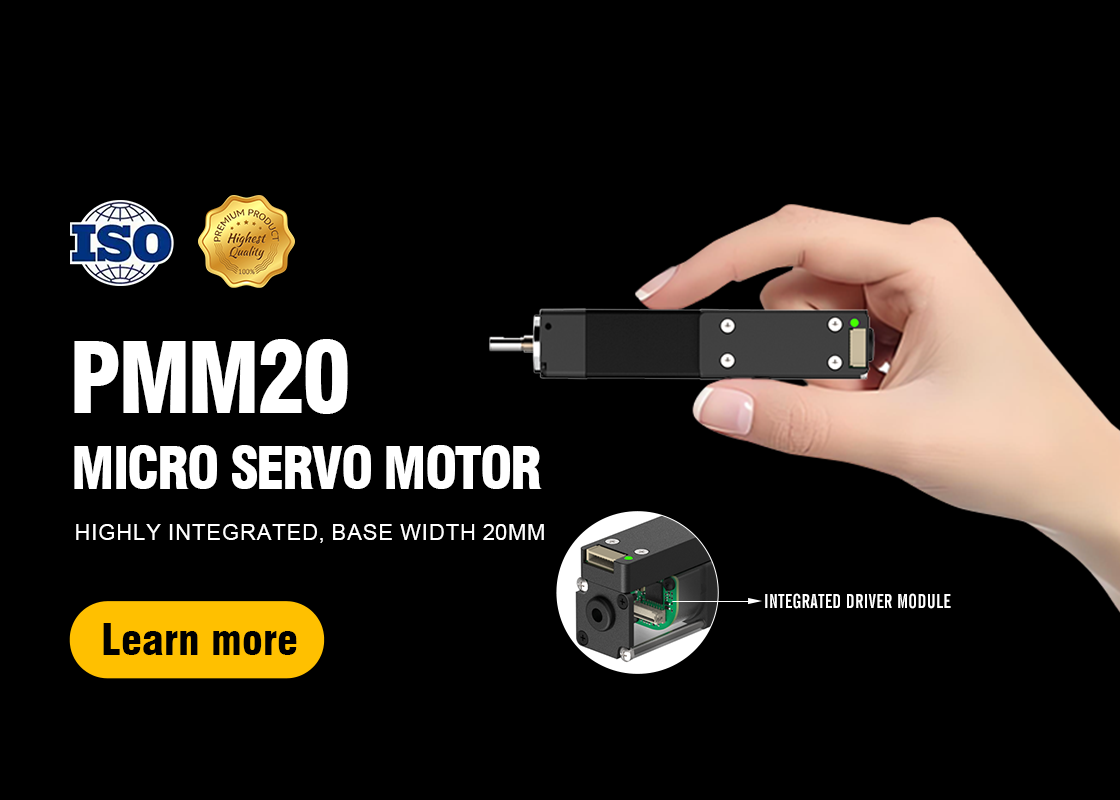
PMM series integrated low-voltage servo motor is a new servo product independently developed by Beijing Limaisheng Control Technology Co., LTD. Based on the leading MBD development method and integrated development concept, it integrates motor, encoder and servo driver in one, adopts FOC magnetic field oriented control technology and supports EtherCAT/CANopen bus control. Compared with the traditional scheme, it has the characteristics of small size and simple connection. Widely used in AGV, mobile robot, collaborative robot and other scenarios.
2. Preparation
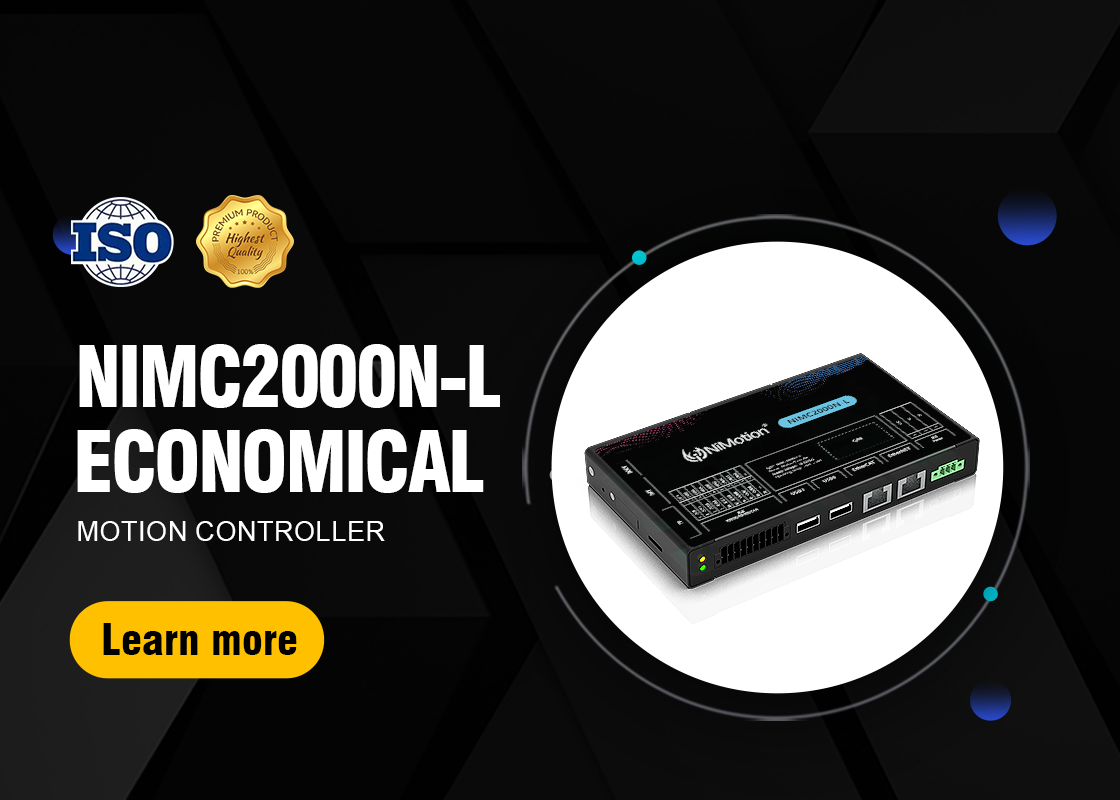
1. Hardware: one MC1002E motion controller (EtherCAT bus), three NiMotion integrated servo motors, four network cables, one 24V power supply, test computer, and other auxiliary equipment.
2. Software: Motion controller configuration software (AutoThink),NiMotion integrated servo motor description file
3. Hardware cables
1. Connect the MC1002E controller to the debugging computer: Connect the 24V power supply to the power port of the controller according to the hardware label, pay attention to the positive and negative terminals of the power supply, and the power port of the controller has anti-reverse connection function. Use a network cable to connect the controller's Ethernet port to any Ethernet port on the computer, as shown in Figure 1.

Figure 1. Wiring diagram of debugging computer and controller
2. Wiring between MC1002E controller and integrated servo motor: Currently EtherCAT controller only supports single-port linear connection, and EtherCAT interface is only available for X1, while there are two EtherCAT interfaces for integrated servo motor. Pay attention to the connection sequence, as shown in Figure 2.

Figure 2. Connection diagram between controller and integrated low-voltage servo motor
4. Engineering configuration
1.Basic parameter configuration
(1) Use AutoThink programming software to create a new project, select MC CPU as the target platform, and choose to import NiMotion integrated servo motor device description file (NiMotion_V1.0.xml) to the device library under the project option in the menu bar. Add EtherCAT slave device-NIMOTION under EtherCAT_Master in the hardware configuration, and the number, model and order must be consistent with the actual connected slave stations, as shown in Figure 3.

Figure 3. Servomotor added from station
(2) Set the associated axis number of EtherCAT slave station, the axis number ranges from 0 to 63, as shown in Figure 4.

Figure 4. Slave servo motor associated shaft number setting
(3) Set the axis type of EtherCAT slave station. The axis types that can be set are EtherCAT_Position,EtherCAT_speed, and EtherCAT_Torque. In this example, the three axes are set to EtherCAT_Position, as shown in Figure 5.

Figure 5. Slave servo motor shaft type setting
(4) Set the servo cycle. Users can select a reasonable servo cycle according to their actual needs. In this example, 1ms is selected, as shown in Figure 6.

Figure 6. Servo cycle setting
2. Program writing
The spiral interpolation motion is used as an example in this example. Axis-id is the joint motion Axis. Under the coordinate frame O-XYZ, axis-X and AXis-Y Axis carry out the plane circular interpolation motion, axis-Z Axis carries out the Z-phase linear motion, and the three axes jointly complete the cylindrical helix trajectory. For example, a diameter of 100 mm is machined by the 3-axis linkage of the CNC machine tool. The pitch is 500 mm and the height is 1000 mm thread. The specific program is shown in Figure 7:

Figure 7. Spiral interpolation motion program
Note: HMC_MoveHelical is the helix interpolation function, which can be directly invoked to complete the machining of the 3-axis according to the process requirements. The function prototype for UDINT HMC_ MoveHelical (USINT ucAxisID, USINT ucAxisX, USINT ucAxisY, USINT ucAxisZ, USINTucMode, LREAL dAx, LREAL dAy, LREAL dBx, LREAL dBy, LREAL dDistanceZ).
3. Summarize
It can be seen from the above example that NiMotion integrated servo motor is highly integrated design, reduce the installation complexity, significantly reduce the wiring compared to the traditional scheme, fully save the installation space, save the matching process between the driver and the motor, reduce the use cost, but also integrate I/O, can be set to positive limit, negative limit, origin, multi-function digital output, Pulse input, etc. Through EtherCAT bus connection, distributed control, convenient for users to conduct high-speed data acquisition and analysis, so as to meet the development needs of intelligent manufacturing, industry 4.0, Internet of Things, cloud computing, forming a highly flexible, personalized, networked structure, At the same time, it saves the cost of users and provides an alternative solution to the traditional servo motor for the intelligent manufacturing of users.