Application of integrated servo motor in AGV
.webp)
With the rapid development of automation technology, Automated Guided Vehicles (AGV) are increasingly used in logistics, warehousing, production and other fields.
As an important equipment in the intelligent logistics system, AGVs use advanced control technology, sensor technology and navigation systems to achieve autonomous handling and precise positioning of goods.
Among them, the integrated servo motor, as the core component of the AGV power system, plays a vital role.
01.Equipment Introduction
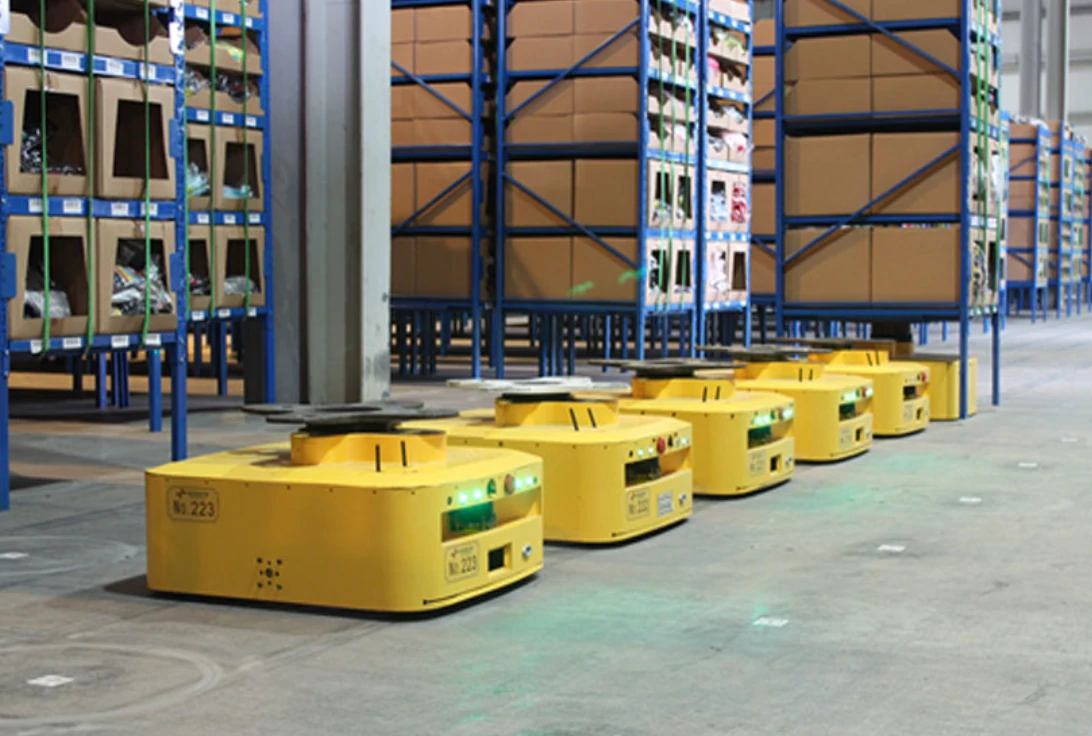
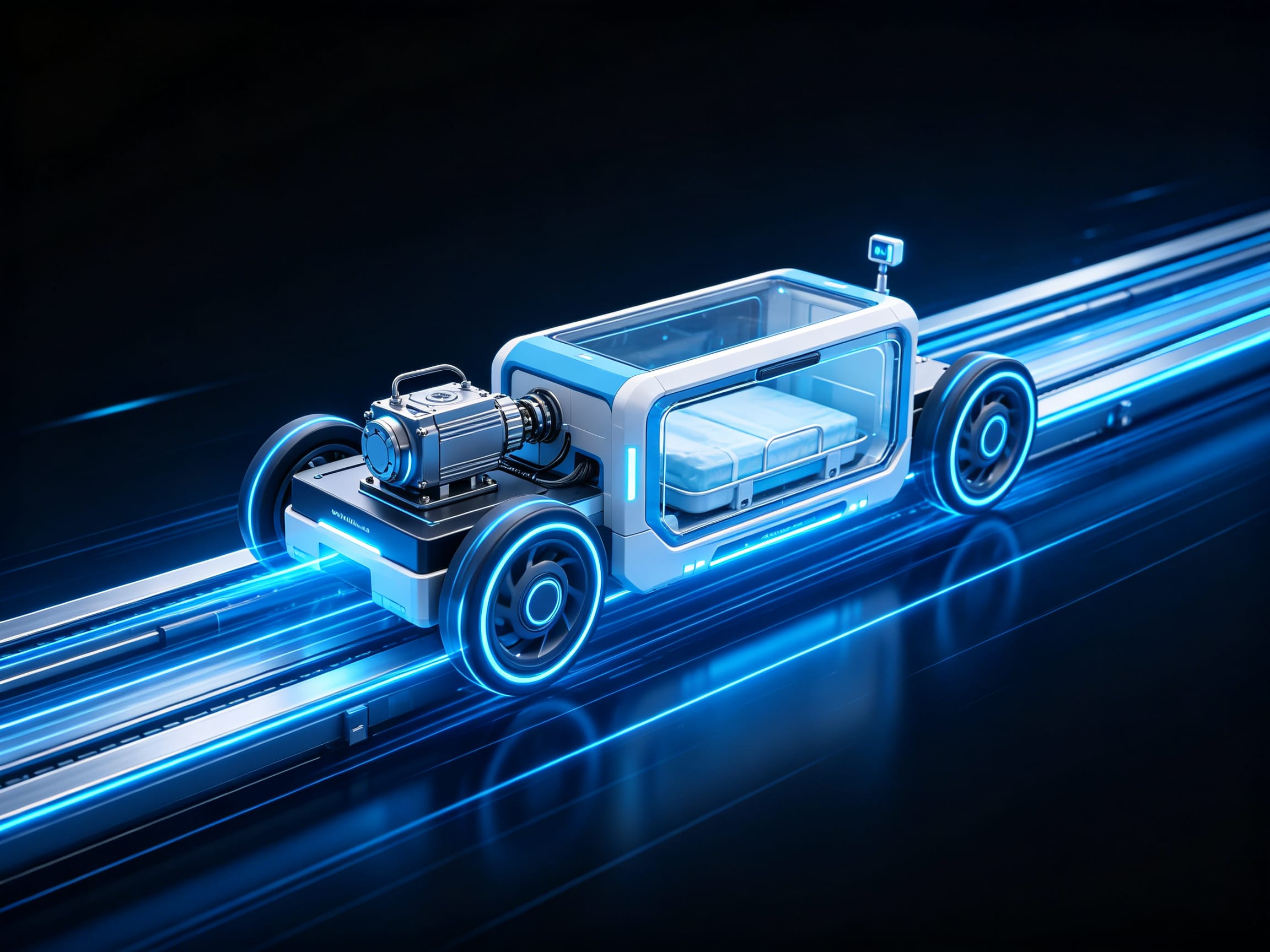
AGV (Automated Guided Vehicle) is an automated navigation vehicle, usually used for automated transportation and logistics operations in factories, warehouses and other places. AGV can navigate according to preset paths or designated markers in the environment to complete tasks such as cargo transportation and handling. It is usually equipped with sensors, navigation systems and control systems, enabling it to make autonomous decisions and avoid collisions with obstacles.
AGVs vary in type and function and can be customized according to specific needs. Using AGVs can improve work efficiency, reduce costs, and reduce human errors. It is one of the important applications in modern logistics and production.
.webp)
Schematic diagram of integrated servo motor structure
The integrated servo motor is a highly integrated servo "system" that integrates the servo motor, encoder and driver. Compared with the traditional distributed servo motor, the integrated servo motor is greatly reduced in size, reduces the cable connection, makes the entire servo system more compact, and is easy to install in the equipment, especially those with limited internal space.
The driving system of the AGV is the key to its autonomous driving. The integrated servo motor, as the core component of the driving system, drives the wheels to rotate by receiving instructions from the control system, thus realizing the forward, backward, and steering movements of the AGV. Its high precision and high dynamic response characteristics ensure the stability and accuracy of the AGV during driving.
02.Example
According to the application scenarios and requirements of AGV, we designed a comprehensive solution:
.webp)
NiMotion Electrical Solution System Diagram
The selection of motion controllers needs to consider the following requirements: ensuring sufficient computing power to run navigation, path planning, vision and other algorithms; supporting ROS for secondary development; supporting industrial communication protocols such as EtherCAT and PROFINET; providing enough general I/O ports and USB ports for connecting various sensors and actuators; and considering size, power consumption, industrial environment, etc. Here we recommend the NIMC2000N motion controller.
The drive module is responsible for controlling the actuators of the mobile robot. It can use a four-wheel omnidirectional mobile base based on an integrated stepper servo motor, connected to an integrated deceleration wheel (containing PU material, pressure-resistant and non-slip), eliminate the complex transmission mechanism, improve adaptability, and make the robot lighter and smaller.
In terms of speed control, the system uses the profile speed mode (PV) to achieve precise control of the AGV shuttle speed. Operators can adjust the AGV's travel speed according to actual needs to meet the logistics transmission requirements in different scenarios. In addition, the system also has an intelligent speed regulation function, which can automatically adjust the motor speed according to factors such as road conditions and load to achieve energy saving and consumption reduction and improve operating efficiency.
.webp)
Motion controller model: NIMC2000N (new version)
.webp)
Motor Model:PMM60
.webp)
Reduction wheel model:NAW60
03.Advantages of integrated servo motor
High integration improves the portability of equipment: The integrated servo motor integrates functional modules such as servo motor, servo driver, encoder and controller, which greatly reduces the size and weight of the equipment. At the same time, it simplifies system wiring and reduces potential failure points.
Flexibility to meet diverse needs: The integrated servo motor supports CANopen/Modbus communication and can be flexibly controlled and adjusted as needed to adapt to different work requirements.
High-precision positioning improves measurement accuracy: The integrated servo motor has high positioning accuracy and can achieve high-precision positioning of mobile equipment.
Multiple control modes: support PP, VM, PV, PT, HM, IP, CSP, CSV, CST standard modes; support NiMotion position mode, NiMotion speed mode, NiMotion torque mode.
High-speed response improves equipment efficiency: The integrated servo motor has a fast response speed and can quickly adjust the angle and position of the detection equipment. This means that the detection unit can obtain sample information more quickly, improving the working efficiency and responsiveness of the equipment.
Complete alarm function: The integrated servo motor can detect hardware failures in time to avoid affecting system operation. It is equipped with multiple safety protection functions. The LED flashing alarm can intuitively display the current status of the motor. It also has protection functions such as overvoltage/undervoltage, overheating, overcurrent, and stall alarm.