Application of integrated servo motor in tension system equipment
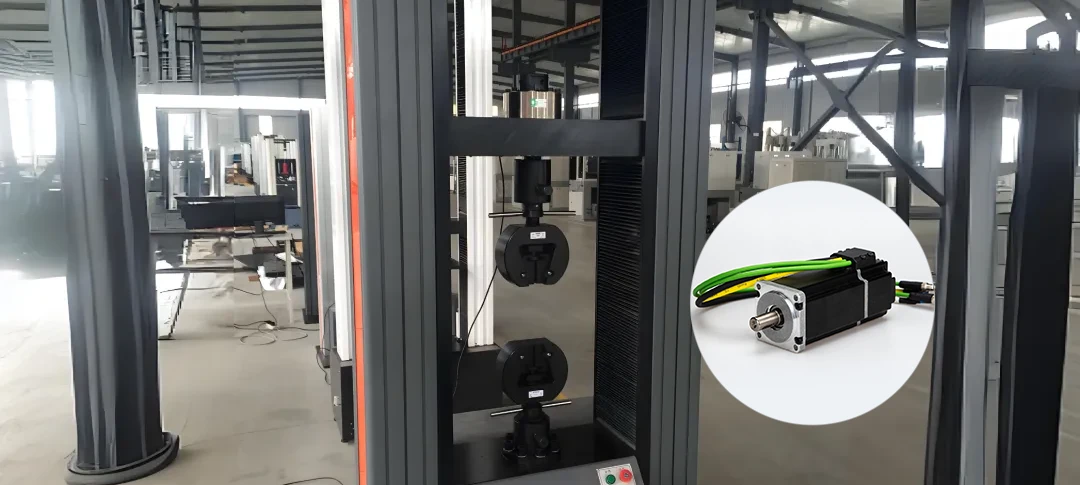
With the rapid development of industrial automation, the demand for high-precision and high-efficiency transmission and control equipment is growing. As an intelligent motor integrating drive, control and feedback, the integrated servo motor has been widely used in various industrial equipment due to its excellent performance. Especially in tensile test equipment, the integrated servo motor plays a vital role.
01.Equipment Introduction
Tensile testing equipment is a device used to test and measure the force on an object. It can measure the object's tension, compression, bending and other force conditions, and transmit the force data to the controller through sensors for analysis and processing.

Image source: Internet
It usually consists of a tension sensor, a fixture, a servo system, a controller and a data acquisition system.
Tension system equipment has the characteristics of high precision, high sensitivity and high stability, and can be used in various application fields such as material testing, product quality control, engineering research, etc.

Schematic diagram of integrated servo motor structure
Its electrical control system is usually a servo system, but conventional servo systems are often bulky and have complex wiring. The integrated servo motor integrates servo motor, driver, encoder and other modules into one device. It has the characteristics of small size, simple wiring and ease of use, and has gradually become the preferred drive device in tension system equipment.
02.Solution
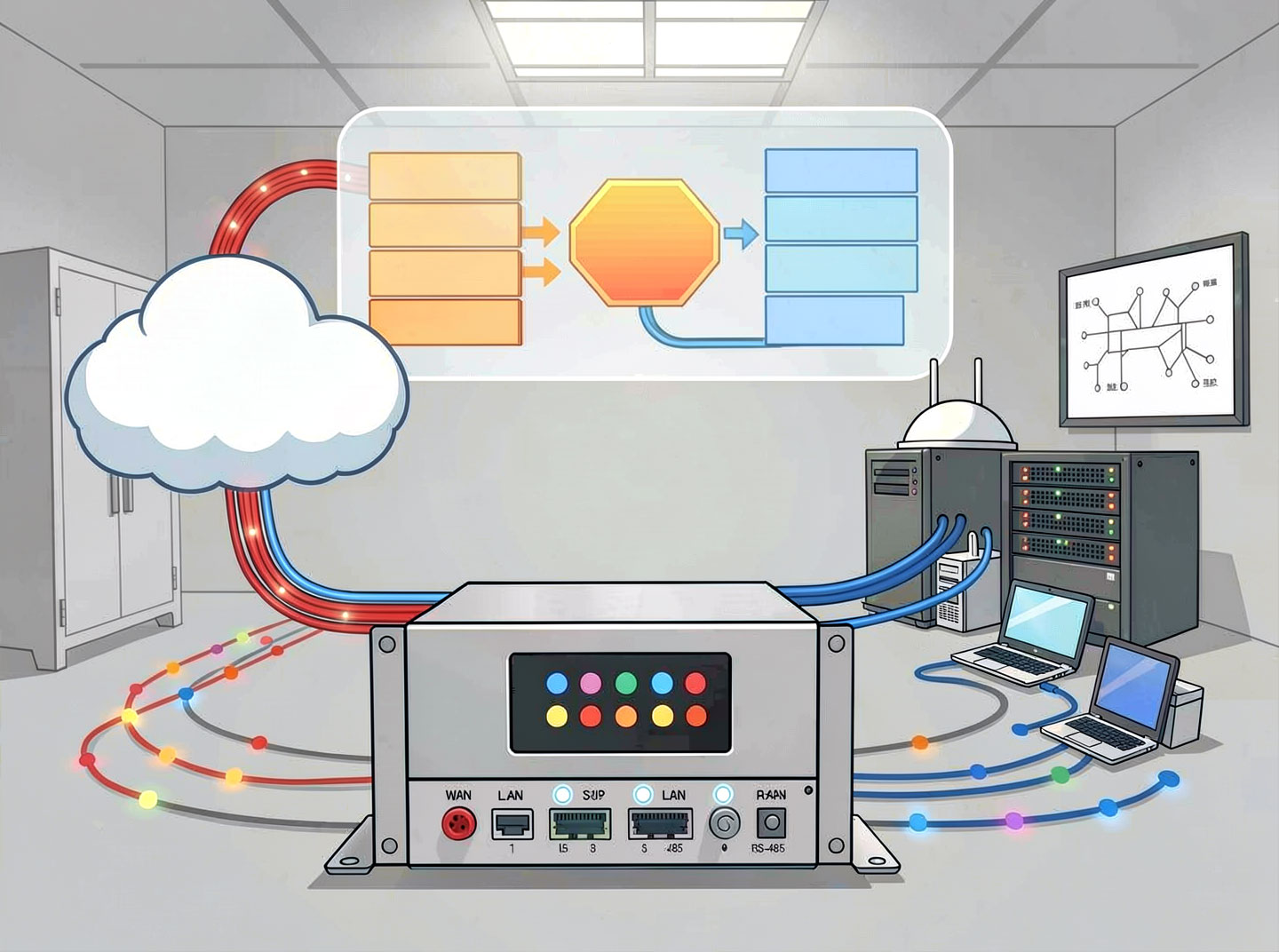
Taking the tensile testing equipment of a certain research institute as an example, the equipment uses an integrated servo motor as the drive and control core, and forms a closed-loop system with a tensile sensor, CompactRIO controller, etc.

NiMotion Electrical Solution System Diagram
During the tensile test, the tensile sensor measures the tensile value in real time and outputs it to the CompactRIO controller. The CompactRIO controller calculates the control signal based on the difference between the set target tensile value and the actual measured value, and then outputs the control signal to the integrated servo motor to drive its movement. The integrated servo motor accurately controls the position through analog speed regulation until the tensile target value is reached.
This closed-loop control method can adjust the tension value in real time and eliminate error interference factors, thereby improving the accuracy and reliability of the test results.
.webp)
Motor Model:PMM6020B
03.Advantages of integrated stepper servo motor
High integration improves the portability of equipment: The integrated stepper servo motor integrates functional modules such as stepper motor, servo driver, encoder and controller, which greatly reduces the size and weight of the equipment. At the same time, it simplifies system wiring and reduces potential failure points.
Flexibility to meet diverse needs: The integrated stepper servo motor supports CANopen/Modbus communication and can be flexibly controlled and adjusted as needed to adapt to different work requirements.
High-precision positioning improves measurement accuracy: The integrated stepper servo motor has high positioning accuracy and can achieve high-precision positioning of mobile equipment.
Multiple control modes: support PP, VM, PV, PT, HM, IP, CSP, CSV, CST standard modes; support NiMotion position mode, NiMotion speed mode, NiMotion torque mode.
High-speed response improves equipment efficiency: The integrated step servo motor has a fast response speed and can quickly adjust the angle and position of the detection equipment. This means that the detection unit can obtain sample information more quickly, improving the working efficiency and responsiveness of the equipment.
Complete alarm function: The integrated step servo motor can detect hardware failures in time to avoid affecting system operation. It is equipped with multiple safety protection functions. The LED flashing alarm can intuitively display the current status of the motor. It also has protection functions such as overvoltage/undervoltage, overheating, overcurrent, and stall alarm.