What is servo detailed answer

Servo is a very common technology in the field of industrial manufacturing, and we have talked about it more before. But what is servo, anyway? In this issue, let's have a simple chat.
The word Servo comes from the Latin "servus," which means that a servant does what his master tells him to do and works faithfully and quickly.
And Servo, as a technical term, is roughly defined like this:
From the above description, we can see that the servo is first of all a control device, which needs to have command input and power output.
Because of the need to control the operation, the output should be mechanical power. Therefore, servo is essentially a power transmission technology for motion control. If according to the different power types used, we can basically divide the servo into: pneumatic servo, hydraulic servo, DC servo and frequency conversion servo. Let's wait.

However, due to the development and maturity of variable frequency drive technology in recent years, coupled with its excellent application experience in many aspects, such as: small size, flexible use, easy integration, easy maintenance... Etc., frequency conversion servo has replaced other types of servo technology in a large number of applications, and has gradually become the absolute main force in the field of industrial operations control. This is why now everyone as long as the reference to servo, basically refers to the frequency conversion servo.

The input of the servo is a series of dynamic control instructions corresponding to the needs of the operation, such as: speed, position or torque. Let's wait. The reason why these instructions are dynamic is that in practical applications, the target object often needs to constantly change its position, speed, torque, etc., according to the process requirements during operation. Such action state. Therefore, servo products often need to have one or more real-time control signal input ports, such as pulse input, analog input or digital communication input. It is used to receive continuous motion control instructions from the upper controller.

These instructions may be the values of the planned motion curve in the controller at various points in time, or may be intermediate variables calculated in real time based on the state of other motion axes (such as: spindle...). But in any case, the task of the servo is to make the action trajectory of its final control object as close as possible to the given running curve.

We need to pay special attention to the words "use feedback" in the servo definition. Although there is no clear line between servo and ordinary transmission technology (such as frequency conversion), whether there is a feedback mechanism for the application object in the system to achieve control is a key sign that it is different from the general pneumatic, hydraulic and motor transmission technology.
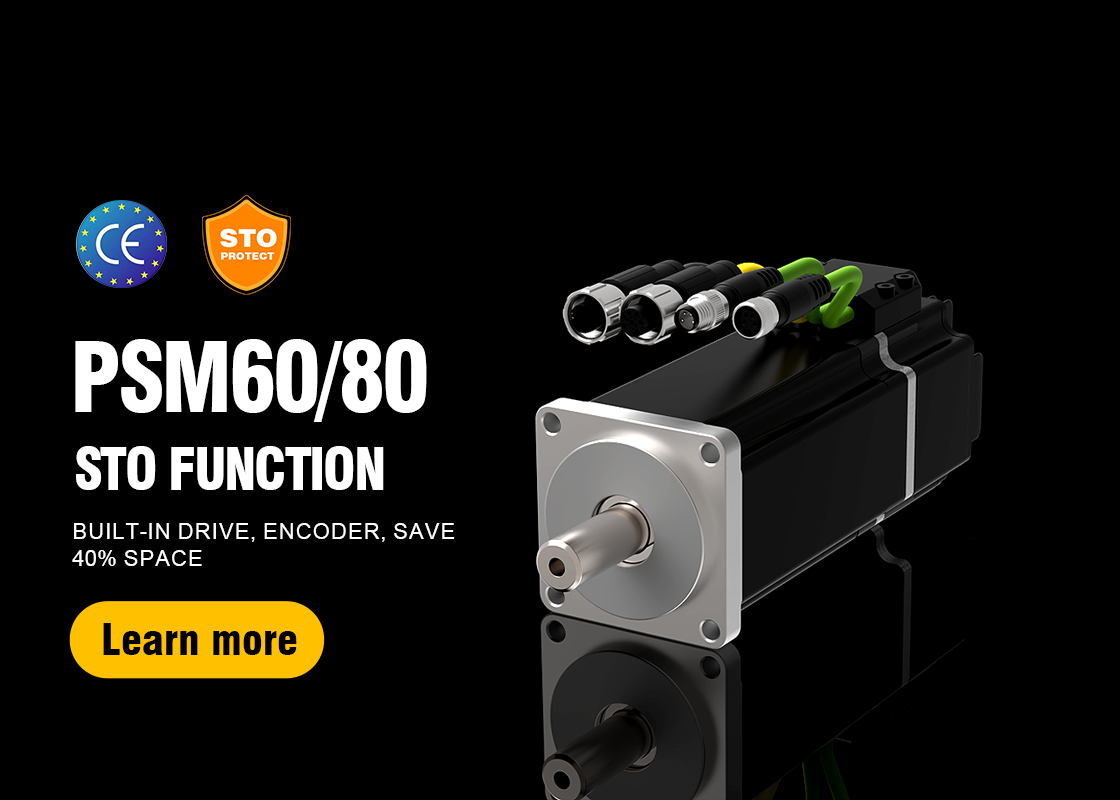
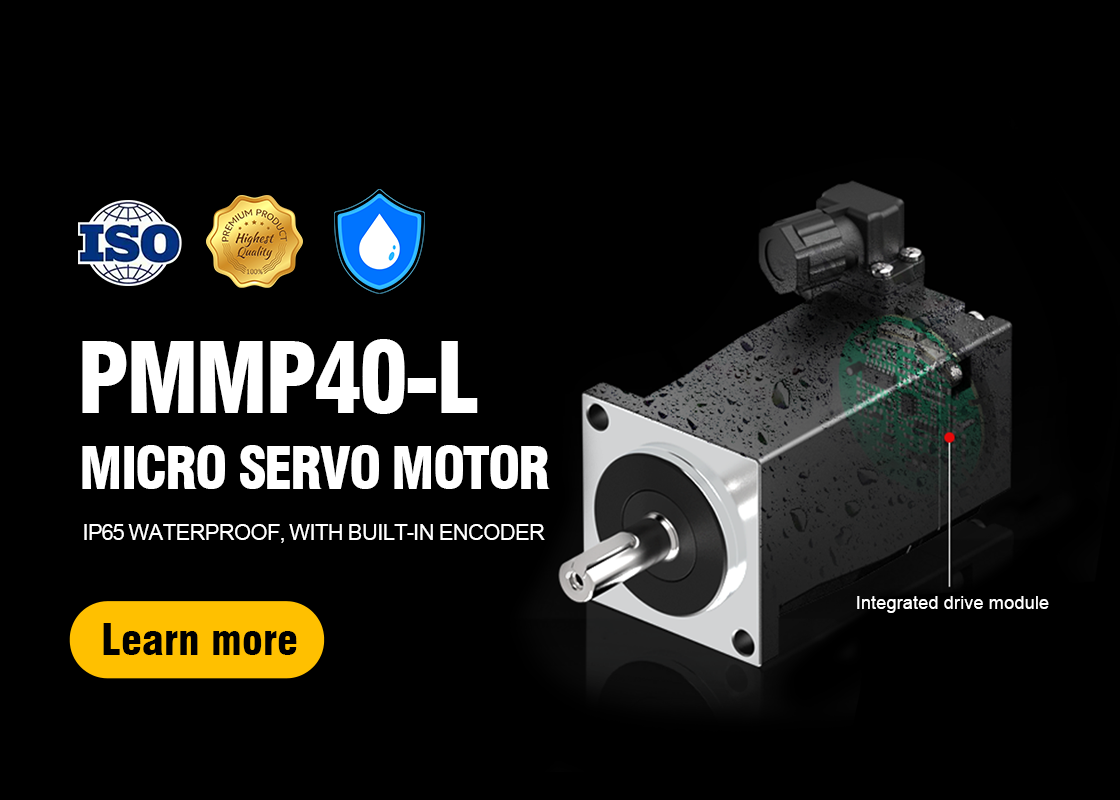
Servo feedback mainly refers to those used to detect the speed and position of the power actuator. Sensing components such as rotary encoders, linear grating ruler... And usually these feedback components will be directly integrated into the control loop of the servo product, such as: most servo motors have integrated feedback encoders, and usually the servo drive will also have the feedback interface card as a standard configuration of their products.

The servo system needs to use these feedback elements to obtain the position of the control object, speed... The motion state is compared with the target value given at the input end in real time, and then the dynamic response output is quickly adjusted according to the size of the feedback error, so that the operation and control performance of the system is closer to the application index needed to be achieved by the process.

For the servo, the "fast response" we refer to here usually refers to the millisecond or even microsecond level, so that the system can react to those subtle deviations in a very short time window and adjust in time. Therefore, the vast majority of servo products will use the frequency response BandWidth value to nominal its response capability. And we see in printing colouring, metal processing, CNC machine tools, wood processing, paper processing...... Servo technology is used in all kinds of high-performance operations control applications to achieve accurate position control, which is a manifestation of servo response ability.
However, this real-time response capability of the servo is not only suitable for high-precision position control, but also for many applications with higher dynamic characteristics, such as: robots, wind power variable pitch, labeling sets, packaging palletizing, valve control... And so on, will also use servo technology. In these applications, the real challenge is often not necessarily positioning accuracy (generally millimeter level is sufficient), but how to overcome the load, environment and self... And ensure that the posture and rhythm of the action meet the process requirements of the equipment operation.
In addition, in many non-position control fields, we can also see a lot of servo technology applications, again because of its strong closed-loop response ability. For example: some devices in thin film materials (such as: paper, plastic, battery... On the tension control, the servo system has the characteristics of high dynamic response and rapid adjustment in speed and torque; Another example: now many air compressors and hydraulic pump stations have also begun to use servo technology to achieve flexible control of gas and oil pressure.

The application of servo technology in the industrial field is driven by the increasing requirements on product quality and equipment automation processes put forward by manufacturing enterprises in the pursuit of production efficiency. And it can be used in the last 20 years from aerospace, CNC machine tools, semiconductors, robots... A small number of professional areas have gradually spread to all kinds of general automation industries, which largely benefits from the optimization of the comprehensive cost of the system brought about by the maturity of technology and the improvement of product usability, especially the development of the variable frequency drive technology we mentioned earlier, which has played a very positive role.