
Which Integrated Stepper Motor Models Are Most Commonly Used?
LMS_Tierner2026-03-16102 views

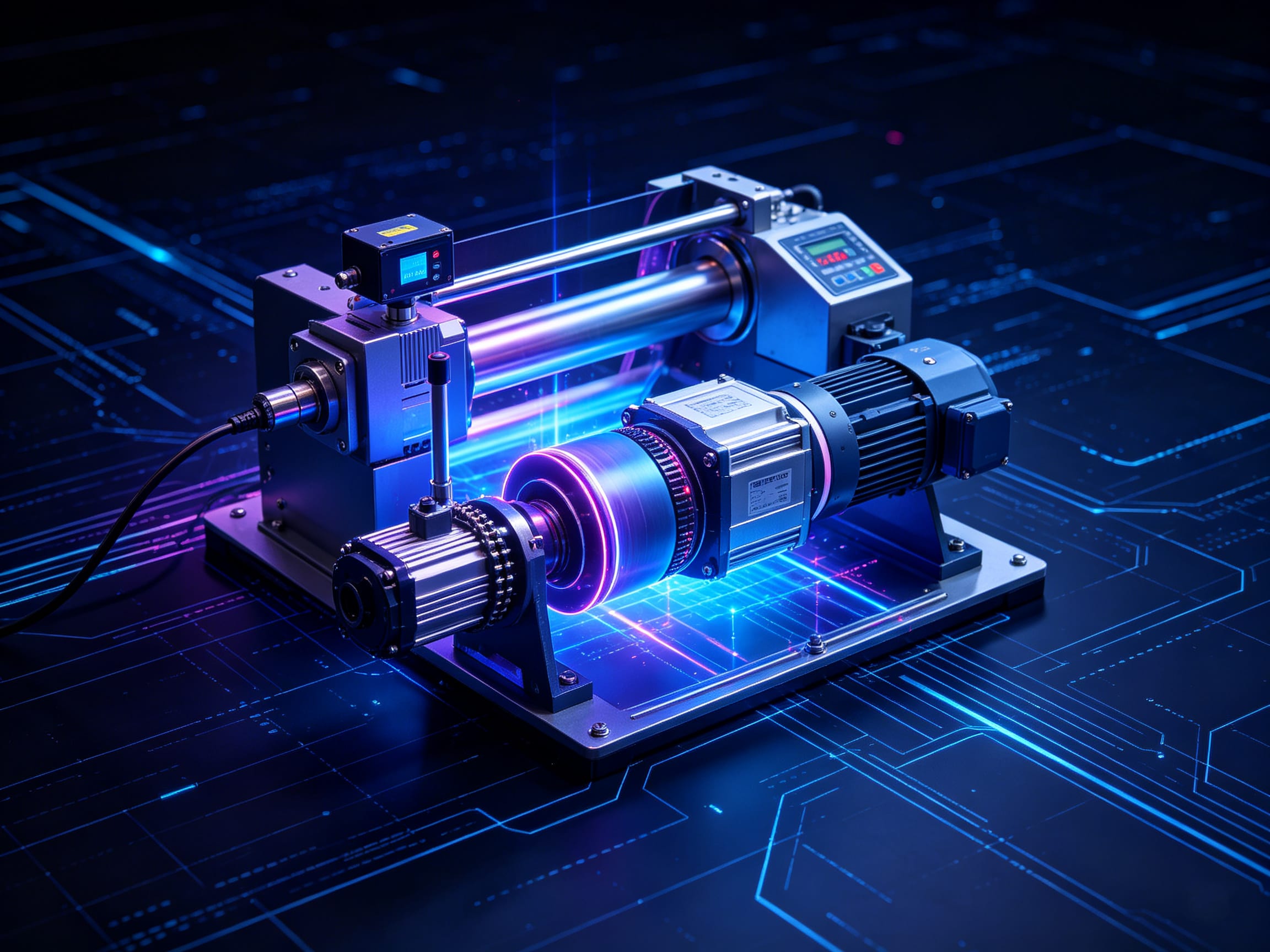
In the fast-evolving landscape of industrial automation, precision motion control has become a cornerstone of modern manufacturing, robotics, and electronic equipment. Among the various motion control components, integrated stepper motor stands out as a highly practical and widely adopted solution. An integrated stepper motor, also known as an all-in-one stepper motor, combines the stepper motor body, driver, encoder, and control interface into a single compact unit. This integration eliminates the need for separate wiring between the motor and driver, reduces electromagnetic interference (EMI), saves installation space, and simplifies system design—making it the preferred choice for engineers and designers across numerous industries.
When selecting integrated stepper motors, users often face the question: which models are the most commonly used? This article will systematically analyze the mainstream integrated stepper motor models in the global market, with a special focus on the STM42 and STM57 series, which are representative of mid-to-small size integrated stepper motors. We will explore their technical parameters, application scenarios, advantages, and why they have become industry favorites. By the end of this article, you will have a clear understanding of the most popular integrated stepper motor models and be able to make informed decisions for your motion control projects.
1. What Is an Integrated Stepper Motor?
1.1 Definition and Core Structure
An integrated stepper motor is a mechatronic product that integrates multiple functional modules into one housing. Unlike traditional split-type stepper systems (where the motor, driver, and encoder are separate components), the integrated version merges these parts seamlessly. Its core structure typically includes:
- Stepper Motor Body: The electromagnetic component that converts electrical pulses into discrete rotational movements (step angles), usually with a 1.8° step angle for standard models.
- Integrated Driver: The circuit board that controls the motor’s current, direction, and speed, supporting microstepping for higher precision.
- Position Encoder: A feedback device (usually magnetic or optical) that provides real-time position data, enabling closed-loop control to prevent step loss.
- Control Interface: Communication ports such as RS485, CANopen, RS232, or pulse/direction inputs for connecting to PLCs, motion controllers, or host computers.
- Protection Circuits: Overvoltage, undervoltage, overcurrent, and over-temperature protection to ensure stable operation.
1.2 Key Advantages Over Traditional Split Systems
- Space-Saving: The all-in-one design reduces the overall volume by 30%–50% compared to split systems, making it ideal for compact equipment like 3D printers, medical devices, and small robots.
- Simplified Wiring: No need for long motor cables between the driver and motor, minimizing wiring errors and EMI.
- Improved Reliability: Fewer connection points reduce the risk of loose wires or signal loss, enhancing system stability.
- Easy Installation: Plug-and-play functionality shortens assembly time and lowers labor costs.
- Cost-Effective: Reduces the need for additional driver enclosures and wiring components, lowering total system cost.
1.3 Classification of Integrated Stepper Motors

Integrated stepper motors are mainly classified by flange size (the standard mounting dimension), which is the primary factor determining their torque and application range. Common flange sizes include 28mm (NEMA 11), 42mm (NEMA 17), 57mm (NEMA 23), 86mm (NEMA 34), and 110mm (NEMA 42). Among these, 42mm and 57mm models are the most widely used due to their balanced performance and versatility—this is where the STM42 and STM57 series come into play.
2. Most Commonly Used Integrated Stepper Motor Series: An Overview
Before diving into the STM42 and STM57 series, let’s first look at the mainstream integrated stepper motor series from leading global manufacturers, which form the backbone of the industry:
2.1 Global Mainstream Integrated Stepper Motor Series
| Manufacturer | Series Name | Flange Size | Key Features | Typical Applications |
| NiMotion (China) | STM Series | 28/42/57/86mm | Closed-loop, CANopen/RS485, FOC control | 3D printers, medical devices, automation equipment |
| MOONS' (China) | STM17R/TSMX | 42/57mm | Pulse control, high torque, compact design | CNC machines, packaging equipment |
| JKONGMOTOR (China) | ISS42/ISC42 | 42mm | Closed-loop, magnetic encoder, multi-communication | Robotic arms, laser engravers |
| JVL (Denmark) | MIS Series | 42/57/86mm | IP65 protection, high precision | Food processing, marine equipment |
| Nanotec (Germany) | PD Series | 42/57mm | Absolute encoder, programmable control | Semiconductor manufacturing, laboratory equipment |
| Anaheim Automation (USA) | 17MD/23MD | 42/57mm | Microstepping, cost-effective | 3D printers, small CNC routers |
2.2 Why 42mm and 57mm Models Dominate the Market
The 42mm (NEMA 17) and 57mm (NEMA 23) flange sizes are the most popular for several reasons:
- Balanced Torque and Size: 42mm models offer 0.1–0.7Nm holding torque, suitable for light-to-medium loads; 57mm models provide 0.8–3.0Nm torque, covering medium-to-heavy loads—covering 80% of industrial and consumer motion control needs.
- Cost Efficiency: They strike the best balance between performance and price, making them accessible for both small-scale projects and mass production.
- Wide Compatibility: Standard flange dimensions ensure compatibility with most mechanical structures and mounting brackets.
- Mature Supply Chain: Global manufacturers have optimized production lines for these sizes, ensuring stable supply and fast delivery.
Among the 42mm and 57mm integrated stepper motors, the STM42 and STM57 series from NiMotion are particularly prominent, representing the industry’s mainstream technical standards and application trends.
3. In-Depth Analysis of STM42 Integrated Stepper Motor
3.1 Basic Overview of STM42 Series
The STM42 series is a 42mm flange (NEMA 17) closed-loop integrated stepper motor developed by NiMotion, a leading manufacturer of motion control products in China. It integrates a high-precision stepper motor, digital driver, magnetic encoder, and multi-communication interface into a compact housing, making it the go-to choice for light-to-medium load precision motion control applications. The STM42 series is available in multiple sub-models, differentiated by torque, length, and communication options, to meet diverse project requirements.
3.2 Core Technical Parameters of STM42 Series
The following table lists the key technical parameters of the main STM42 sub-model
| Model | Flange Size (mm) | Holding Torque (Nm) | Body Length (mm) | Rated Voltage (VDC) | Phase Current (A) | Step Angle (°) | Encoder Resolution | Communication Interface | Weight (kg) |
| STM4228A | 42 | 0.12 | 46.5 | 12–30 | 0.6 | 1.8 | 1000ppr | CANopen/RS485/RS232 | 0.25 |
| STM4234A | 42 | 0.28 | 52.5 | 12–30 | 1 | 1.8 | 1000ppr | CANopen/RS485/RS232 | 0.28 |
| STM4248A | 42 | 0.48 | 64.5 | 12–30 | 1.5 | 1.8 | 1000ppr | CANopen/RS485/RS232 | 0.32 |
| STM4260A | 42 | 0.6 | 76.5 | 12–30 | 2 | 1.8 | 1000ppr | CANopen/RS485/RS232 | 0.36 |
3.3 Key Technical Features of STM42
- Closed-Loop Control with Magnetic Encoder: Equipped with a 1000ppr magnetic encoder, the STM42 provides real-time position feedback, enabling closed-loop control to eliminate step loss—critical for high-precision applications.
- Multi-Protocol Communication: Supports CANopen (CiA402 standard), RS485, and RS232, allowing seamless integration with PLCs, industrial computers, and motion controllers.
- FOC (Field-Oriented Control) Technology: Adopts advanced FOC and SVPWM (Space Vector Pulse Width Modulation) algorithms, ensuring smooth operation, low noise, and high efficiency even at low speeds.
- Comprehensive Protection Functions: Includes overvoltage protection (OVP), undervoltage protection (UVP), overcurrent protection, over-temperature warning, and stall detection—enhancing operational safety.
- Compact and Lightweight: The shortest model (STM4228A) is only 46.5mm long and weighs 0.25kg, ideal for space-constrained equipment.
- Customizable Options: Offers brake integration, dual-shaft output, and custom shaft diameters to meet special application needs.
3.4 Typical Applications of STM42 Series
The STM42 series is widely used in industries requiring light-to-medium load precision motion control:

- 3D Printing & Additive Manufacturing: Drives the X/Y/Z axes of desktop and industrial 3D printers, ensuring high-precision layer-by-layer printing.
- Medical Devices: Powers surgical robots, diagnostic equipment (e.g., blood analyzers), and automated drug delivery systems, where precision and reliability are paramount.
- Laboratory Automation: Controls sample handling, liquid handling, and analytical instruments in laboratories, ensuring accurate and repeatable movements.
- Small Robots & Collaborative Robots (Cobots): Drives joint movements of small industrial robots and educational robots, providing smooth and precise motion.
- Electronic Equipment: Used in laser engravers, CNC routers, pick-and-place machines, and semiconductor testing equipment.
- Packaging & Labeling: Controls the feeding and positioning of small packaging machines and label printers.
3.5 Why STM42 Is a Top Choice
- Perfect Balance of Size and Performance: The 42mm flange size is compact enough for small equipment while providing sufficient torque (up to 0.6Nm) for most light-load applications.
- High Compatibility: Multi-communication interfaces and standard NEMA 17 mounting ensure easy integration into existing systems.
- Cost-Effective: Compared to high-end servo motors, the STM42 offers comparable precision at a lower cost, making it ideal for cost-sensitive projects.
- Proven Reliability: With millions of units deployed globally, the STM42 series has a track record of stable performance in harsh industrial environments.
4. In-Depth Analysis of STM57 Integrated Stepper Motor
4.1 Basic Overview of STM57 Series
The STM57 series is a 57mm flange (NEMA 23) closed-loop integrated stepper motor from NiMotion, designed for medium-to-heavy load motion control applications. As the larger counterpart to the STM42, the STM57 series offers higher torque and stronger load capacity while retaining the compact integrated design and advanced control features of the STM series. It is the most commonly used 57mm integrated stepper motor in the industry, widely adopted in industrial automation, robotics, and CNC equipment.
4.2 Core Technical Parameters of STM57 Series
The following table presents the key technical parameters of the main STM57 sub-models
| Model | Flange Size (mm) | Holding Torque (Nm) | Body Length (mm) | Rated Voltage (VDC) | Phase Current (A) | Step Angle (°) | Encoder Resolution | Communication Interface | Weight (kg) |
| STM5756A | 57 | 0.8 | 76.5 | 12–48 | 2.5 | 1.8 | 1000ppr | CANopen/RS485/RS232 | 0.65 |
| STM5776A | 57 | 1.5 | 96.5 | 12–48 | 3 | 1.8 | 1000ppr | CANopen/RS485/RS232 | 0.8 |
| STM5710A | 57 | 2.2 | 120.5 | 12–48 | 4 | 1.8 | 1000ppr | CANopen/RS485/RS232 | 0.95 |
| STM5720A | 57 | 3 | 140.5 | 12–48 | 5 | 1.8 | 1000ppr | CANopen/RS485/RS232 | 1.1 |
4.3 Key Technical Features of STM57
- High Torque Output: The STM57 series delivers up to 3.0Nm holding torque, making it suitable for medium-to-heavy load applications that require higher force than the STM42 series.
- Wide Voltage Range: Supports 12–48VDC input, compatible with both low-voltage (24VDC) industrial power supplies and higher-voltage systems for increased torque at high speeds.
- Advanced Control Algorithms: Inherits the FOC and SVPWM technology from the STM42, ensuring smooth operation, low vibration, and high positioning accuracy even under heavy loads.
- Enhanced Heat Dissipation: Optimized housing design and internal heat conduction paths improve heat dissipation, allowing continuous operation at high torque without overheating.
- Rich I/O Functions: Built-in digital inputs (DI) and outputs (DO) for limit switches, emergency stops, and signal feedback, simplifying system design.
- CiA402 Compliance: Fully compliant with the CANopen CiA402 motion control standard, supporting multiple control modes (PP, VM, PV, PT, HM, IP, CSP, CSV, CST) for flexible motion control.
4.4 Typical Applications of STM57 Series
The STM57 series is the workhorse of medium-load industrial motion control, with applications spanning multiple sectors:

- Industrial Automation Equipment: Drives conveyor belts, linear slides, and positioning tables in assembly lines, packaging machines, and material handling systems.
- CNC Machinery: Powers the axes of small-to-medium CNC routers, engraving machines, and milling machines, providing high precision and stable torque.
- Robotics & Cobots: Used in the joints of medium-sized industrial robots and collaborative robots, enabling precise and powerful movement.
- Printing & Packaging Machinery: Controls the paper feed, cutting, and labeling mechanisms of large-format printers, flexographic printers, and packaging lines.
- Textile Machinery: Drives the yarn feeding and positioning systems of knitting machines and weaving machines, ensuring consistent tension and precision.
- Medical & Laboratory Equipment: Powers heavy-duty medical devices such as automated sample processors and surgical positioning systems.
- Semiconductor Manufacturing: Used in wafer handling, testing, and packaging equipment, where high precision and reliability are critical.
4.5 Why STM57 Is a Top Choice
- Superior Load Capacity: With torque up to 3.0Nm, the STM57 can handle most medium-load applications that are beyond the reach of 42mm models.
- Versatile Compatibility: Standard NEMA 23 mounting and multi-communication interfaces ensure seamless integration with a wide range of industrial systems.
- Durable Design: Built with high-quality materials and robust construction, the STM57 can withstand harsh industrial environments (dust, vibration, temperature fluctuations).
- Scalability: The STM57 series offers a wide range of torque options (0.8–3.0Nm), allowing users to select the exact model for their load requirements without overpaying for unnecessary performance.
- Industry Standard: The 57mm NEMA 23 size is a global industry standard, ensuring easy replacement and availability of spare parts.
5. Comparison Between STM42 and STM57 Series
To help users choose between the STM42 and STM57 series, we compare their key parameters, performance, and application scenarios in the following table:
| Parameter | STM42 Series | STM57 Series |
| Flange Size | 42mm (NEMA 17) | 57mm (NEMA 23) |
| Holding Torque | 0.12–0.60Nm | 0.8–3.0Nm |
| Body Length | 46.5–76.5mm | 76.5–140.5mm |
| Weight | 0.25–0.36kg | 0.65–1.10kg |
| Rated Voltage | 12–30VDC | 12–48VDC |
| Phase Current | 0.6–2.0A | 2.5–5.0A |
| Typical Load | Light-to-medium (≤5kg) | Medium-to-heavy (5–20kg) |
| Space Requirement | Compact, ideal for small equipment | Larger, suitable for medium-sized equipment |
| Cost | Lower | Higher (due to larger size and higher torque) |
| Main Applications | 3D printers, small robots, medical devices | CNC machines, industrial robots, packaging lines |
5.1 Key Differences in Performance
- Torque Gap: The STM57 offers 2–5 times the torque of the STM42, making it suitable for heavier loads and faster acceleration.
- Size and Weight: The STM42 is significantly smaller and lighter, making it ideal for portable or space-constrained applications.
- Power Consumption: The STM57 has higher current and voltage requirements, leading to slightly higher power consumption, but this is offset by its higher load capacity.
5.2 Selection Guide: STM42 vs. STM57
Choose the STM42 if:
- Your application requires light-to-medium load (≤5kg)
- Space is limited (e.g., desktop equipment, small robots)
- Cost is a primary concern
- You need high precision in a compact package
Choose the STM57 if:
- Your application requires medium-to-heavy load (5–20kg)
- You need higher torque and faster acceleration
- You are designing industrial automation or CNC equipment
- You require a robust, durable motor for harsh environments
6. Factors to Consider When Selecting the Most Suitable Integrated Stepper Motor
When choosing an integrated stepper motor (including STM42, STM57, or other models), consider the following key factors to ensure optimal performance:
6.1 Load Requirements
- Holding Torque: Select a motor with holding torque 1.5–2 times the required load torque to ensure stability and prevent step loss.
- Dynamic Torque: Consider the motor’s torque at operating speed, as torque decreases with increasing speed in stepper motors.
6.2 Space Constraints
- Measure the available installation space and choose a motor with compatible flange size and body length.
- For compact equipment, prioritize the STM42 or other 42mm models; for larger equipment, the STM57 or 57mm models are suitable.
6.3 Control System Compatibility
- Ensure the motor’s communication interface (CANopen, RS485, pulse/direction) matches your controller (PLC, motion controller, Arduino).
- For industrial applications, CANopen (CiA402) is the preferred standard for multi-axis synchronization.
6.4 Precision Requirements
- For high-precision applications (e.g., semiconductor manufacturing, medical devices), choose closed-loop models with encoders (like STM42/STM57) to eliminate step loss.
- For low-precision applications (e.g., simple positioning), open-loop models may suffice.
6.5 Environmental Conditions
- Consider operating temperature, humidity, dust, and vibration levels. For harsh environments, select motors with IP65 protection (e.g., JVL MIS series).
- Ensure the motor’s protection circuits (overvoltage, over-temperature) match your environmental requirements.
6.6 Cost Budget
- Balance performance and cost: closed-loop models (STM42/STM57) offer higher precision but cost more than open-loop models.
- For mass production, choose models with a mature supply chain (like STM42/STM57) to ensure cost stability and fast delivery.
7. Future Trends of Integrated Stepper Motors
The integrated stepper motor market is evolving rapidly, driven by advancements in automation and robotics. Key future trends include:
- Higher Integration: Future models will integrate more functions, such as built-in controllers, wireless communication (Bluetooth, Wi-Fi), and IoT connectivity, enabling smarter motion control systems.
- Miniaturization: Manufacturers will develop smaller, more compact integrated stepper motors (e.g., 20mm flange) for micro-automation and wearable devices.
- Higher Precision: Encoder resolution will increase to 2000ppr or higher, and control algorithms will improve to achieve sub-micron positioning accuracy.
- Energy Efficiency: Advanced FOC algorithms and low-power design will reduce energy consumption, making integrated stepper motors more suitable for battery-powered devices.
- Standardization: Global standards for communication protocols (e.g., CANopen, EtherCAT) will be further unified, simplifying system integration across manufacturers.
The STM42 and STM57 series are well-positioned to adapt to these trends, with NiMotion and other manufacturers continuously upgrading their technology to meet future market demands.
Conclusion
In the global market for integrated stepper motors, the STM42 (42mm/NEMA 17) and STM57 (57mm/NEMA 23) series stand out as the most commonly used models, thanks to their balanced performance, wide compatibility, and cost-effectiveness. The STM42 series dominates light-to-medium load applications such as 3D printers, small robots, and medical devices, while the STM57 series is the preferred choice for medium-to-heavy load applications like industrial automation, CNC machinery, and robotics.
When selecting an integrated stepper motor, it is essential to consider your specific load requirements, space constraints, control system compatibility, precision needs, and budget. For most projects, the STM42 or STM57 series will provide the optimal solution, combining the benefits of integrated design, closed-loop control, and multi-communication capabilities.
As the automation industry continues to grow, integrated stepper motors will remain a critical component of motion control systems, and the STM42 and STM57 series will continue to lead the market as the most trusted and widely used models.
Share to: