
How to choose the appropriate servo motor communication protocol?
Why Communication Protocol Selection Matters in Modern Motion Control?
In the complex landscape of industrial automation, communication protocols serve as the central nervous system connecting controllers, drives, and actuators. For engineers designing motion control systems, selecting the appropriate servo motor communication protocol is not merely a technical detail—it is a strategic decision that directly influences system performance, scalability, maintainability, and total cost of ownership.

Modern motion systems demand ultra-fast deterministic communication with precise multi-axis synchronization, driving engineers toward real-time Ethernet-based industrial protocols. As industrial automation grows more complex, the communication infrastructure connecting drives, controllers, and sensors has become a critical design element rather than a background utility.
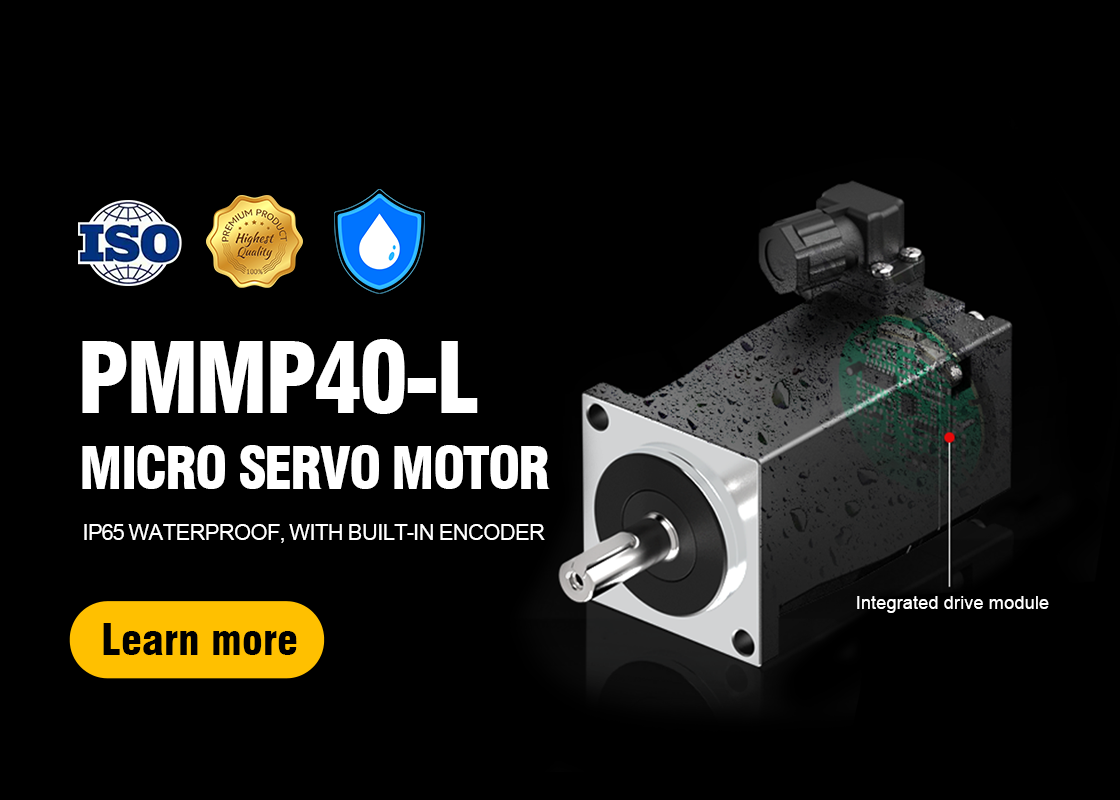
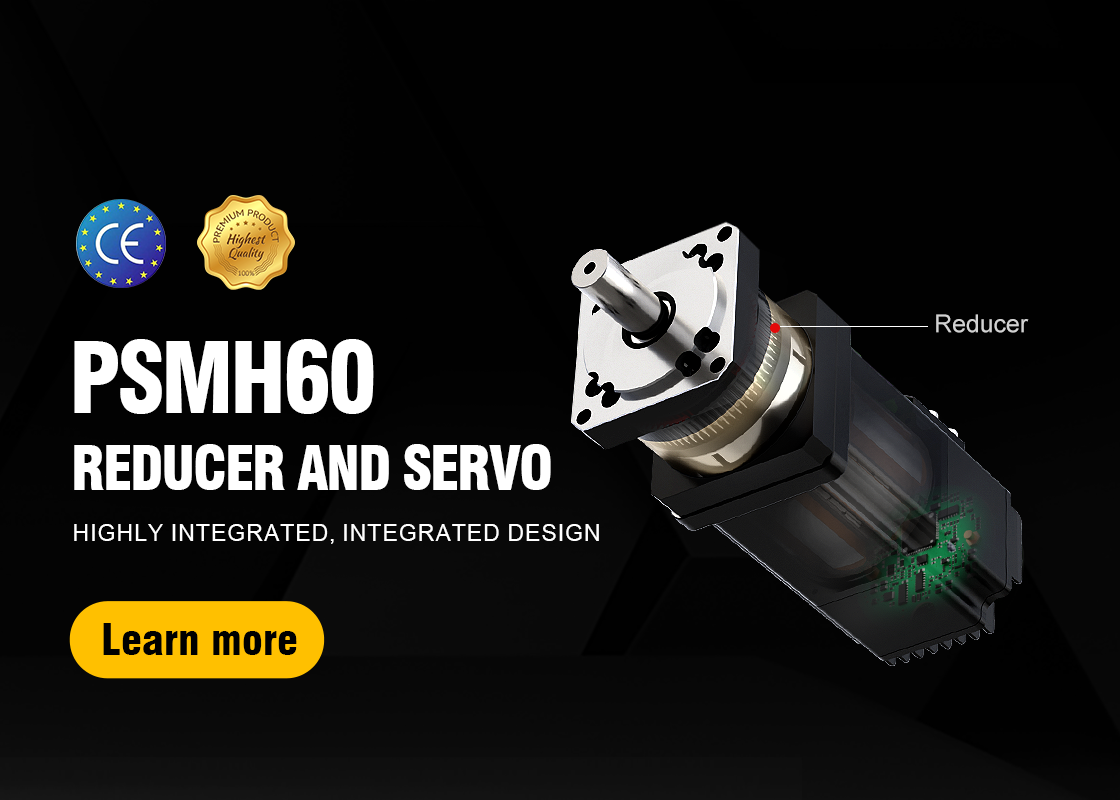
Among the innovations reshaping this landscape, the Integrated Servo Motor—which combines motor, drive, and encoder in a single unit—has emerged as a compelling solution for applications requiring compact footprints, reduced cabling, and simplified commissioning. For these integrated solutions, the choice of communication protocol becomes even more consequential, as it determines not only how the motor communicates but also how seamlessly it integrates into broader automation ecosystems.
This guide provides a systematic framework for selecting the appropriate servo motor communication protocol, with particular attention to the unique considerations of Integrated Servo Motor systems. It covers fundamental communication architectures, in-depth protocol comparisons, practical selection criteria, and future trends shaping the industry.
Part 1: Understanding the Fundamentals of Servo Motor Communication
1.1 The Evolution from Traditional to Digital Communication

Before diving into protocol selection, it is essential to understand the three primary control methods available for servo motors:
- Pulse Control: Uses electrical pulses where each pulse corresponds to a specific angular displacement, and pulse frequency determines speed. Simple and widely supported, but limited in feedback capability.
- Analog Control: Uses analog voltage or current signals to control speed or torque. Simple and cost-effective but susceptible to noise and interference.
- Communication Control: Uses digital fieldbus protocols (CAN, EtherCAT, Modbus, PROFINET) for bidirectional data exchange. Provides advanced control, real-time feedback, and diagnostic capabilities.
Communication-based control is increasingly the preferred approach for complex and large-scale system applications, enabling features such as multi-axis synchronization, predictive maintenance, and seamless integration with Industry 4.0 architectures.
1.2 Key Performance Metrics for Protocol Evaluation
When comparing servo motor communication protocols, engineers should evaluate the following critical parameters:
| Metric | Description | Typical Range |
| Cycle Time | Time between successive data exchanges | 12.5 μs to 50 ms |
| Jitter | Variation in timing between cycles | <1 ns to ±10 μs |
| Bandwidth Utilization | Effective data throughput vs. raw bitrate | 40% to 90%+ |
| Node Capacity | Maximum number of addressable devices | 32 to 65,535 |
| Cable Length | Maximum distance between nodes | 30 m to 1,000 m+ |
| Determinism | Predictability of data transmission timing | Hard real-time to non-deterministic |
1.3 The Rise of the Integrated Servo Motor
The Integrated Servo Motor represents a paradigm shift in motion system design. By combining the motor, drive electronics, and feedback encoder into a single mechanical unit, integrated servo motors offer:
- Reduced Footprint: Eliminates separate drive cabinets and reduces panel space requirements.
- Simplified Cabling: Often supports daisy-chained connections or one-cable technology (OCT) combining power and communication.
- Faster Commissioning: Pre-configured drive parameters reduce setup time.
- Distributed Intelligence: Enables decentralized control architectures better suited to modern manufacturing layouts.
When selecting communication protocols for Integrated Servo Motor systems, engineers must consider not only protocol performance but also the motor manufacturer‘s implementation quality, form factor constraints, and thermal management—since integrating drive electronics into the motor housing creates unique heat dissipation challenges.
Part 2: The Major Servo Motor Communication Protocols — An In-Depth Analysis
2.1 Protocol Comparison Overview
Currently, mainstream servo communication protocols include EtherCAT, CANopen, PROFINET, Modbus, EtherNet/IP, MECHATROLINK, and Sercos. The following sections analyze each protocol‘s architecture, performance characteristics, and ideal application scenarios.
2.2 EtherCAT (Ethernet for Control Automation Technology)

Developed by: Beckhoff
Architecture: Ethernet-based, processing-on-the-fly
Key Characteristics:
EtherCAT is widely recognized as the highest-performance industrial Ethernet protocol for motion control. It employs a “processing-on-the-fly” mechanism where each device reads and writes data as a single Ethernet frame passes through the network, minimizing latency.
- Cycle times: Down to 12.5 μs
- Jitter: <1 μs (distributed clock synchronization error <100 ns)
- Bandwidth utilization: >90% (effective throughput >80 Mbps on 100 Mbps network)
- Node capacity: Up to 65,535 nodes
- Topology: Line, tree, star, and hybrid configurations; daisy-chaining eliminates switch costs
Strengths:
- Highest synchronization accuracy and speed among Ethernet-based protocols
- Excellent scalability for large multi-axis systems
- Open standard with extensive vendor support (CiA 402 drive profile compatibility)
- Built-in distributed clock mechanism for sub-microsecond timing alignment
Limitations:
- Higher hardware cost (ESC chips ~$10–15 per node)
- Requires specialized configuration tools (e.g., Beckhoff TwinCAT)
Ideal Applications:
- High-speed multi-axis motion control (robotics, CNC machining)
- Semiconductor wafer handling (requires synchronization error <500 ns)
- Packaging machinery with >50 servo axes
- Automotive welding production lines with 128-axis synchronization
2.3 PROFINET

Developed by: PROFIBUS & PROFINET International (PI)
Architecture: Ethernet-based with Real-Time (RT) and Isochronous Real-Time (IRT) classes
Key Characteristics:
PROFINET is the market leader in Europe and the preferred choice within the Siemens ecosystem. It offers two real-time variants: RT for typical I/O cycles (1–10 ms) and IRT for hard real-time synchronized motion.
- Cycle times: ≤1 ms (IRT mode)
- Jitter: Consistently below 1 μs for IRT
- Bandwidth utilization: 50–70% for RT mode
- Topology: Line, star, ring configurations
- Diagnostics: Port-level diagnostics and PROFIenergy energy monitoring
Strengths:
- Deterministic performance with support for mixed industrial traffic
- Strong integration with Siemens automation ecosystem
- Excellent diagnostic capabilities
- Supports IEEE 1588 precision clock protocol
Limitations:
- Proprietary advantages tied to Siemens platforms
- Higher complexity for multi-vendor integration
- Limited bandwidth utilization compared to EtherCAT
Ideal Applications:
- Factory automation systems with Siemens controllers
- Solar panel stringing equipment requiring coordinated robotic and conveyor synchronization
- Automotive assembly lines with mixed real-time and non-real-time traffic
- Legacy system upgrades within PROFIBUS environments
2.4 EtherNet/IP
Developed by: ODVA (Open DeviceNet Vendor Association)
Architecture: Ethernet-based with Common Industrial Protocol (CIP)
Key Characteristics:
EtherNet/IP leverages standard Ethernet hardware while incorporating CIP for unified communication architecture across networks. It uses TCP/IP for configuration and UDP/IP for high-speed real-time data exchange.
- Cycle times: As low as 1 ms with CIP Motion
- Security: Built-in CIP Security with authentication and encryption
- Topology: Flexible star and ring configurations
- Interoperability: Excellent for bridging OT (Operational Technology) and IT networks
Strengths:
- Unmatched PLC integration, particularly with Rockwell Automation (Allen-Bradley) systems
- Seamless IT/OT integration for cost and maintenance benefits
- Open standard with broad vendor support
- Native security features for sensitive control data
Limitations:
- Lower cycle time performance compared to EtherCAT and PROFINET IRT
- Not optimized for sub-millisecond synchronized motion
- Primarily dominant in North American markets
Ideal Applications:
- High-speed packaging lines and automotive assembly
- Applications requiring seamless integration with enterprise IT systems
- North American facilities standardized on Rockwell Automation
- Complex robotics requiring 1 ms loop times
2.5 CANopen

Developed by: CAN in Automation (CiA)
Architecture: CAN-based serial bus
Key Characteristics:
CANopen is a high-level serial communication protocol based on the Controller Area Network (CAN) bus, providing standardized communication for industrial devices including servo drives.
- Baud rate: Up to 1 Mbps
- Cycle times: Minimum 1 ms (event-triggered)
- Synchronization accuracy: ±10 μs for SYNC messages
- Node capacity: Up to 127 nodes per bus
- Profile compliance: CiA 402 drive profile standardization
Strengths:
- Low hardware cost (CAN transceivers <$2 per node)
- Excellent noise immunity in harsh electrical environments
- Mature ecosystem with extensive tool support (EDS files, object dictionary)
- Proven reliability in distributed and embedded applications
Limitations:
- Limited bandwidth (1 Mbps maximum)
- Lower synchronization accuracy compared to Ethernet-based protocols
- Event-triggered nature introduces timing uncertainty
- Complex parameter configuration relative to EtherCAT
Ideal Applications:
- Small to medium-sized equipment with moderate axis counts
- Cost-sensitive applications requiring reliable communication
- Embedded systems and mobile robotics (AGV/AMR)
- Applications where noise immunity outweighs raw speed requirements
2.6 Modbus (RTU and TCP)

Developed by: Modicon (now Schneider Electric)
Architecture: Serial (RTU) or Ethernet (TCP)
Key Characteristics:
Modbus is arguably the most recognized industrial protocol globally, introduced in 1979. Its enduring simplicity ensures continued relevance, particularly in its Ethernet-based variant Modbus TCP.
- Cycle times: 10–50 ms typical
- Bandwidth utilization: <40% for Modbus TCP due to TCP/IP stack overhead
- Node capacity: 247 maximum theoretical, <32 practical for RTU
- Architecture: Simple client-server (master-slave) model
Strengths:
- Lowest hardware cost (RS485 chips ~$0.50/node)
- Virtually universal vendor support
- Extremely simple to implement and troubleshoot
- Minimal hardware requirements
Limitations:
- No true determinism, unsuitable for complex motion control
- Low bandwidth utilization and throughput
- Limited real-time capabilities
- Basic data structure (16-bit registers and coils only)
Ideal Applications:
- Basic I/O and monitoring tasks
- Parameter configuration and data acquisition in pumps, HVAC systems
- Legacy system integration
- Applications where simplicity and low cost outweigh real-time requirements
2.7 MECHATROLINK
Developed by: Yaskawa Electric
Architecture: Ring topology with dual-channel redundancy
Key Characteristics:
MECHATROLINK is an open industrial network protocol specifically designed for communication between controllers (PLCs) and servo drives, I/O devices, and other automation components.
- Topology: Ring with automatic path reconstruction on cable break
- Node capacity: Up to 62 nodes per ring
- Special features: Data pre-reading (sends commands 3 cycles ahead to compensate for network delay)
Strengths:
- Dual-channel redundancy for high availability
- Advanced features like data pre-reading for interpolation control
- Strong in CNC machine tool applications
- Limitations:
- Primarily associated with Yaskawa ecosystem
- Limited adoption outside specific industries
Ideal Applications:
- CNC machine tools requiring nanometer-level interpolation control
- High-availability systems where network redundancy is critical
- Applications within Yaskawa-dominated automation environments
Part 3: A Systematic Framework for Protocol Selection

3.1 Decision Factors and Their Weights
Selecting the appropriate communication protocol requires evaluating multiple factors against application requirements. The following decision matrix provides a structured approach:
Factor 1: Real-Time Performance Requirements
| Application Type | Required Cycle Time | Recommended Protocols |
| High-speed multi-axis synchronization | <100 μs | EtherCAT |
| Coordinated motion with tight jitter | ≤1 ms | PROFINET IRT, EtherCAT |
| Standard motion control | 1–10 ms | EtherNet/IP (CIP Motion), PROFINET RT |
| Simple positioning and monitoring | 10–50 ms | Modbus TCP, CANopen |
| Non-critical parameter access | >50 ms | Modbus RTU |
Factor 2: System Size and Scalability
| System Complexity | Axis Count | Recommended Protocols |
| Large-scale distributed | >100 axes | EtherCAT (65,535 nodes max) |
| Medium-scale production | 30–100 axes | EtherCAT, PROFINET IRT |
| Small to medium equipment | 8–30 axes | CANopen, PROFINET RT, EtherNet/IP |
| Single-axis standalone | 1–8 axes | Modbus, pulse control |
Factor 3: Budget and Hardware Cost
| Cost Level | Approximate Per-Node Cost | Protocols |
| Ultra-low cost | <$1 | Modbus RTU (RS485) |
| Low cost | $2–5 | CANopen |
| Moderate cost | $5–15 | Modbus TCP, EtherNet/IP |
| Higher cost | $10–25 | EtherCAT, PROFINET |
Note: EtherCAT slave controller (ESC) chips typically cost $10–15 per node.
Factor 4: Existing Infrastructure and Vendor Lock-In
| Ecosystem | Dominant Protocols |
| Siemens-based systems | PROFINET |
| Rockwell Automation (Allen-Bradley) | EtherNet/IP |
| Beckhoff-based systems | EtherCAT |
| Yaskawa-dominated applications | MECHATROLINK |
| Mixed-vendor environments | EtherCAT, CANopen (open standards) |
Factor 5: Environmental Conditions
| Environment | Considerations | Recommended Protocols |
| High electrical noise | Differential signaling | CANopen, RS485, EtherCAT (fiber option) |
| Long cable runs (>100m) | Fiber optic support | EtherCAT (fiber), RS485 |
| Harsh industrial | Ruggedized connectors | CANopen, PROFINET |
| Clean, controlled | Standard Ethernet | All Ethernet-based protocols |
3.2 Protocol Selection Flowchart (Text-Based)
Step 1: Determine Real-Time Requirements
- If <100 μs cycle time required → EtherCAT
- If 100 μs–1 ms with deterministic jitter required → PROFINET IRT or EtherCAT
- If 1–10 ms acceptable → PROFINET RT or EtherNet/IP
- If >10 ms acceptable → proceed to Step 2
Step 2: Assess System Scale
- If >100 axes → EtherCAT (mandatory for scalability)
- If 30–100 axes → EtherCAT or PROFINET IRT
- If <30 axes → proceed to Step 3
Step 3: Consider Budget Constraints
- If lowest cost priority → Modbus RTU (simple monitoring) or CANopen (basic control)
- If moderate budget with good performance → CANopen or Modbus TCP
- If performance priority → EtherCAT (higher ROI for performance-critical applications)
Step 4: Evaluate Ecosystem Compatibility
- If existing Siemens infrastructure → PROFINET
- If existing Rockwell infrastructure → EtherNet/IP
- If existing Beckhoff or open architecture → EtherCAT
- If mixed-vendor environment → EtherCAT or CANopen
Step 5: Consider Future Requirements
- If Industry 4.0, IoT, or OPC UA integration planned → Ethernet-based protocols (EtherCAT, PROFINET, EtherNet/IP)
- If distributed control architecture → EtherCAT with Integrated Servo Motor support
3.3 When to Choose Each Protocol: A Summary Table
| Protocol | Best For | Avoid When |
| EtherCAT | High-performance multi-axis motion, sub-μs synchronization, large-scale systems | Budget is extremely constrained (<$10/node) |
| PROFINET | Siemens ecosystems, mixed traffic environments, European markets | Non-Siemens control platforms, <1 ms not required |
| EtherNet/IP | Rockwell ecosystems, IT/OT integration, North American facilities | Sub-ms deterministic motion required |
| CANopen | Cost-sensitive applications, moderate axis counts, harsh electrical environments | High-speed synchronized motion (>10 axes) |
| Modbus | Simple monitoring, parameter configuration, legacy integration | Any real-time motion control requirement |
| MECHATROLINK | CNC machine tools, Yaskawa-dominated systems, high-availability applications | Open architecture, mixed-vendor environments |
Part 4: Special Considerations for Integrated Servo Motor Systems

4.1 Why Protocol Selection Is Critical for Integrated Servo Motors
The Integrated Servo Motor—which combines drive electronics and motor in one housing—presents unique protocol selection challenges and opportunities. Unlike traditional distributed systems where drives reside in control cabinets, integrated servo motors are often mounted directly on machines, exposed to environmental stresses and space constraints.
Key considerations specific to Integrated Servo Motors:
Cabling Complexity: Integrated servo motors often employ daisy-chained or one-cable technology (OCT) where power and communication share a single cable. Protocols that support simple daisy-chaining (EtherCAT, CANopen) are particularly advantageous. As noted in industry experience, “each servo is daisy chained from one to the next” when using integrated solutions.
Form Factor Constraints: Integrated servo motors require careful thermal management since drive electronics generate heat within the motor housing. Some protocols consume more processing power and generate more heat than others—a factor rarely considered in traditional drive selection.
Distributed Architecture: Integrated servo motors enable decentralized control, moving intelligence from central cabinets to the point of actuation. Protocols like EtherCAT with distributed clock synchronization are particularly well-suited to such architectures.
Mounting and Accessibility: When selecting an Integrated Servo Motor, engineers must consider “the unique form factor, mounting considerations, cabling and safety requirements” of each solution. Protocols requiring additional components (switches, terminators) may complicate mounting in space-constrained locations.
4.2 Recommended Protocols for Integrated Servo Motor Applications
Based on industry feedback and technical analysis, the following protocols are most commonly recommended for Integrated Servo Motor systems:
| Application Domain | Recommended Protocol | Rationale |
| High-performance robotics | EtherCAT | Real-time control, daisy-chain support, distributed clock sync |
| Mid-range industrial automation | CANopen | Cost-effective, reliable, mature ecosystem |
| Simple positioning tasks | Modbus (serial or TCP) | Low cost, universal compatibility |
| Siemens-integrated systems | PROFINET | Ecosystem alignment, diagnostic features |
| Open-architecture systems | EtherCAT or CANopen | Multi-vendor interoperability |
As noted in robotics community discussions, “many models support CANopen, EtherCAT, or Modbus” for integrated servo motors, with EtherCAT being the top recommendation for real-time control applications
4.3 The One-Cable Technology (OCT) Advantage
A growing trend in Integrated Servo Motor systems is one-cable technology (OCT), which combines power and industrial Ethernet communication in a single cable. This approach reduces both commissioning time and machine footprint. Protocols that support OCT implementations include:
- EtherCAT: Widely supported in OCT-enabled integrated servo motors from Beckhoff (AMP8000 series), Bosch Rexroth, and others
- PROFINET: Available in select Siemens SINAMICS integrated drive systems
- HIPERFACE DSL: A dedicated digital motor feedback protocol using single-cable technology for encoder communication
When evaluating Integrated Servo Motor solutions, engineers should prioritize protocols with proven OCT implementations to maximize the space and cabling benefits of integrated design.
Part 5: Implementation Best Practices and Common Pitfalls

5.1 Pre-Implementation Checklist
Before committing to a communication protocol, verify the following:
- Controller compatibility: Does your PLC, motion controller, or PC-based control system support the chosen protocol natively?
- Drive compatibility: Do your selected servo drives or Integrated Servo Motors offer the protocol as a standard or optional feature?
- Tool support: Does your engineering environment provide configuration tools, device description files (ESI, EDS, GSDML), and diagnostic utilities for the protocol?
- Cable and connector availability: Are appropriate cables, connectors, and terminators readily available and cost-effective?
- Training and expertise: Does your team have experience with the protocol, or is training available?
- Vendor support: Do your preferred vendors offer technical support for the protocol in your region?
- Future scalability: Can the protocol accommodate planned system expansions (more axes, additional I/O, higher speeds)?
- Industry 4.0 readiness: Does the protocol support OPC UA, data analytics integration, or cloud connectivity?
5.2 Common Selection Mistakes to Avoid
Mistake 1: Over-specifying protocol performance
Selecting EtherCAT for a simple indexing application with 2–3 axes adds unnecessary cost and complexity when CANopen or Modbus would suffice. Match protocol performance to actual requirements, not marketing claims.
Mistake 2: Ignoring ecosystem lock-in
Choosing a protocol heavily tied to a single vendor (PROFINET for Siemens, EtherNet/IP for Rockwell, MECHATROLINK for Yaskawa) can limit future flexibility. For multi-vendor environments, prioritize open standards like EtherCAT or CANopen.
Mistake 3: Underestimating commissioning complexity
Some protocols require extensive configuration of device description files, object dictionaries, and timing parameters. Factor engineering time into total cost calculations—EtherCAT with modern configuration tools may actually commission faster than CANopen despite higher hardware costs.
Mistake 4: Neglecting diagnostic capabilities
Advanced diagnostics (PROFINET‘s port-level monitoring, EtherCAT’s ns-level delay measurement) can dramatically reduce troubleshooting time in large systems. For critical applications, the diagnostic features of higher-tier protocols justify their premium cost.
Mistake 5: Forgetting about future Industry 4.0 integration
As manufacturing moves toward connected, data-driven operations, protocols that support OPC UA, edge computing, and cloud integration will become increasingly valuable. Ethernet-based protocols (EtherCAT, PROFINET, EtherNet/IP) provide a clear migration path.
5.3 Testing and Validation Recommendations
Before finalizing protocol selection, conduct the following validation activities:
- Benchmark real-time performance: Set up a representative system with your chosen controller and a few servo axes. Measure actual cycle times, jitter, and synchronization accuracy under load.
- Test cable length and topology: Verify that your physical layout works within protocol limits for cable length, node spacing, and topology constraints.
- Evaluate diagnostic tools: Simulate faults (cable breaks, node failures, communication errors) and assess how quickly your team can identify and resolve issues.
- Check interoperability: If mixing components from multiple vendors, test communication thoroughly—even within the same protocol, implementation variations can cause issues.
- Assess thermal impact for Integrated Servo Motors: If using Integrated Servo Motors, monitor operating temperatures under full load to ensure the chosen protocol‘s processing demands don‘t exacerbate heat buildup.
Part 6: Market Trends and Future Outlook

6.1 Current Market Landscape
The global industrial Ethernet AC servo system market was valued at approximately USD 6.93 billion in 2025 and is projected to reach USD 12 billion by 2035, growing at a CAGR of 5.6%. The Integrated Servo Motor market alone was valued at USD 1.61 billion in 2025 and is expected to reach USD 2.52 billion by 2032, with a CAGR of 6.64%.
Key trends shaping protocol adoption include:
- EtherCAT dominance in motion control: EtherCAT is increasingly becoming the #1 fieldbus for motion control applications, driven by its exceptional speed (cycle times as low as 12.5 μs) and efficiency.
- Industrial Ethernet market share shift: Ethernet-based protocols (EtherCAT, PROFINET, EtherNet/IP) continue to gain share over serial fieldbuses (CANopen, Modbus RTU), driven by bandwidth demands and Industry 4.0 requirements.
- Asia-Pacific growth: The Asia-Pacific region, particularly China and India, is anticipated to dominate market growth due to rapid industrialization and heavy automation investments.
- AI and IoT integration: Recent advances in motion control include high-performance servo drives, AI integration, and enhanced communication protocols like EtherCAT, designed to improve precision, efficiency, and reliability.
6.2 Emerging Protocols and Technologies
OPC UA FX (Field eXchange) : Building on OPC UA‘s success in IT/OT integration, OPC UA FX is positioned to play an important role in future motion control systems, particularly for cross-vendor interoperability and cloud connectivity.
TSN (Time-Sensitive Networking) : IEEE 802.1 TSN promises to unify industrial Ethernet protocols on a common timing infrastructure. While still emerging, TSN-enabled protocols may simplify multi-protocol environments in the future.
CC-Link IE TSN: Mitsubishi‘s open industrial Ethernet protocol combines gigabit bandwidth with TSN capabilities, gaining traction particularly in Asian markets.
IO-Link: For simple sensors and actuators, IO-Link offers a cost-effective alternative to Ethernet-based systems, with some Integrated Servo Motor manufacturers reporting 10–15% investment cost savings compared to traditional Ethernet networks.
6.3 Future-Proofing Your Protocol Selection
To ensure your protocol choice remains viable for 5–10 years:
- Prioritize open standards: Protocols with open specifications (EtherCAT, CANopen, OPC UA) offer greater long-term flexibility than proprietary solutions.
- Plan for TSN convergence: When selecting Ethernet-based protocols, consider vendors‘ TSN roadmaps.
- Look for multi-protocol support: Many modern servo drives and Integrated Servo Motors support multiple protocols on the same hardware platform, allowing future protocol changes without hardware replacement.
- Consider OPC UA companion specifications: As OPC UA becomes the standard for higher-level communication, protocols with OPC UA companion specs will integrate more seamlessly with enterprise systems.
- Evaluate cybersecurity features: With increasing connectivity, protocols offering built-in security (CIP Security for EtherNet/IP, PROFINET‘s security extensions) will become increasingly important.
Part 7: Quick Reference Tables
7.1 Protocol Comparison Summary
| Protocol | Cycle Time | Jitter | Bandwidth Utilization | Max Nodes | Relative Cost | Primary Strength |
| EtherCAT | 12.5 μs – 100 μs | <100 ns | >90% | 65,535 | $$ | Highest speed & synchronization |
| PROFINET IRT | ≤1 ms | <1 μs | 50–70% | 512 | $$ | Deterministic + mixed traffic |
| EtherNet/IP | 1–10 ms | >10 μs | Moderate | Unlimited (IP) | $$ | IT/OT integration |
| CANopen | ≥1 ms | ±10 μs | Low | 127 | $ | Cost-effective reliability |
| Modbus TCP | 10–50 ms | Non-deterministic | <40% | 247 | $ | Simplicity & compatibility |
| MECHATROLINK | ≤1 ms | <1 μs | Moderate | 62 | $$ | Redundancy & CNC features |
7.2 Protocol Suitability by Industry
| Industry | Primary Protocols | Secondary Protocols |
| Automotive assembly | EtherCAT, PROFINET | EtherNet/IP |
| Semiconductor | EtherCAT | — |
| Packaging machinery | EtherCAT | CANopen, PROFINET |
| CNC machine tools | MECHATROLINK, EtherCAT | PROFINET |
| Robotics (industrial) | EtherCAT | CANopen |
| Mobile robotics / AGV | CANopen | EtherCAT (fiber) |
| Food and beverage | PROFINET, EtherNet/IP | Modbus TCP |
| Textile machinery | CANopen | Modbus RTU |
| HVAC / pumps | Modbus (RTU/TCP) | — |
| Energy / solar | PROFINET | Modbus |
Conclusion: Making the Right Choice for Your Application
Selecting the appropriate servo motor communication protocol requires balancing multiple, often competing factors: real-time performance, system scale, budget constraints, existing infrastructure, and future requirements.
For high-performance applications requiring sub-microsecond synchronization and multi-axis coordination—such as robotics, semiconductor manufacturing, and high-speed packaging—EtherCAT remains the gold standard, delivering exceptional speed, low jitter, and excellent scalability.
For Siemens-dominated environments or applications needing deterministic performance with mixed traffic types, PROFINET IRT provides a compelling solution with strong diagnostic capabilities.
For North American facilities standardized on Rockwell Automation, EtherNet/IP offers seamless integration and IT/OT convergence advantages.
For cost-sensitive applications with moderate axis counts and good noise immunity, CANopen continues to be a reliable workhorse.
For simple monitoring, parameter configuration, and legacy system integration, Modbus (RTU or TCP) remains the simplest, most universally supported option.
For Integrated Servo Motor applications specifically, engineers should prioritize protocols that support daisy-chaining and one-cable technology, with EtherCAT and CANopen leading in real-world implementations.
The wrong protocol selection can severely limit the realization of an Industry 4.0 strategy, while the right choice enables scalable, maintainable, and high-performance motion systems that can evolve with changing production demands. By systematically evaluating requirements against the framework presented in this guide, engineers can confidently select the optimal communication protocol for their specific application—whether traditional servo systems or modern Integrated Servo Motor architectures.