Inductor type stepping motor
1. Features:
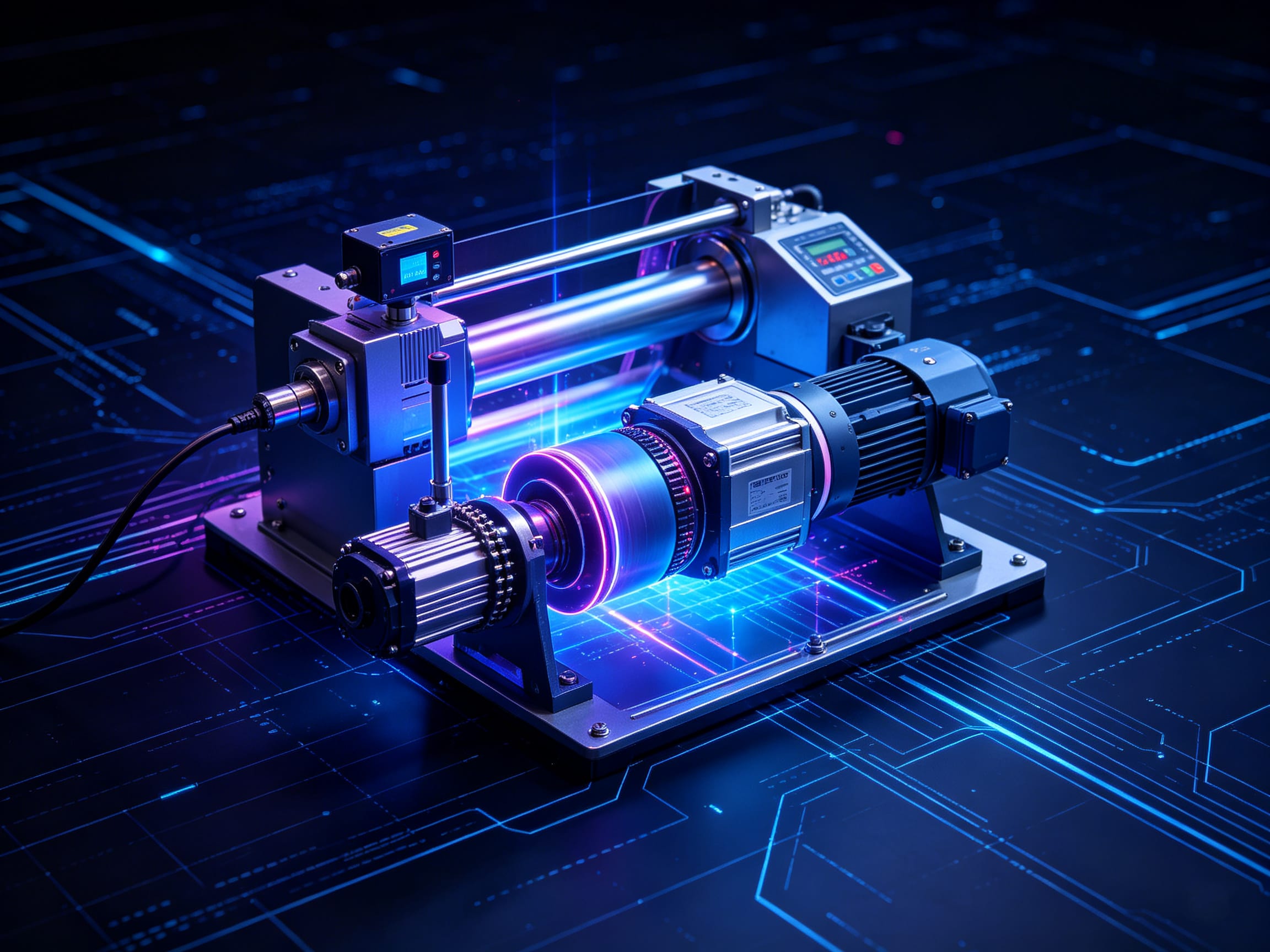
Compared with the traditional reactive stepper motor, the rotor of the inductor type stepper motor is equipped with a permanent magnet to provide the working point of the soft magnetic material, and the stator excitation only needs to provide the changing magnetic field without providing the energy consumption of the working point of the magnetic material, so the motor has high efficiency, low current and low heat. Because of the existence of permanent magnet, the motor has a strong back potential, its self-damping effect is better, so that it is relatively stable in the process of operation, low noise, low frequency vibration.
Inductor type stepper motor can be regarded as a low speed synchronous motor to some extent. A four-phase motor can be used for four-phase operation or two-phase operation. (must be driven by bipolar voltage), and the reaction motor can not be so. For example: four-phase, eight-phase operation (A-AB-B-BC-C-CD-D-DA-A) can completely use two-phase eight-beat operation. It is not difficult to find that the condition is C=,D=.
The internal winding of a two-phase motor is completely consistent with the four-phase motor, the low-power motor is generally directly connected to the two-phase, and the motor with a larger power is often externally connected to eight leads (four-phase) in order to facilitate use and flexibly change the dynamic characteristics of the motor, so that when used, it can be used as a four-phase motor, and the two-phase motor winding can be used in series or parallel.
2. Classification
Inductor type stepper motor can be divided into: two-phase motor, three-phase motor, four-phase motor, five-phase motor and so on. With the frame number (motor outside diameter) can be divided into: 42BYG(BYG for induction stepper motor code), 57BYG, 86BYG, 110BYG, (international standard), and like 70BYG, 90BYG, 130BYG, etc., are domestic standards.
3. Static index term of stepper motor
Phase number: The number of excitation coils that produce different polar N and S fields. m is usually used.
Number of beats: The number of pulses required to complete A periodic change in the magnetic field or the conductive state is expressed by n, or refers to the number of pulses required by the motor to turn A pitch Angle, taking the four-phase motor as an example, there are four phase four beat operation mode AB-BC-CD-DA-AB, and four phase eight beat operation mode A-AB-B-BC-C-CD-D-DA-A.
Step Angle: corresponding to a pulse signal, the angular displacement of the motor rotor is represented by θ. θ=360 degrees (the number of rotor teeth J* the number of running beats), taking the conventional two - and four-phase, rotor teeth for 50 teeth motor as an example. The four-beat running step Angle is θ=360 degrees/(50*4) =1.8 degrees (commonly known as full step), and the eight-beat running step Angle is θ=360 degrees/(50*8) =0.9 degrees (commonly known as half step).
Positioning torque: When the motor is not energized, the locking torque of the motor rotor itself (caused by harmonics of the tooth shape of the magnetic field and mechanical errors)
Static torque: the locking torque of the motor shaft when the motor does not rotate under the rated static electric action. This torque is a standard to measure the motor volume (geometric size), and has nothing to do with the drive voltage and drive power supply.
Although the static torque is directly proportional to the number of electromagnetic field ampere-turns and is related to the air gap between the fixed tooth rotor, it is not advisable to reduce the air gap and increase the field ampere-turns to improve the static torque, which will cause the heat and mechanical noise of the motor.
4. stepper motor dynamic indicators and terminology:
(1) step Angle accuracy:
The error between the actual value and the theoretical value of each step Angle of the stepper motor. Expressed as a percentage: error/step Angle *100%. The value of different running beats is different, and the four-beat running time should be within 5%, and the eight-beat running time should be within 15%.
(2) Out of step:
The number of steps when the motor is running is not equal to the theoretical number of steps. Call it out of step.
(3) offset Angle:
The rotor tooth axis offset the stator tooth axis Angle, the motor operation must have an offset Angle, the error caused by the offset Angle, the use of subdivision drive can not be solved.
(4). maximum no-load starting frequency:
The maximum frequency at which the motor can be started directly without load in a certain drive form, voltage and rated current.
(5) the maximum no-load operating frequency:
Motor in a certain drive form, voltage and rated current, the highest speed frequency of the motor without load.
(6) running moment frequency characteristics:
The curve of the relationship between the output torque and frequency measured in the operation of the motor under certain test conditions is called the running torque frequency characteristic, which is the most important of many dynamic curves of the motor and the fundamental basis for the selection of the motor.
Other characteristics include inertial frequency characteristics, starting frequency characteristics and so on.
Once the motor is selected, the static moment of the motor is determined, while the dynamic moment is not, the dynamic moment of the motor depends on the average current of the motor during operation (rather than the static current), the greater the average current, the greater the motor output torque, that is, the harder the frequency characteristics of the motor.
Among them, curve 3 has the highest current or the highest voltage; Curve 1 The minimum current, or the lowest voltage, the intersection of the curve and the load is the maximum speed point of the load. To make the average current large, increase the driving voltage as much as possible, so that the use of small inductance and large current motor.
(7) the resonance point of the motor:
Stepper motor has a fixed resonance region, two, four phase induction type stepper motor resonance region is generally between 180-250 PPS (step Angle 1.8 degrees) or about 400pps (step Angle 0.9 degrees), the higher the motor drive voltage, the greater the motor current, the lighter the load, the smaller the motor volume, then the resonance region upward offset, vice versa, In order to make the output moment of the motor large, without losing step and reduce the noise of the whole system, the general operating point should be offset more resonance area.
(8) motor positive and negative rotation control:
When the motor winding power sequence is AB-BC-CD-DA or (), it is positive rotation, and when the power sequence is DA-CA-BC-AB or (), it is reverse.