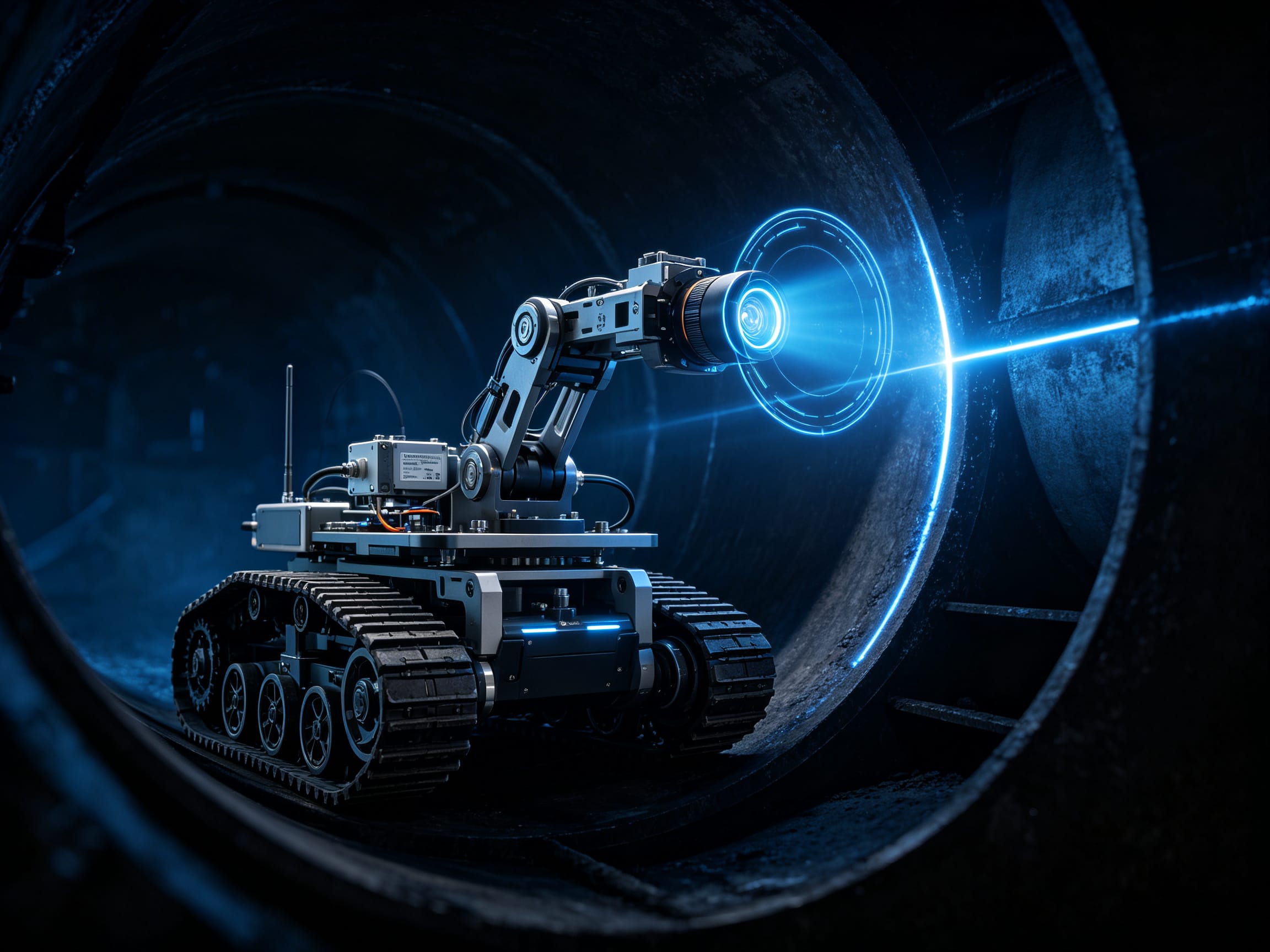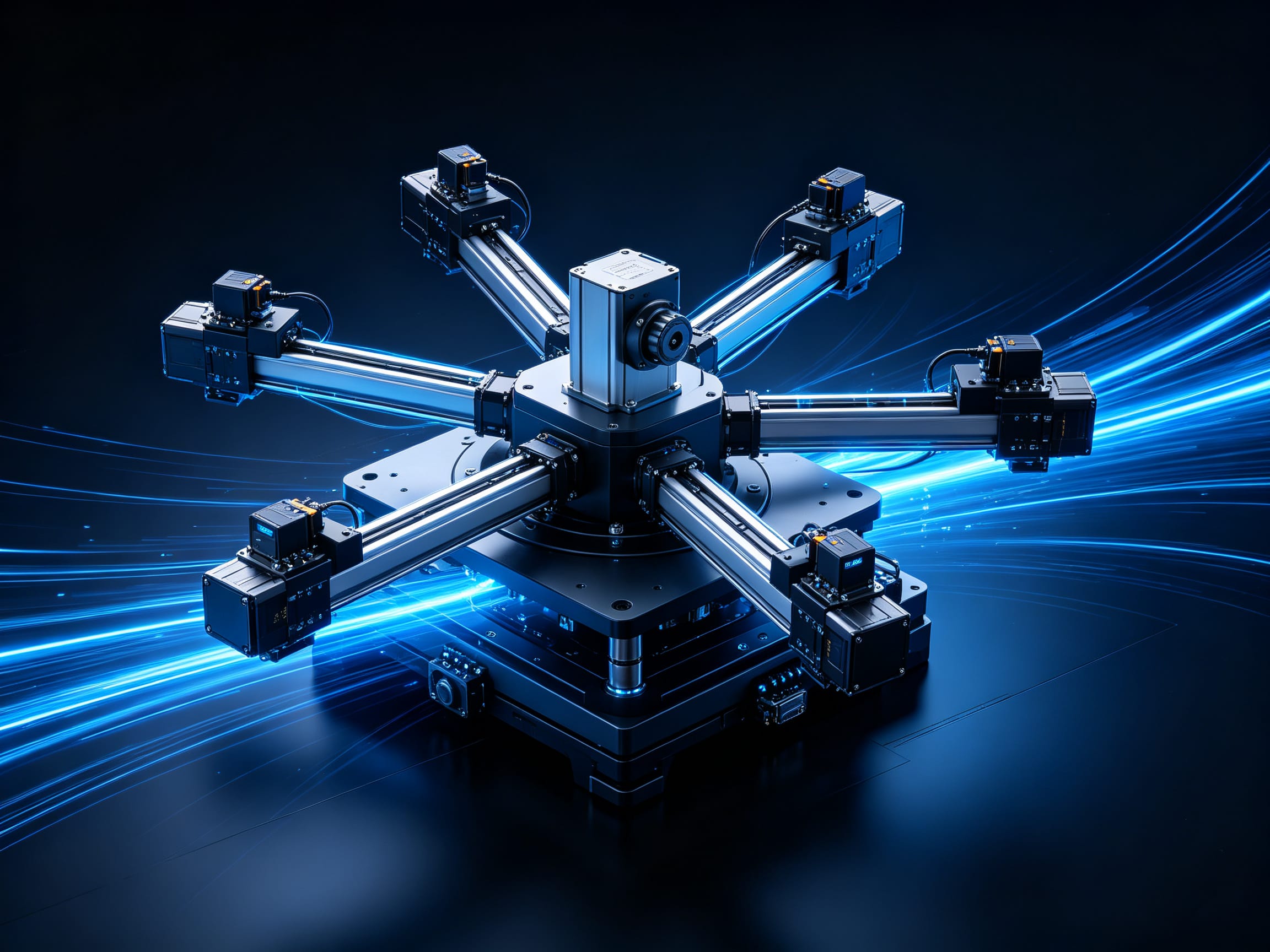
Application case of integrated servo motor in pipeline weld inspection crawling robot

In pipeline maintenance in industries like petrochemicals and energy, weld inspection is a critical step in ensuring safe pipeline operation. The Pipeline Weld Inspection Crawler Robot addresses the low efficiency and high risk of traditional manual inspections. This robot utilizes the PMMP40 integrated servo motor. Through its compact design and high-precision motion control, it enables automated inspection in complex pipeline environments.
1. Device Overview
The Pipeline Weld Inspection Crawler Robot is an inspection device that can autonomously move within pipelines. Core functional requirements include:
Compactness: Must fit within the confines of DN200-DN500 pipes.
High-Temperature Resistance: Must operate in environments exceeding 60°C for extended periods.
Motion Stability: Crawling at a constant speed of 0.1-0.5 m/s to ensure continuous sensor data collection.
Load Capacity: Must carry a 3-5 kg visual or ultrasonic inspection module.
2. Application Solutions and Products

Servo Motor Model: PMMP4010 B-CANopen-L-0HE (100W short servo motor with integrated CANopen bus control)
Drive System: Combined with a 50:1 reducer, output torque is increased to 4.8 N·m.
Control Mode: Contour speed operation mode, supporting real-time speed adjustment and smooth trajectory transitions.
Space Optimization: A short motor + flange-mounted direct-connect reducer design reduces axial length by 40%.
Thermal Management: The motor housing is equipped with cooling fins and an internal temperature sensor for real-time monitoring.
Synchronous Control: The four motors coordinate via the CANopen bus to ensure The robot's posture is stable.
3. Problems and Solutions
1. Motor Overtemperature Alarm: After prolonged operation, the motor temperature exceeds 80°C, triggering protection.
Solution: Replace the shorter, high-torque motor and reduce the rated current by 20%.
2. Insufficient Installation Space: The original motor + reducer combination exceeds the robot's design space.
Solution: Use an integrated servo motor, eliminating the need for an external driver.
3. Low-Speed Vibration: Periodic vibration occurs at 0.1 m/s.
Solution: Optimize the speed loop PID parameters and add a mechanical damping structure.
Technical Detail Optimization:
Enable the motor's automatic frequency reduction function. When the temperature reaches 60°C, the motor will automatically reduce the frequency. Actively reduce output power at temperatures above 30°C.
An anti-backlash gear was installed at the output end of the reducer to eliminate transmission backlash.
4. Application Results
Improved reliability: Continuous operation for 12 hours without overtemperature alarms, extending motor life by three times.
Inspection efficiency improved: The crawling speed remained stable at 0.3 m/s, increasing the daily pipeline inspection length to 800 meters.
Optimized integration: The total equipment weight was reduced by 15%, making it suitable for smaller pipe diameters.
5. Summary
The use of the PMMP40 integrated servo motor overcomes the technical challenges of space constraints and thermal management for pipeline inspection robots. This case demonstrates the adaptability of short, high-torque servo motors in confined environments, providing a standardized reference for specialized robot drive systems. Future applications could include inspections in extreme environments such as nuclear power plant pipelines and submarine oil and gas pipelines.