Application of PMM integrated low-voltage servo motor in AGV

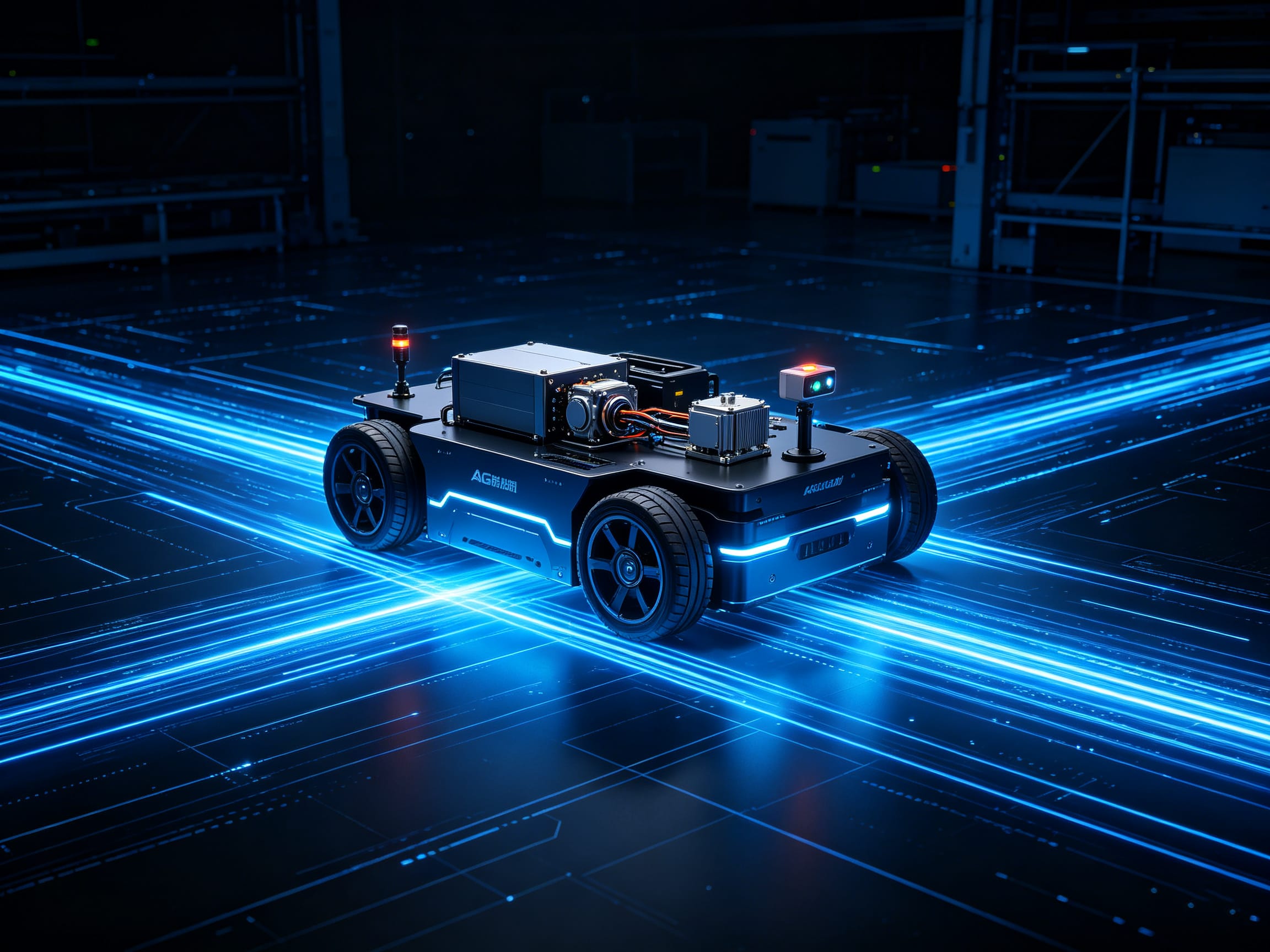
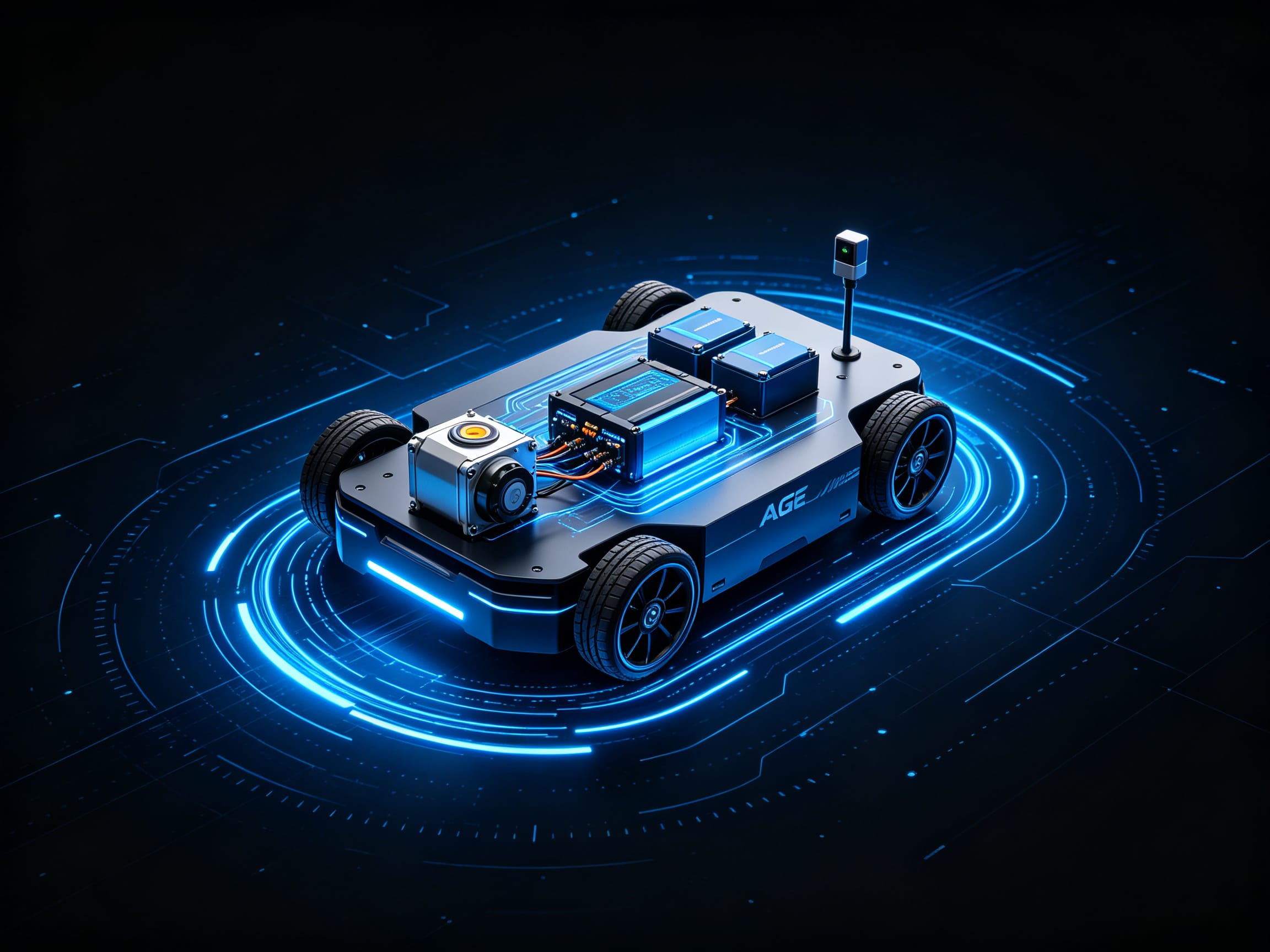
Recently, a domestic electronics factory is using 8 unmanned carrier AGV(Automated Guided Vehicles) instead of 15 workers to drive logistics cars to work, the use of AGV improves production efficiency, saves the cost of employment, saves the cost of employment for customers, and has been trusted and supported by customers. The original assembly workshop has a total of 500 production workers, including 36 people in the logistics department, and 15 people are responsible for driving the logistics car to shuttle between various stations and machine tools to complete the material distribution. The shuttle material supply of unmanned transport car meets the requirement of real-time material supply in the workshop. Meet the requirements of lean management and Industry 4.0. Among them, PMM integrated low-voltage servo plays a crucial role as a power motor and a steering motor. Each set of unmanned transport vehicles uses four 60 series 200W servo machines developed by our company, and is networked through CANopen protocol. The servo machine developed by our company is small in size, compact in structure, simple in wiring, low in external interference, and adopts communication network control, which greatly reduces the cost of the whole set of equipment, improves production efficiency, and truly realizes private customization.
The PMM integrated low-voltage servo is a bus motor that can be connected to the EtherCAT/CANOpen communication network for fieldbus control. The high-speed and stable EtherCAT bus communication is the reliable guarantee of the PMM integrated low-voltage servo, which can support the synchronization of 100 axes within 1ms, and is suitable for high-rigidity requirements such as engraving and milling machines, die-cutting machines, and multi-wire cutting machines. EtherCAT bus brings great technical advantages to PMM integrated low-voltage servo.

The PMM integrated low-voltage servo is a bus motor that can be connected to the EtherCAT/CANOpen communication network for fieldbus control. The high-speed and stable EtherCAT bus communication is the reliable guarantee of the PMM integrated low-voltage servo, which can support the synchronization of 100 axes within 1ms, and is suitable for high-rigidity requirements such as engraving and milling machines, die-cutting machines, and multi-wire cutting machines. EtherCAT bus brings great technical advantages to PMM integrated low-voltage servo.
EtherCAT core technology
One frame to the end
(1) EtherCAT has a maximum data capacity of 1470 bytes per frame, and data can be modified or added during message transmission without stacking, caching, or shredding/combining
(2) Each node directly uses hardware to achieve calculation without software involvement, which greatly reduces the message delay. The communication delay of a servo shaft is only 1us
Synchronous clock
(3) Each EtherCAT slave has a clock mechanism inside the slave controller ESC, called the slave clock
(4) Each EtherCAT master also has an internal clock mechanism, called the master clock
(5) The EtherCAT network uses the first slave clock as the reference clock, and the reference clock as the system clock of the entire system, and all clocks including the master clock are synchronized to the reference clock
(6) In the EtherCAT network, the distributed clock can use the SYNC signal to make all EtherCAT devices use the same system time, so as to control the synchronous execution of tasks of each device;
(7) SYNC signal transmission period is the synchronization period

PMM integrated low voltage servo product features:
(1) Modular high integration design, quick layout and installation, eliminating the matching process between the driver and the motor, reducing the cost of use
(2) Connected to the controller through EtherCAT/CANOpen protocol (DS402), each node directly uses hardware to achieve calculation, without software involvement, greatly reducing the message delay time. Transmission rate: 2x100Mbps (full duplex) The hardware delay of a servo shaft is only 1us

(3) Wide voltage input (24 ~ 48VDC), can use battery power supply, optional power off braking protection
(4) Integrated single-turn absolute encoder, zero memory within limited range
(5) Provide speed and position feedforward parameter configuration to improve response speed and tracking accuracy
(6) Integrated I/O, can be set to positive limit, negative limit, origin setting, multi-functional digital output, pulse input detection
(7) Real-time fault monitoring and protection function, including overcurrent, I2T overload, overvoltage, undervoltage, overheat, overspeed, out-of-difference protection
(8) Provide a variety of scenarios of development schemes and development kit support, shorten the development cycle
(9) Provide features in motion mode of various scenes: two-wheel differential drive mode, wheelset slip alarm, etc
Unmanned is the general trend of smart factories in the future, and robots that replace manual completion including object transportation and sorting are undoubtedly the basis of smart factories.
With the gradual expansion and deepening of the Made in China 2025 plan, the fully automated production line has been basically completed, but the handling, loading and unloading of goods and raw materials in the manufacturing plant is still mostly manual operation, and the work content is single and repeated. With the further improvement of domestic labor costs and the production efficiency requirements caused by high competitive pressure of enterprises, the production efficiency is increased year by year. More and more cargo handling work will be completed by AGV cars, and PMM integrated low-voltage servo will be more widely used in AGV and related products and industries in the future. As the NIMotion product line and features continue to grow, we look forward to working with you to create a bright future. We will provide you with better service, more advanced technology, more stable products, and better respond to the continuous changes in the market.