Application of integrated servo motors in humanoid robots
With the accelerated evolution of global industrial automation and service intelligence, humanoid robots, due to their human-like movement flexibility and scene adaptability, are becoming key innovation carriers in manufacturing, logistics, public services, and home services.
However, the joint drive systems of humanoid robots have long faced challenges such as complex structure, large size, and limited control precision and response speed. Especially in their multi-degree-of-freedom joints, the traditional combination of separate motors, reducers, and controllers often results in low system integration, large space occupation, complex assembly, and insufficient dynamic performance.
Against this backdrop, integrated servo motors (mechatronics solutions that highly integrate core components such as servo motors, drivers, and encoders) are becoming one of the key technological paths to overcome these bottlenecks due to their significant advantages such as compact structure, fast response, precise control, and ease of installation and maintenance. This article uses the solution selected in humanoid robot products as an example to explore the specific application schemes, technical challenges, and achievements of integrated servo motors in these applications.
1. Equipment Introduction

A humanoid robot is an intelligent robot with a humanoid shape, multiple degrees of freedom of joints, and the ability to mimic human actions such as walking, grasping, and manipulation. Humanoid robots' core motion capabilities heavily rely on their joint drive systems, which typically consist of servo motors, reducers, sensors, and controllers, responsible for converting electrical energy into precise mechanical motion. In recent years, with advancements in materials, sensing, and control algorithms, humanoid robots are moving from the laboratory to industrial and commercial applications, such as automotive assembly, precision electronics manufacturing, warehousing and logistics, medical services, and even home companionship.
Current industry technology development exhibits the following trends:
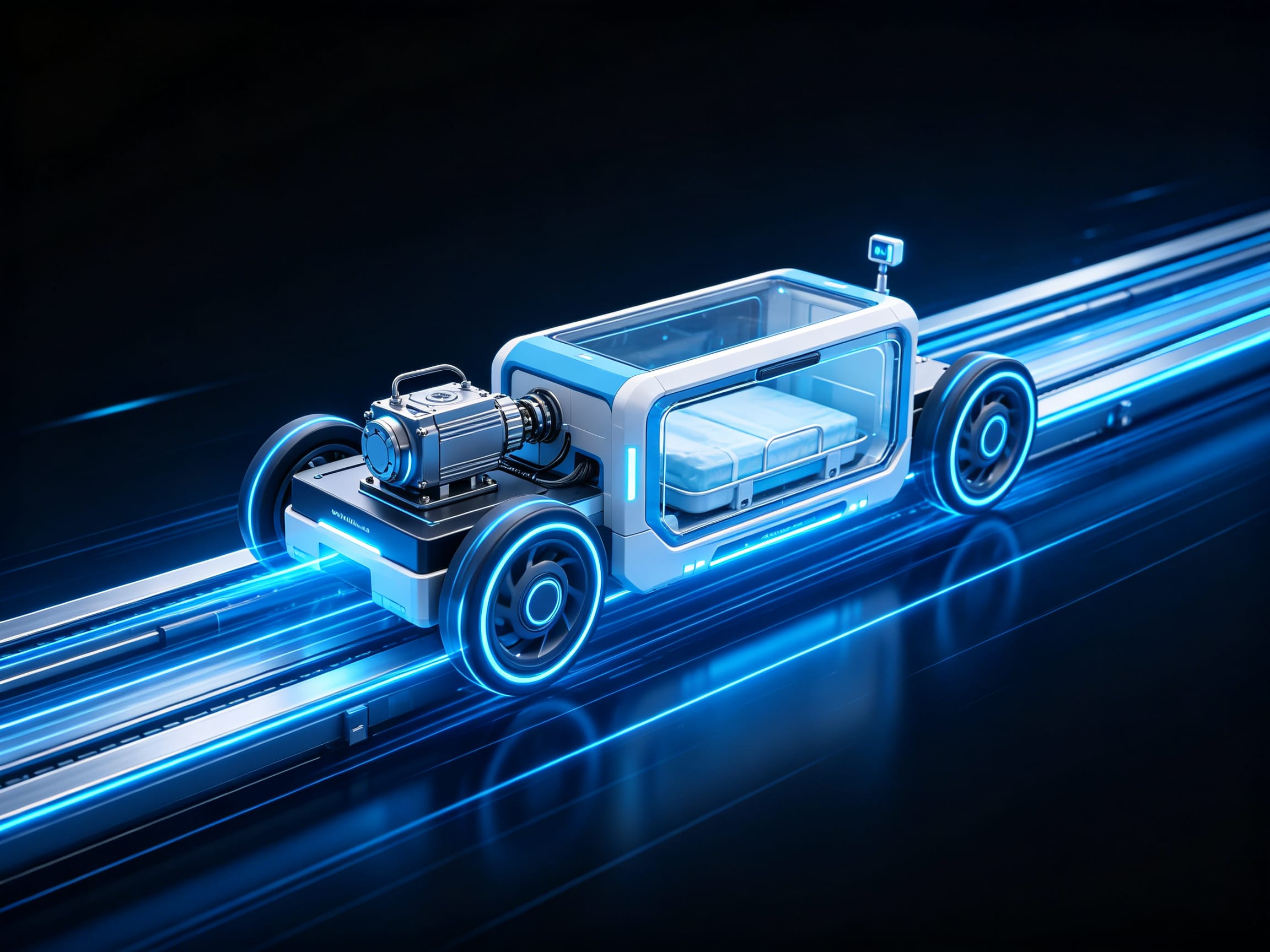
1. Integration and Lightweighting: To reduce size and weight, the industry is vigorously developing modular solutions that integrate motors, reducers (such as harmonic reducers), encoders, and drive controllers into a single unit.
2. High Dynamics and High Precision: To meet the precision operation requirements of industrial scenarios, servo systems need to possess extremely high dynamic response and positioning accuracy.
3. Fusion of Perception and Intelligence: Advanced servo systems integrate high-precision encoders, force sensors, and vision sensors, combined with AI algorithms, giving robots stronger environmental perception and adaptive control capabilities.
2. Application Solution

In this case study of a humanoid robot, an integrated servo motor was chosen to drive the core joints, aiming to achieve the design goals of lightweight design, high precision, and rapid integration.
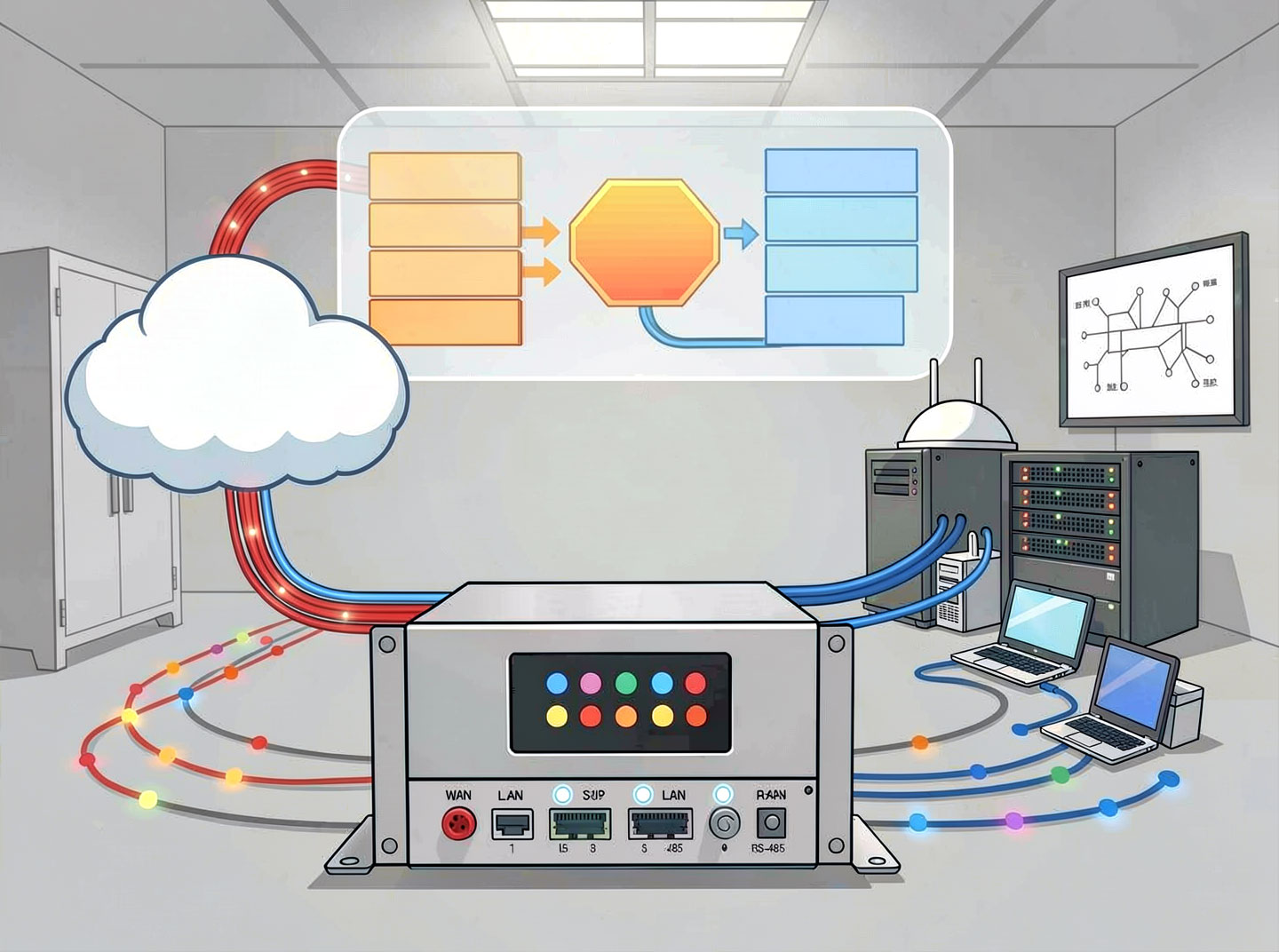
The integrated servo motor communicates with the host computer via PP (Position Position) mode, receiving and executing precise motion trajectory commands to drive the joints to complete specified actions. The user wanted this solution to maintain a small size and low power consumption of the servo system while ensuring high torque output, to meet the stringent space and energy efficiency requirements of the humanoid robot.
• Product Model: PMMB8063B-COE-0HEB (Host Computer Control) / Direct-Connected Screw
• Application Device Name: Humanoid Robot
• Approximate Quantity Per Device: 1 unit
• Functions Used: PP Mode
3. Application Product

4. Problems and Solutions
Problem Encountered:
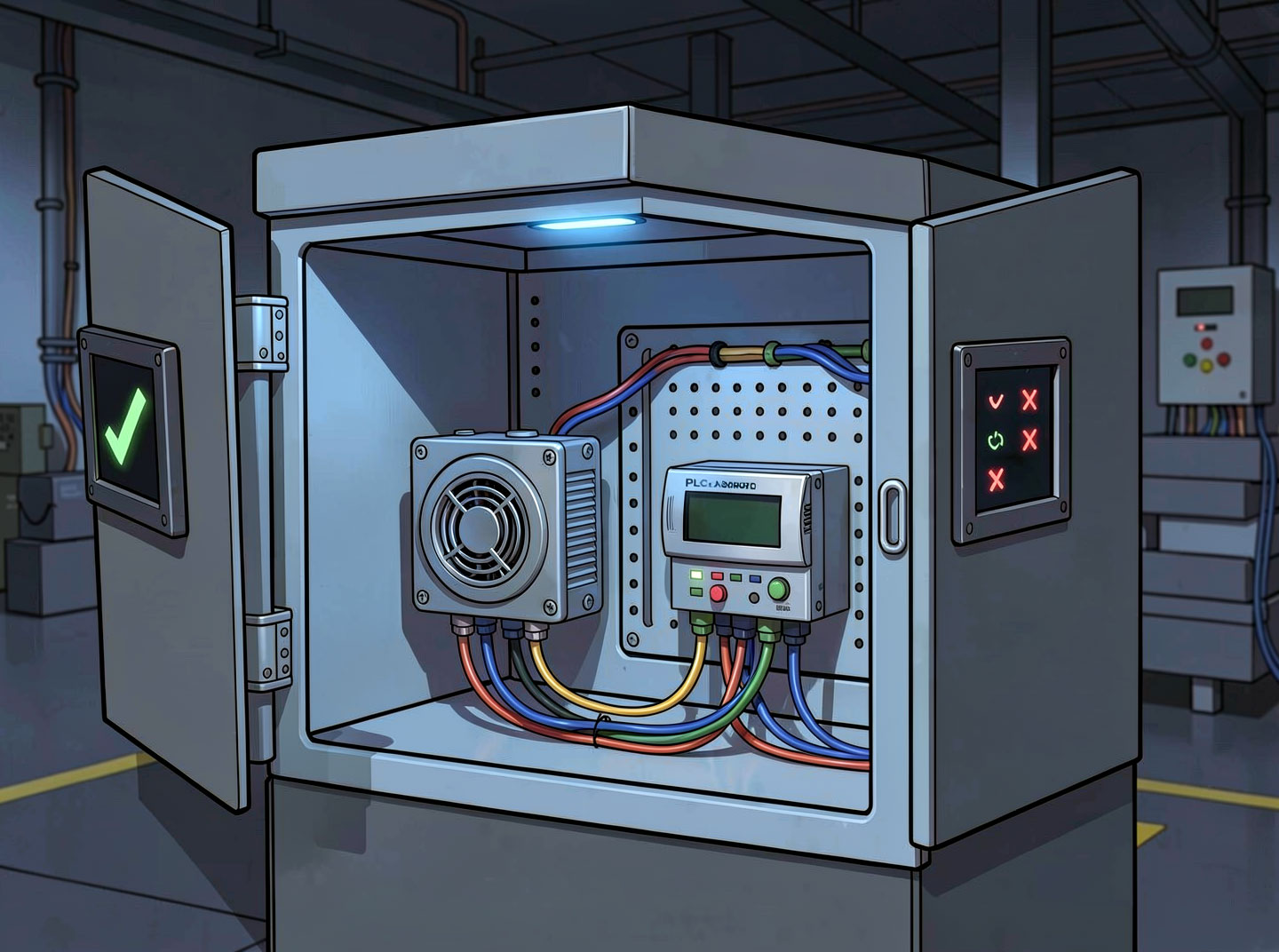
After the enable signal was removed, the brake failed to close properly, causing the load (joint or actuator) to unexpectedly drop.
Problem Analysis:
Servo motor brakes typically require a separate 24V DC power supply to drive their electromagnetic coils (brake releases when energized, locks when de-energized). The problem may involve the brake control circuit (e.g., wiring sequence), the brake power supply, or the configuration of the driver's internal control signals.
After detailed circuit troubleshooting and testing, the engineering team discovered that the 24V negative terminal (ground) of the buck module used to convert a higher voltage (potentially 48V or higher) to the required 24V for braking was incorrectly connected to the ground wire of the servo motor brake interface. This incorrect connection caused a malfunction in the brake circuit's potential reference and control logic, rendering the brake coil's control signals ineffective.
Solution:
The circuit connections were corrected according to the technical specifications. The 24V power output from the buck module was now correctly supplied only to the positive and negative terminals of the brake coil, ensuring proper isolation or common grounding with the servo driver's control signal ground, brake control signal ground, etc., strictly adhering to the wiring requirements in the product's electrical manual. After correcting the connection, the system logic returned to normal: when the host computer control signal or driver enable signal was removed, the brake reliably and instantly closed and locked, effectively preventing the load from free-falling or sliding.
This problem demonstrates that even with highly integrated and standardized "integrated servo motors," the precise design and connection of their peripheral auxiliary circuits (especially safety function circuits) remain crucial for ensuring reliable system operation. Any wiring deviation can lead to the failure of critical safety functions.
5. Summary and Conclusion
Through this application, the integrated servo motor solution effectively simplifies the mechanical and electrical design of joints. By highly integrating core technology modules, it is profoundly transforming the design paradigm of humanoid robots, bringing them superior performance, more reliable quality, and a more competitive cost structure.