[Popular Science] What is a drive-control integrated servo motor?
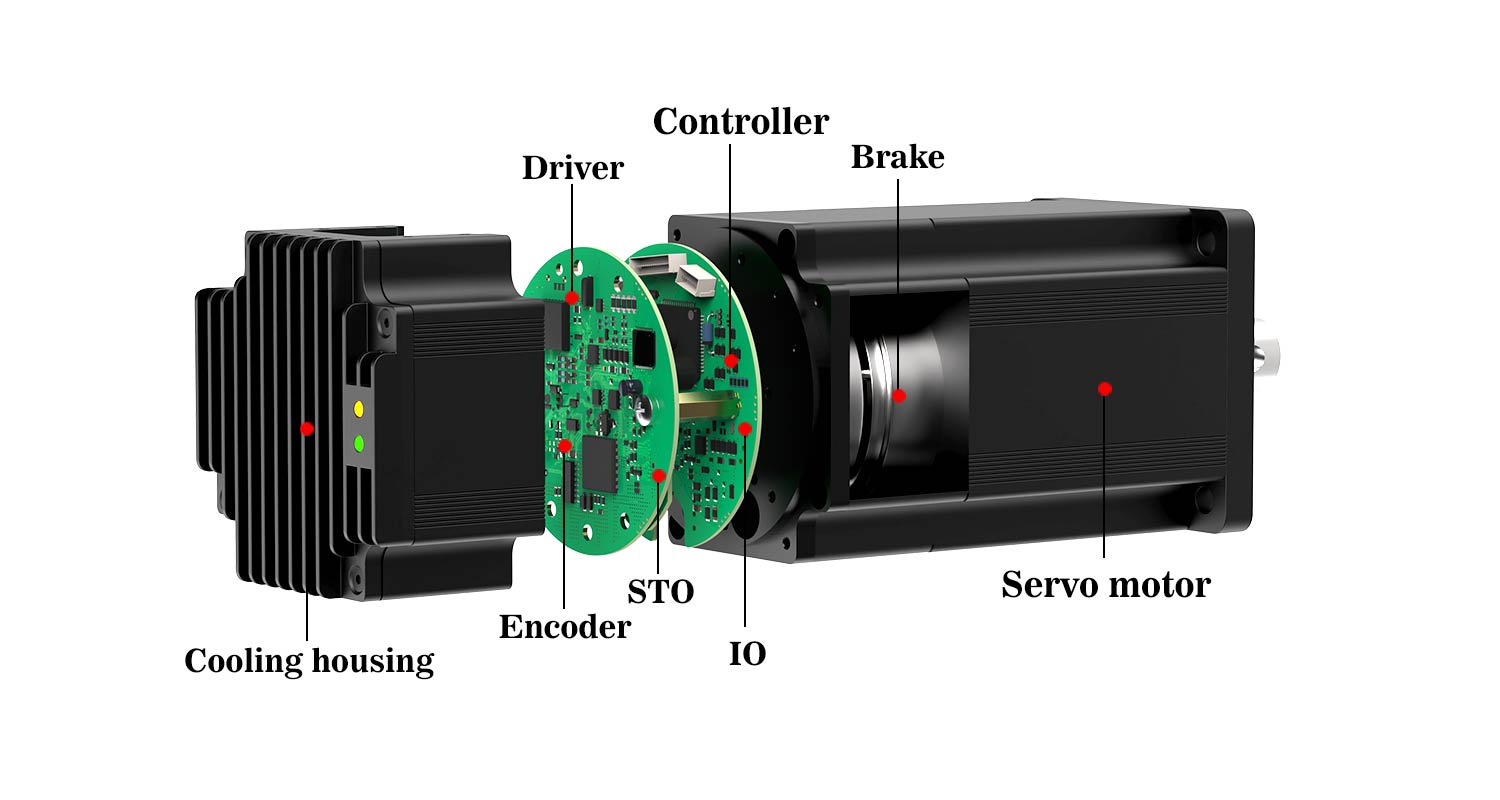
The integrated drive and control servo motor has become a shining pearl in the field of modern industrial automation with its high degree of integration, compatibility, convenience and excellent performance. It is undoubtedly an ideal choice for industry users who pursue efficient, precise and intelligent control.
1. What is a drive-control integrated servo motor?

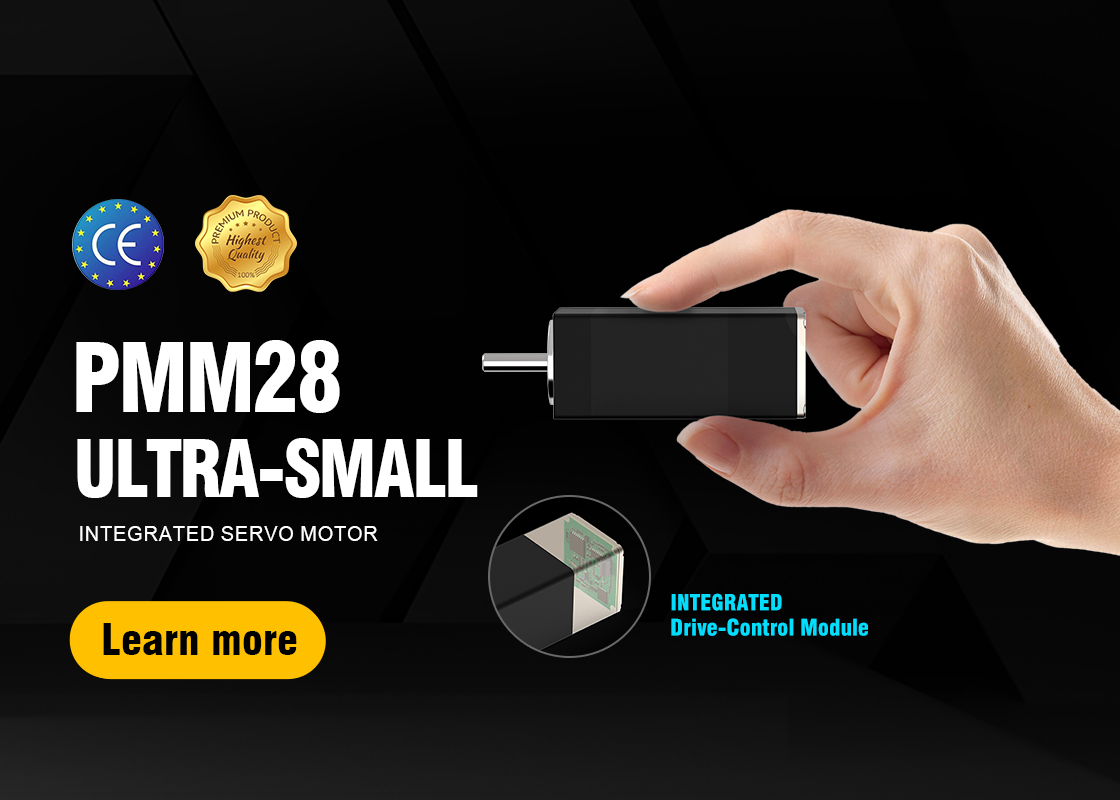
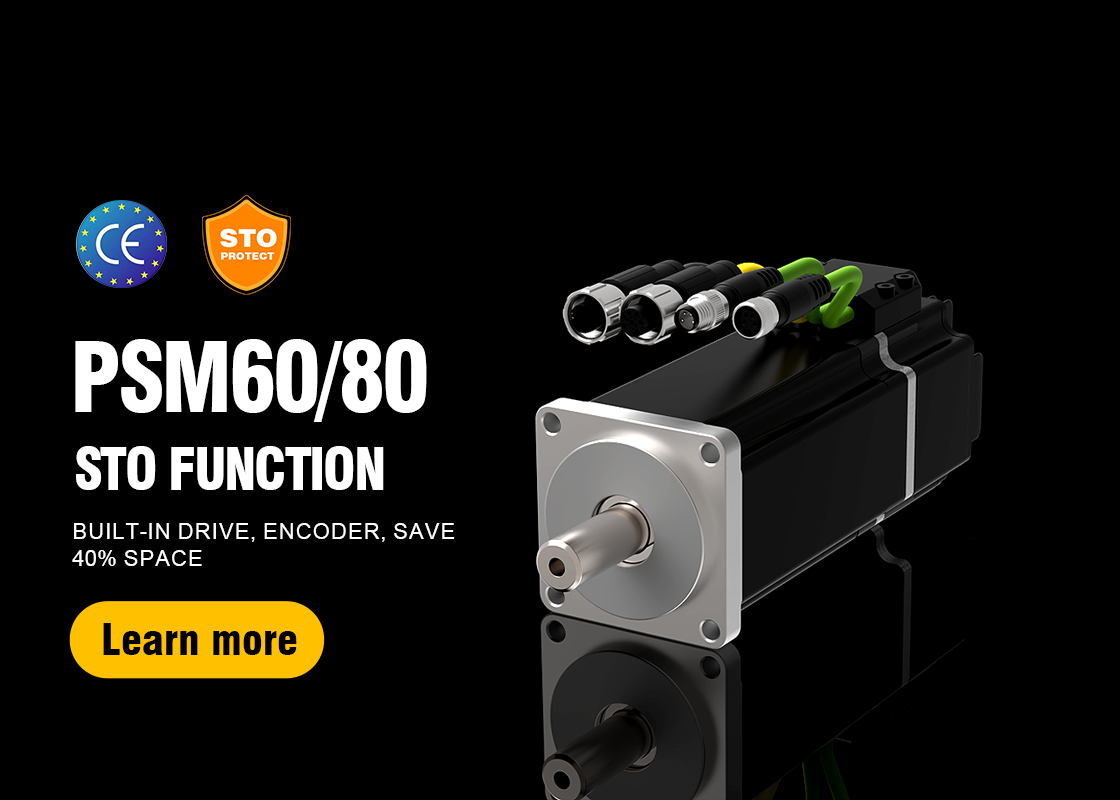
Drive-controlled integrated servo motor, as the name implies, is a servo system that integrates servo motor, encoder, and driver. It can support EtherCAT, CANopen, Modbus and other buses. Simply put, it is like the difference between a desktop computer and a laptop.
So it is easy to think of the advantage that it is small in size, without the need to deploy complex settings such as drivers, encoders, brakes (some have built-in brakes), etc., which is particularly suitable for application scenarios that are sensitive to installation space and distributed control.
If you just want to know what the drive-controlled integrated servo motor is, then knowing these is enough.
But things are not that simple!
2. Evolution
First of all, demand is undoubtedly the fundamental driving force for the rapid development of any product and even the entire industry. In the vast history, the birth of almost every innovative product is deeply imprinted with the mark of demand.
In the 21st century, an era of rapid technological development, we can foresee and experience the unprecedented rapid development of various industries from an unprecedented perspective. As one of the best industries, the automation industry has shown amazing vitality and potential. The automation industry is gradually transforming from traditional labor-intensive to technology-intensive. The core driving force of this transformation is the urgent market demand for efficient, intelligent and lightweight automation products. The automation industry has ushered in unprecedented development opportunities, and various types of automation products have sprung up like mushrooms after rain, showing a trend of blowout.
From simple mechanical arms to complex intelligent robots, from basic automated production lines to highly integrated intelligent manufacturing systems, automation products are penetrating into all areas of production and life with unprecedented breadth and depth.
Of course, we have also contributed our own strength in this feast of the automation industry. Through continuous technology research and development, product innovation and market development, we are committed to providing more efficient, intelligent and lightweight automation solutions to global customers, helping enterprises achieve digital transformation and intelligent upgrading.
1. Traditional servo system
Early servo systems achieved precise control of mechanical components through the close cooperation of core components such as servo motors, encoders, drivers, and sensors.

Traditional servo system
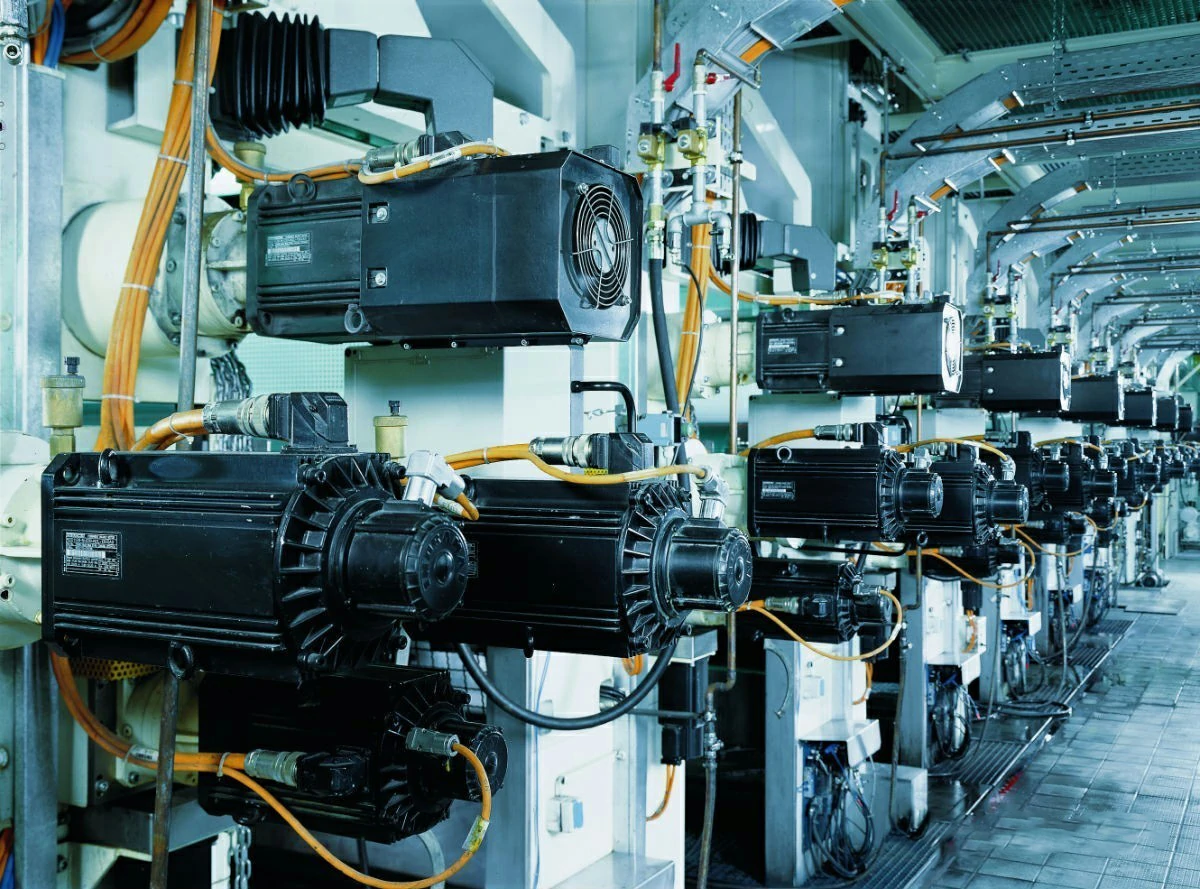
Traditional servo motor
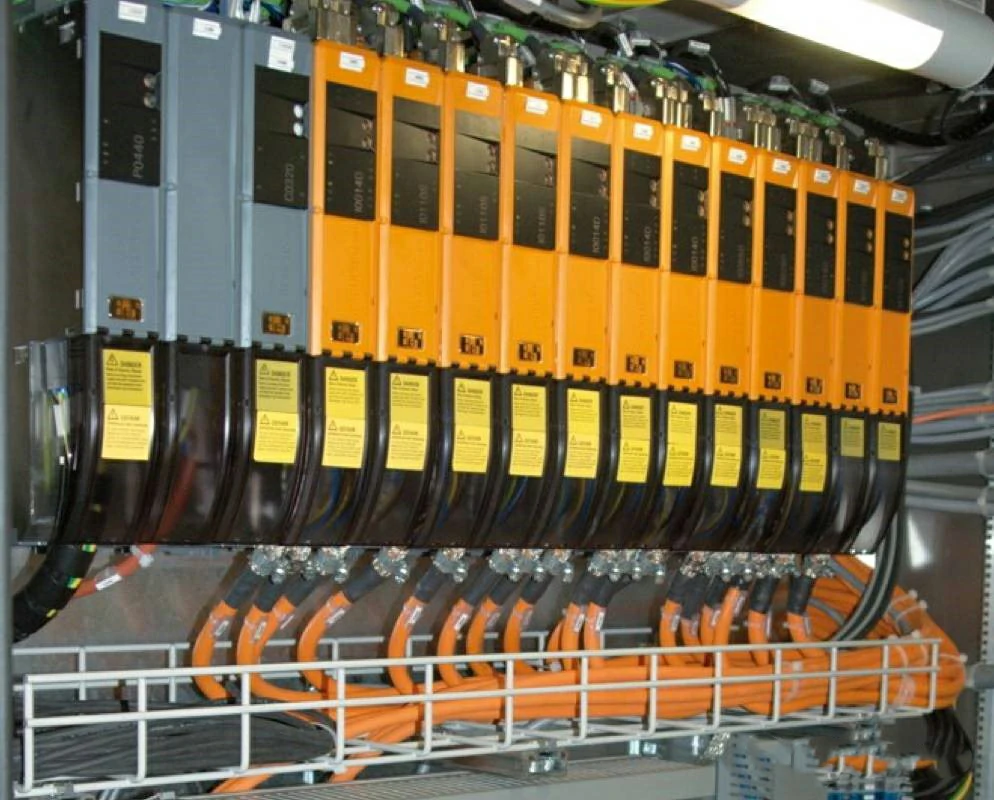
Servo drive
The traditional servo motor and servo drive are two independent product components. The former is installed on the equipment site to connect and drive the mechanical transmission load; the latter is placed in the electrical cabinet to provide the servo motor with adjustable power output on demand.
Obviously, due to the large number of servo axes, when using the hardware system layout of this split servo drive and motor product, the equipment production line must have an electrical cabinet with a large enough internal space to carry the servo drives equivalent to (corresponding to) the number of servo motors. Therefore, the primary problem caused by the centralized installation of a large number of servo drives in the cabinet is the space occupation of the equipment.
Correspondingly, a series of application costs will be increased. For example: a larger power cabinet heat dissipation and ventilation device (such as air conditioning) is required to help cool these power components in the confined space, complex electrical cabinet production, and installation of a large number of cabinet components.
Of course, another more troublesome thing will be brought about, which is a large number of cables. In such a system layout, each servo motor needs to be connected to the power supply, feedback (and brake) port of the servo drive through a cable.
On the one hand, there is the hardware cost, including a series of components necessary for line laying, from servo motor cables to bridges, wire ducts, plugs, etc., which are directly affected by the number of servo axes and the distance between devices.
On the other hand, the increase in the number of cables, line nodes and mechanical equipment complexity has brought about huge consumption of line laying engineering costs and labor hours, as well as extremely high error probability and error correction costs during wiring and wiring.
In addition, a large number of motor cables in the equipment, like countless high-power RF antennas, have become the source and hidden danger of electromagnetic noise interference, affecting the system's EMC electromagnetic compatibility performance, equipment stability and operating efficiency. Of course, this problem will continue, and the solution is probably to avoid and reduce it.
So, in simple terms, the main problems and challenges of using the traditional servo drive and motor split layout in large multi-axis motion control equipment systems are:
• Large electrical cabinet volume and space occupation
• Complex equipment wiring and wiring
• Higher system application and engineering integration costs
2. Integrated servo motor

Distributed control system including integrated servo motor
So the integrated servo motor came into being, and with the development of bus communications such as EtherCAT, CANopen, Modbus, etc., the integrated servo motor is like a duck in water in the distributed system. For example, in the EtherCAT communication system, a motion controller or PLC can easily control several or more than a dozen integrated servo motors.
| Category | Split low-voltage servo | Split AC servo | Integrated servo motor |
| Voltage | 24/36/48V DC | 220/380V AC</ span> | 16~52V DC |
| Power supply | DC switching power supply /battery | Industrial frequency AC power | DC switching power supply /battery |
| Encoder | Incremental encoder | Absolute encoder | Absolute encoder |
| Function | Speed/Position(A few have torque) | Full functionality | Full functionality |
| Cost | High | High | Slightly lower |
| Encoder+Driver+Motor+Cable | Motor+A small amount of cables | ||
| Performance | Medium | High | Medium |
| Affected by voltage | Some products have powerful performance | The drive and motor are more perfectly matched, and the performance is limited to voltage | |
| Installation complexity | High | High | Low |
| Power cord, communication line, encoder line, driver, encoder, motor | Power cord, communication line, integrated servo motor | ||
| Cost-effectiveness | Slightly higher | High | High |
| Low installation efficiency, many fault points, difficult maintenance, high layout cost (electric control cabinet) | High installation efficiency, few failure points, simple maintenance, low layout cost, convenient expansion axis | ||
Advantages of integrated servo motors:
• Highly integrated, motion control + encoder feedback + motor drive + motor + brake, Greatly reduces the size and weight of the equipment. At the same time, it simplifies system wiring and reduces potential fault points
• Run data and parameter settings through various communication networks, as well as input networks for operation instructions
• Optional EtherCAT, CANopen, Modbus, etc., support standard CiA402
• Configurable I/O
• Rich diagnostic protection mechanism, automatic speed planning, automatic load adjustment, closed-loop control, support for stall detection
......
Disadvantages of integrated servo motors:
Integrated servo motors are low-voltage products, so they are inevitably affected by voltage. Their power, torque, speed, etc. will be within the normal range. For example, our servos are generally below 1500W in power, rated speed 3000, and torque 2 times overload.
On the other hand, since the PCB and the motor are together, the tolerance conditions of the components must be considered in many cases, so some extremely harsh environments are not applicable, such as extremely cold areas/ultra-high temperature areas.
With the passage of time and the development of science and technology, I believe these problems will gradually decrease or even disappear.
3.Derivatives
The birth of the integrated servo motor is undoubtedly a success, but sometimes it seems to have excessive or insufficient performance.
The integrated servo motor includes a servo motor, an encoder, and a driver. The basic structure has been determined, but it seems that it is feasible to replace the servo motor with a stepper motor or a brushless motor, so that the cost will not be reduced.
Thus, integrated brushless motors, integrated stepper servo motors, etc. came from this. Of course, in terms of performance, from high to low, they are integrated servo motors, integrated brushless motors, integrated stepper servo motors, and integrated stepper motors.
Broadly speaking, these are actually all considered servo systems. Many companies have different names for integrated drive and control products, such as integrated, hybrid, and integrated, but the naming standards are basically based on the properties of the main motor, driver, and other components.
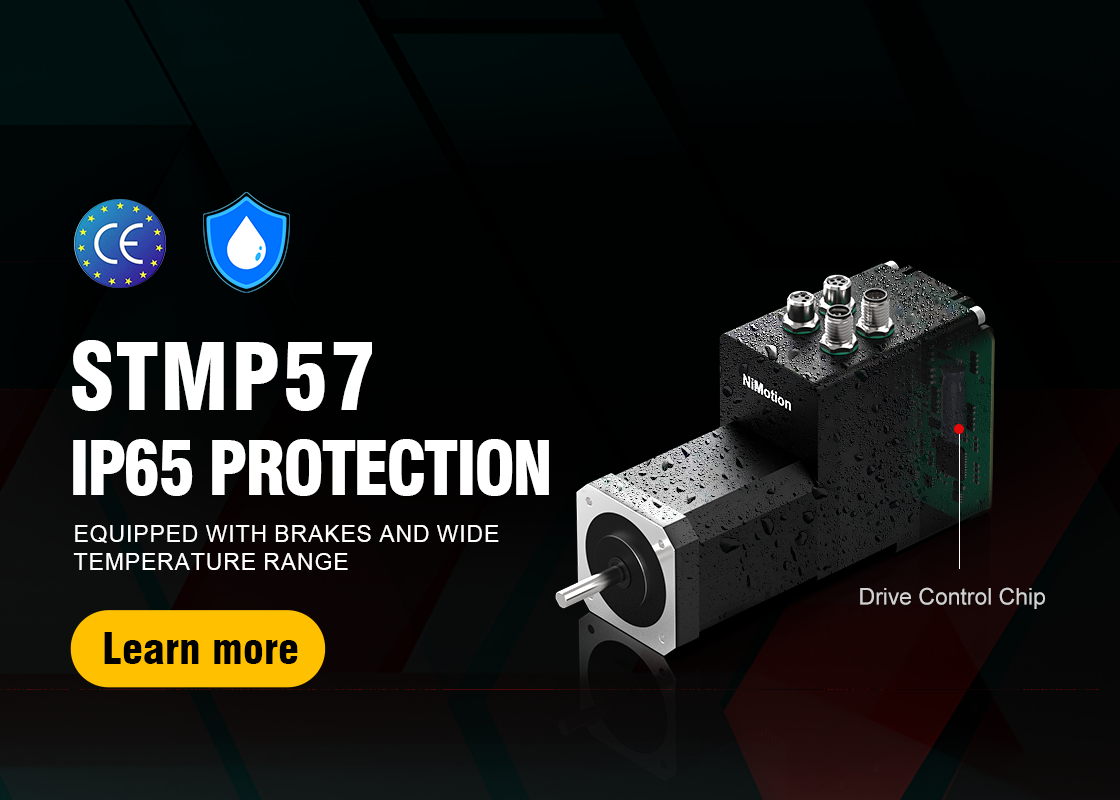
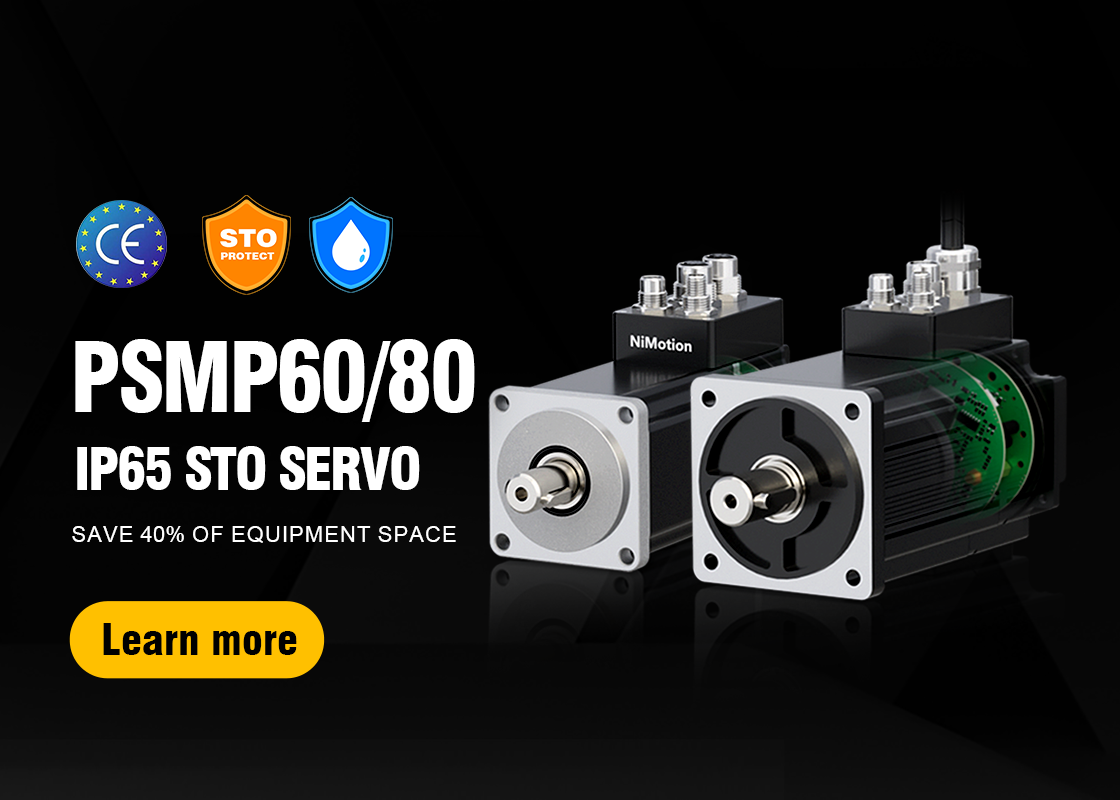
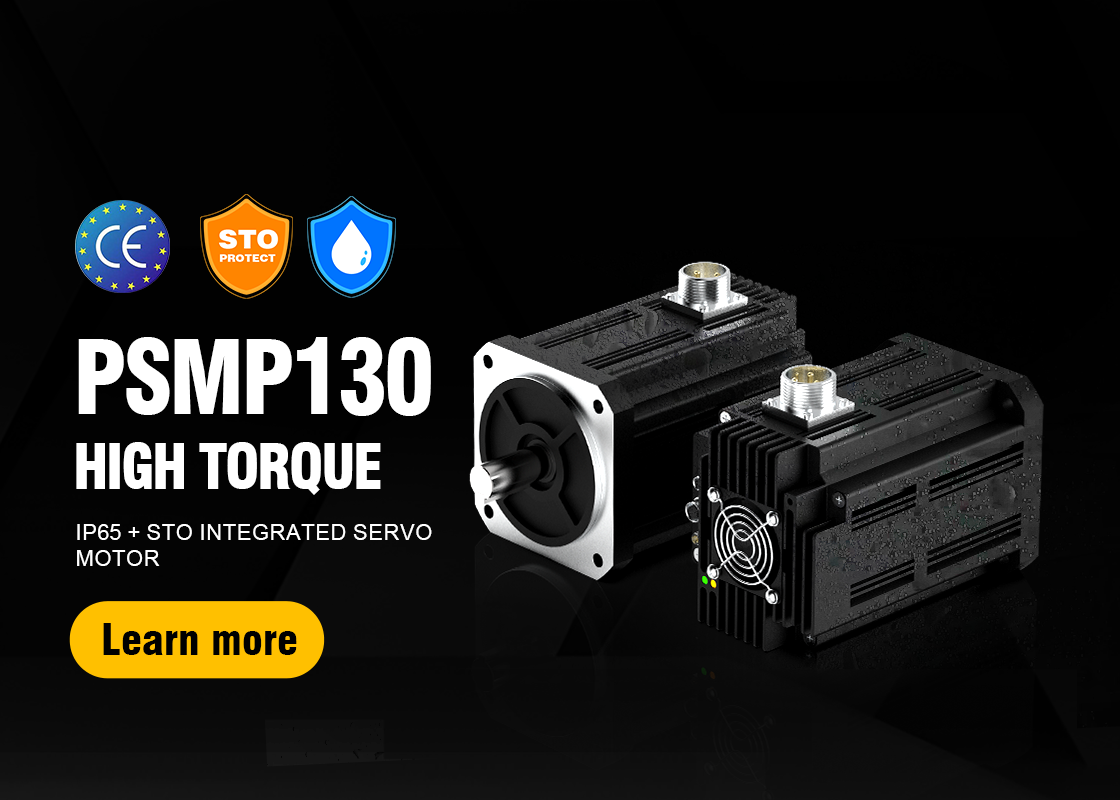
Sometimes, we can't wait to add all the functions that can be added, such as adding a brake on the basis of an integrated servo motor, upgrading the encoder from single turn to multi-turn, adding STO, adding IP65 protection, AI, DI/DO configuration, firmware communication protection, and adaption to controllers from other manufacturers.
Often, one or some new functions added during research and development will be transferred to the entire appropriate product line, so the product has derived many sub-models in the continuous iteration. Please refer to another article for the specific differences.
4.Challenges
In recent years, with the continuous advancement of science and technology and the increasing diversification of consumer demand, a large number of similar integrated products have emerged in the market. This phenomenon has undoubtedly injected new vitality and hope into the entire industry, and the significance behind it far exceeds the increase in the number of products themselves. This is not just a simple market phenomenon, but also a profound industry change and a leap in consumer cognition, which is worth our careful appreciation and analysis from multiple dimensions.
From the perspective of market segmentation, the rise of integrated products has undoubtedly brought unprecedented development opportunities to this segment. It has prompted related companies to continue to work hard and improve their market competitiveness through technological innovation, product optimization and other means, thereby promoting the prosperity and development of the entire industry. This benign market competition mechanism is not only conducive to improving product quality and meeting the growing needs of consumers, but also helps to promote the establishment and improvement of industry standards, laying a solid foundation for the long-term development of the industry.
However, while we are delighted with the prosperity of the integrated product market, we have to face up to the harsh market environment hidden behind it. With the surge in the number of similar products, market competition has become increasingly fierce, and problems such as price wars and homogeneous competition have become increasingly prominent. This not only brings huge operating pressure to companies, but also easily leads to chaos in the market order and a decline in consumer trust. Therefore, how to maintain stability in the fierce market competition, adhere to innovation-driven development, and take a differentiated development path has become an issue that every company must consider carefully.