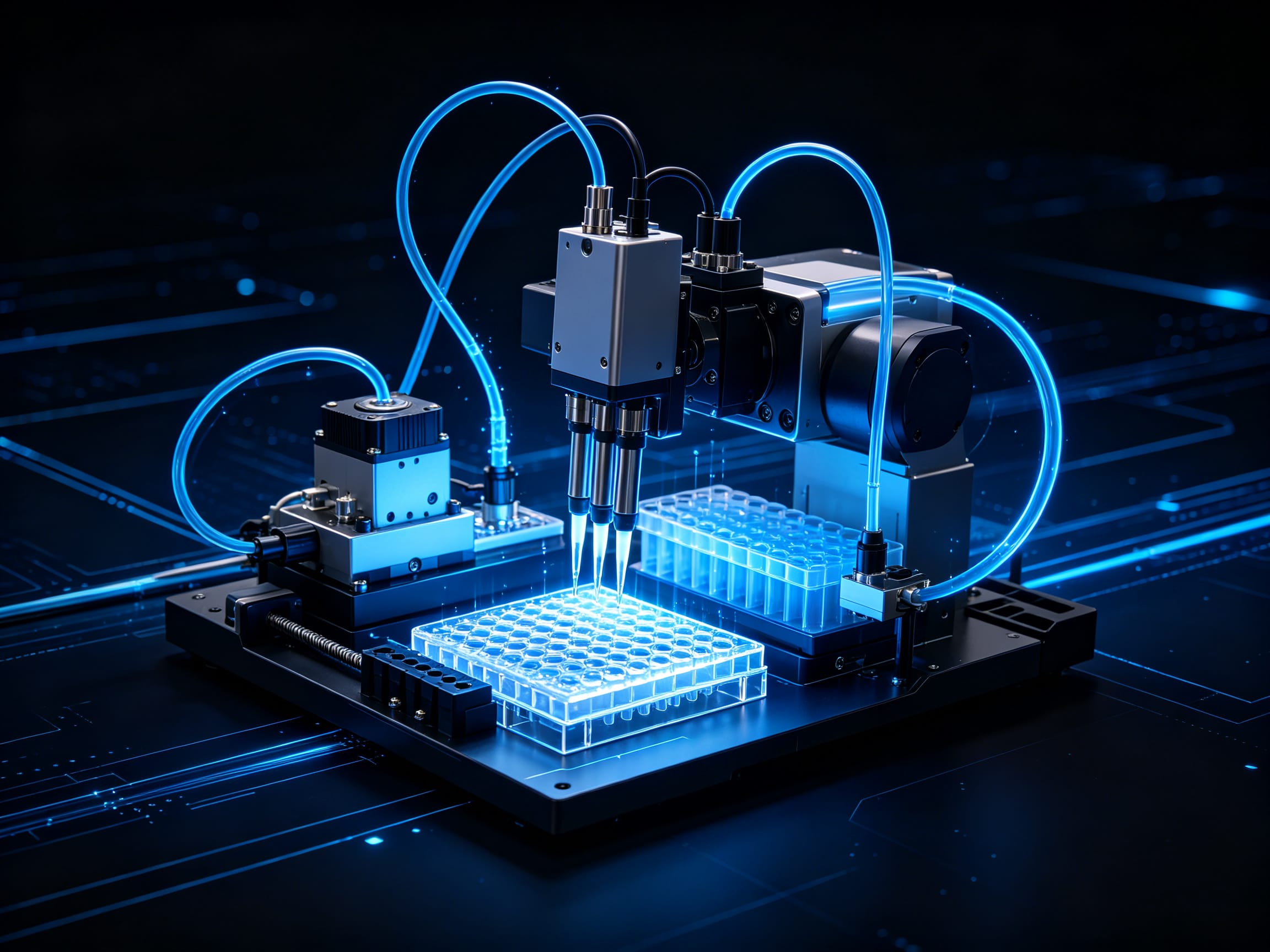
Application case of integrated stepping servo motor in lens autofocus equipment
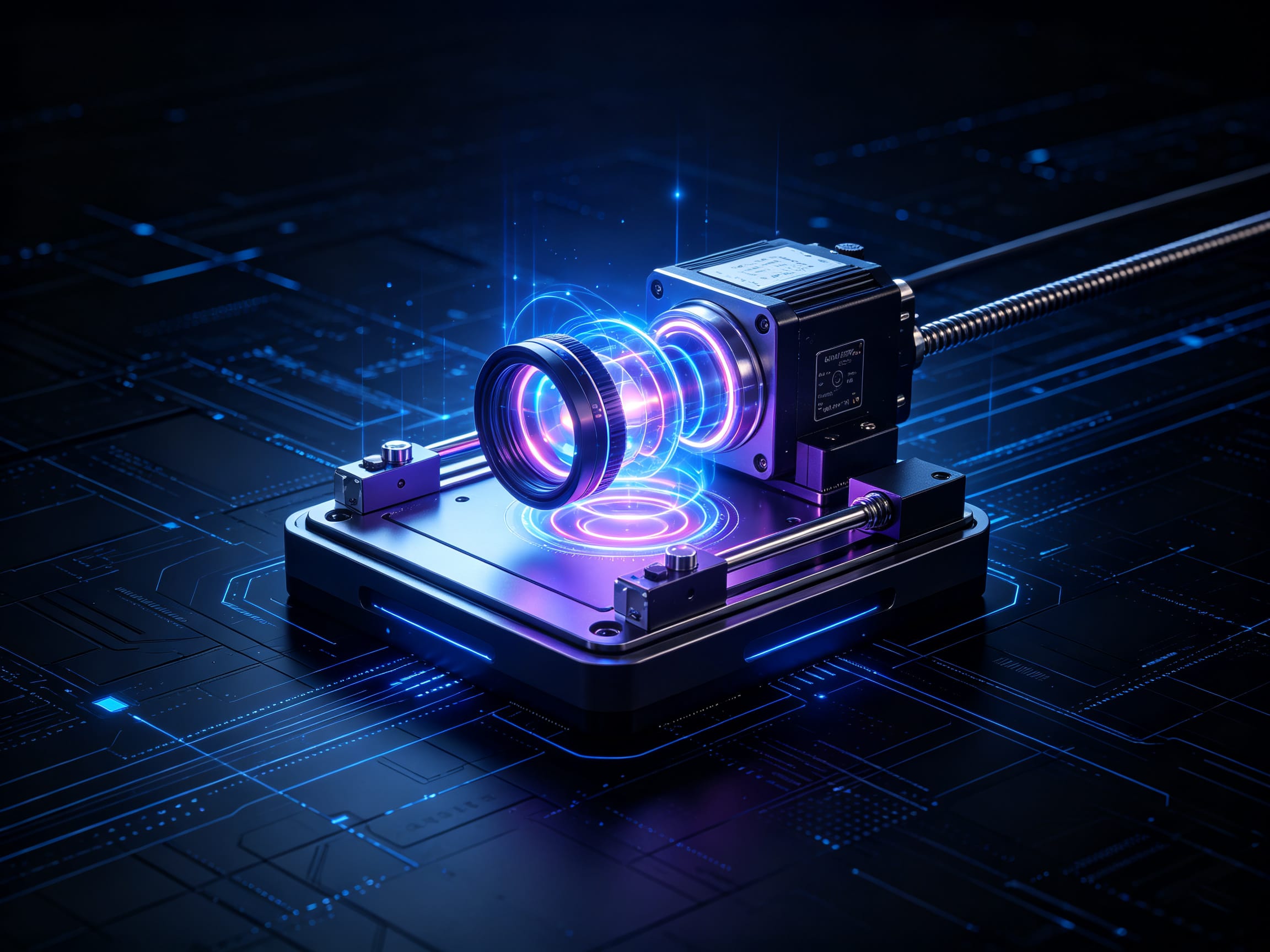
In the field of optical lens manufacturing, high-precision focusing is a core process for ensuring image quality. To address the low-speed jitter and insufficient positioning accuracy of traditional stepper motors, the PMM28 series integrated servo motors are used. By flexibly switching between PP (position) and PV (velocity) modes, they significantly improve the smoothness and repeatability of lens focusing equipment.

1. Device Introduction
Lens focusing equipment is primarily used for precision focusing of optical lenses. Its core requirements include:
1. Low-speed stability: No jitter within the 0.1-1 mm/s speed range
2. Fast response: Single focus cycle ≤ 0.5 seconds
2. Application Solutions and Products


1. Core Product Configuration
• Servo Motor Model:
PMM2820B-485-0FS (integrated design, supports Modbus-RTU protocol)
• Control Mode:
PP Mode: Used for presetting the focus position trajectory
PV Mode: Real-time adjustment of focus speed to accommodate different lens materials
2. System Integration Highlights
• Dynamic parameter configuration via RS485 bus communication with the host computer
• Adaptive filtering algorithm suppresses mechanical resonance during low-speed operation
3. Problem and Solution
Problem: The focusing lens exhibits periodic oscillation at 0.2 mm/s.
Solution: Enabling servo motor damping control and optimizing the speed loop PID control function
Technical Optimization Details:
• Comparative tests show that the servo motor's vibration amplitude at 0.1 mm/s is 90% lower than that of a stepper motor.
• Dynamic variable speed focusing is achieved through PV mode, adapting to the focusing requirements of lenses with different curvatures.
4. Application Results
1. Improved Accuracy: Focus repeatability reaches ±3 μm, and the yield rate increases to 99.6%.
2. Improved Efficiency: Single focus time is reduced to 0.3 seconds, increasing production capacity by 40%.
3. Reduced Cost: The integrated design reduces wiring complexity and reduces maintenance costs by 30%.
5. Summary
The application of the PMM28 series integrated servo motors has overcome the technical bottleneck of micron-level motion control in lens focusing equipment. This case demonstrates the advantages of integrated servo motors as a replacement for high-precision optical equipment, providing a standardized solution for applications such as lens assembly and semiconductor lithography machine focusing. Future applications include medical endoscopy and AR/VR lens inspection.
Advantages of integrated stepper/servo motor
High integration improves the portability of equipment: The integrated stepper servo motor integrates functional modules such as stepper motor, servo driver, encoder and controller, which greatly reduces the size and weight of the equipment. At the same time, it simplifies system wiring and reduces potential failure points.
Flexibility to meet diverse needs: The integrated stepper servo motor supports CANopen/Modbus communication and can be flexibly controlled and adjusted as needed to adapt to different work requirements.
High-precision positioning improves measurement accuracy: The integrated stepper servo motor has high positioning accuracy and can achieve high-precision positioning of mobile equipment.
Multiple control modes: support PP, VM, PV, PT, HM, IP, CSP, CSV, CST standard modes; support NiMotion position mode, NiMotion speed mode, NiMotion torque mode.
High-speed response improves equipment efficiency: The integrated step servo motor has a fast response speed and can quickly adjust the angle and position of the detection equipment. This means that the detection unit can obtain sample information more quickly, improving the working efficiency and responsiveness of the equipment.
Complete alarm function: The integrated step servo motor can detect hardware failures in time to avoid affecting system operation. It is equipped with multiple safety protection functions. The LED flashing alarm can intuitively display the current status of the motor. It also has protection functions such as overvoltage/undervoltage, overheating, overcurrent, and stall alarm.