Application Case of Integrated Stepper Servo Motor in North Finder
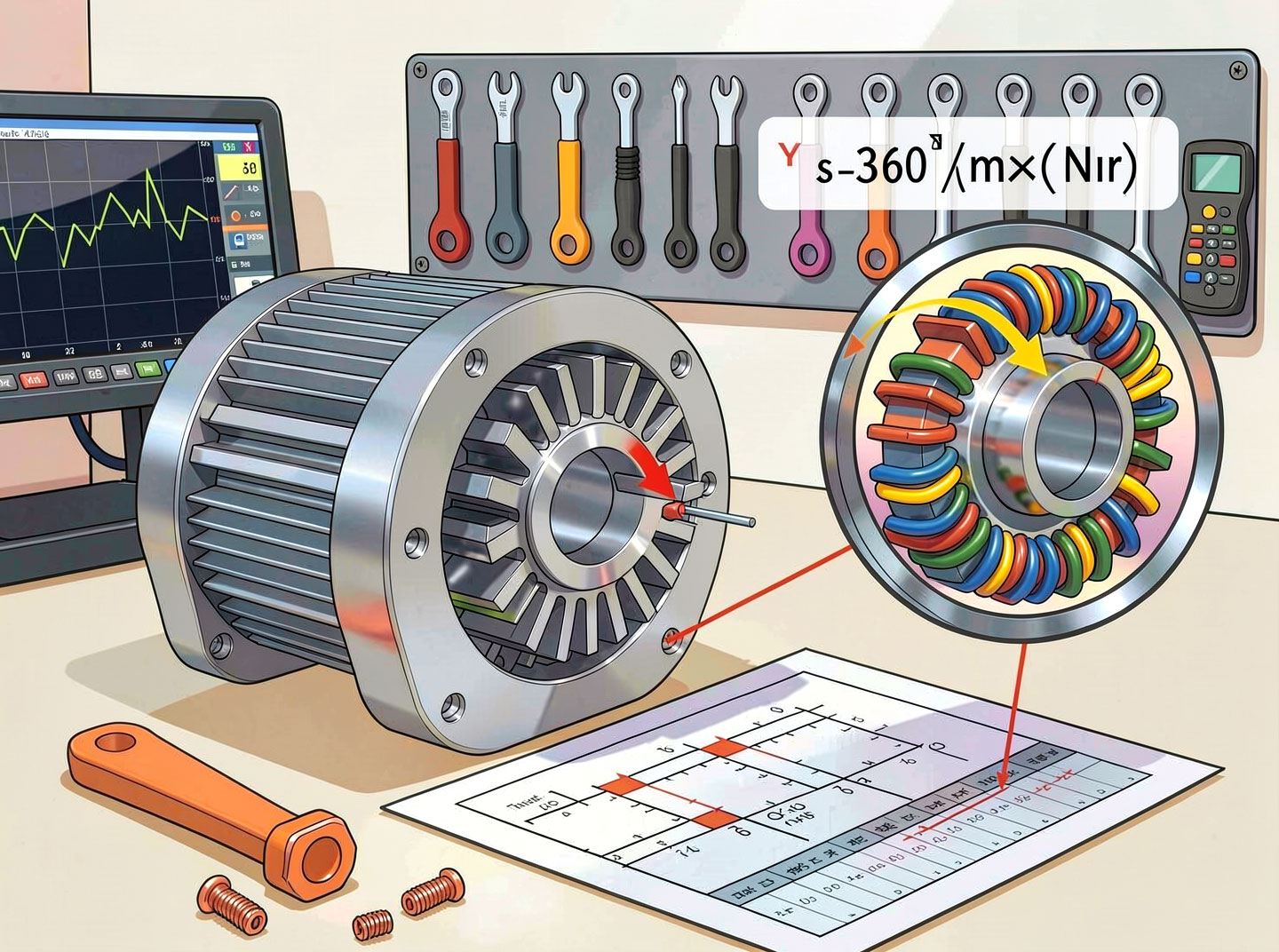
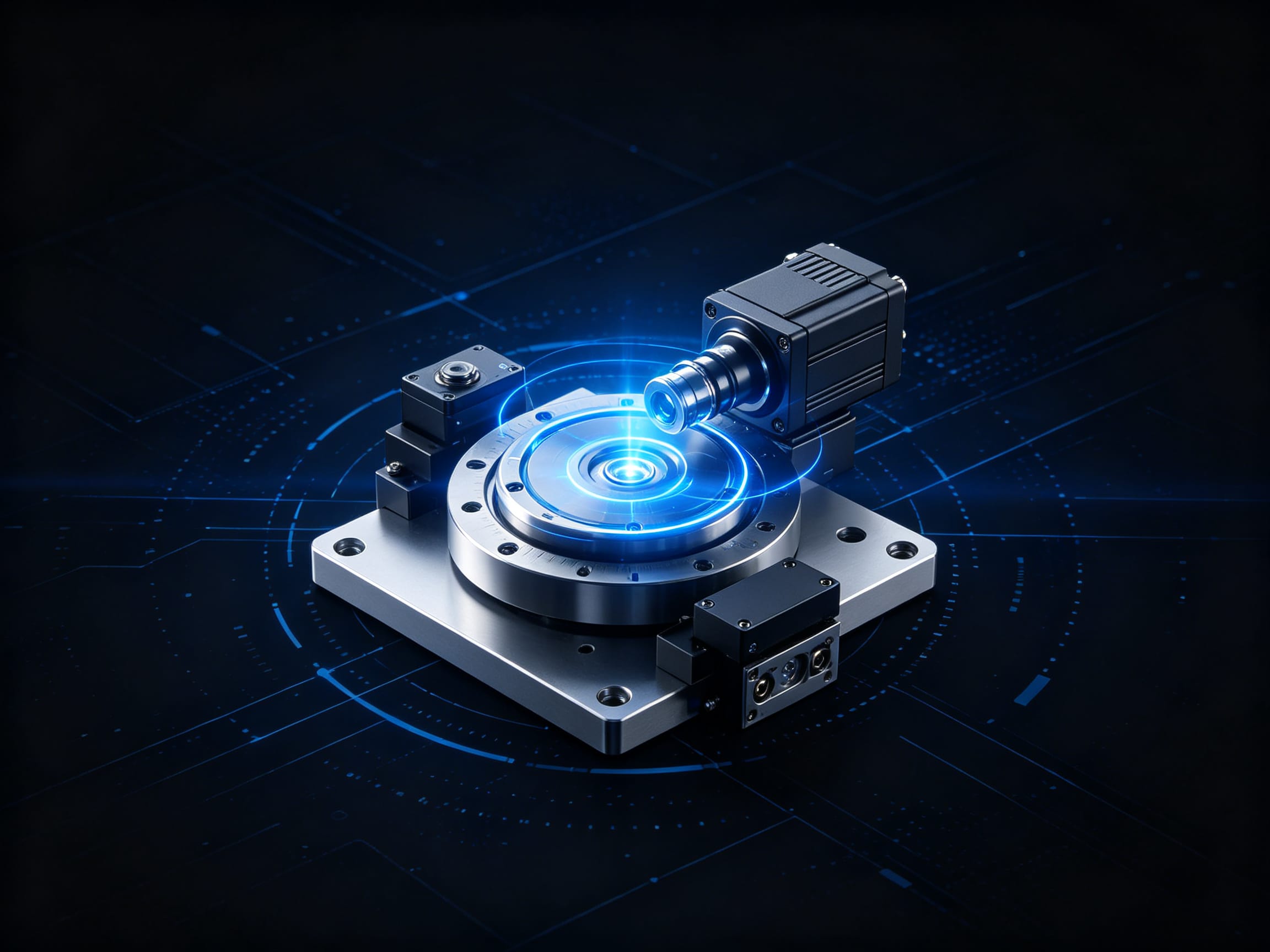
North-finding instruments (such as fiber optic north-finding instruments) are crucial devices for rapidly and autonomously determining true north, with significant military, surveying, navigation, and industrial applications in areas such as Earth rotation tracking and azimuth positioning. Traditional north-finding systems face challenges in azimuth adjustment, stability, response speed, and integration. Integrated stepper servo motors, with their high precision, fast response, compact structure, and ease of control, provide an ideal drive solution for the azimuth adjustment mechanism of north-finding instruments.

1. Application Scheme

The integrated stepper servo motor is applied to the azimuth adjustment mechanism of the north-finding instrument. The specific scheme is as follows:
1. Driven Object: The azimuth rotation platform or gyroscope mounting bracket of the north-finding instrument.
2. Control Method: Pulse/direction or bus command control is used, with azimuth angle commands sent by the main control system of the north-finding instrument.
3. Integrated Design: The motor is directly mounted on the north-finding instrument base, driving the platform rotation through a reduction mechanism (such as a harmonic reducer), ensuring a compact structure and high transmission accuracy.
4. Feedback Closed Loop: The motor's built-in encoder provides real-time position feedback, achieving closed-loop control and ensuring azimuth positioning accuracy at the arcsecond level (e.g., within ±5 arcseconds).
5. Dynamic Performance: During north-finding, the motor needs to rotate quickly and smoothly to the specified azimuth and remain stable during measurement to avoid vibration interference with the gyroscope signal.
This solution successfully replaces the traditional separate stepper motor + driver solution or DC servo system, improving system reliability, accuracy, and response speed.
2. Application Product
_20260113105041A160.jpg)
In this application, an integrated stepper servo motor was selected.
Model: STM4234B-485-MF-0FS
Functions used: Single-turn position recovery memory function, zero-point setting, absolute position mode.
3. Problems Encountered and Solutions
Challenge 1: Balancing High Precision and Fast Response
• Problem: The north-finding instrument requires both fast azimuth adjustment (shortening north-finding time) and high precision (ensuring accurate northward positioning). Traditional stepper motors are prone to step loss or slow response, while servo systems are costly and complex to integrate. • Solution: An integrated stepper servo motor is adopted, eliminating the risk of missed steps through closed-loop control. Combined with high subdivision and optimization algorithms, positioning accuracy within 0.01° and millisecond-level response are achieved.
Challenge 2: Environmental Adaptability and Stability
• Problem: North-finding instruments are often used in outdoor, vehicle-mounted, or shipboard environments, subject to vibration, temperature variations, and electromagnetic interference.
• Solution: An integrated motor with an IP65 protection rating is selected, featuring integrated filtering and anti-vibration design. A temperature drift compensation algorithm ensures stable operation within a temperature range of -20°C to 60°C.
Challenge 3: System Integration and Space Constraints
• Problem: North-finding instruments have a compact structure. Traditional separate "motor + driver + controller" solutions occupy a large space and have complex wiring.
• Solution: The integrated design significantly saves installation space, reduces external wiring, and simplifies integration with the main controller through bus communication, improving overall reliability.
Challenge 4: Interference of Dynamic Processes on Gyroscope Signals
• Problem: Vibration or electromagnetic noise may be generated during motor start-up, shutdown, or commutation, affecting the detection of weak signals by the fiber optic gyroscope.
• Solution: Optimize the motor's acceleration and deceleration curves (e.g., S-curves), adopt low-vibration design and shielding technology to ensure the motor remains silent or operates smoothly at extremely low speeds during the north-finding measurement phase.
4. Summary
This case study demonstrates the successful application of an integrated stepper servo motor in high-precision orientation positioning equipment. It effectively addresses the shortcomings of traditional drive solutions in terms of accuracy, response, integration, and environmental adaptability, providing a reliable technical reference for similar measuring instruments requiring precise motion control. With technological advancements, integrated motors will play a crucial role in more high-end equipment in the future.