Application Case of Integrated Stepper Servo Screw Motor in Fluorescence Microscopy
In life science research, biomedical testing, and materials analysis, fluorescence microscopy, with its high resolution and high sensitivity, has become an indispensable key device in laboratory and clinical work. Traditional fluorescence microscopes often employ manual adjustment or low-precision drive schemes for their stages, which pose challenges in scenarios requiring high-precision positioning and stability, such as high-resolution real-time imaging and long-term live cell tracking.
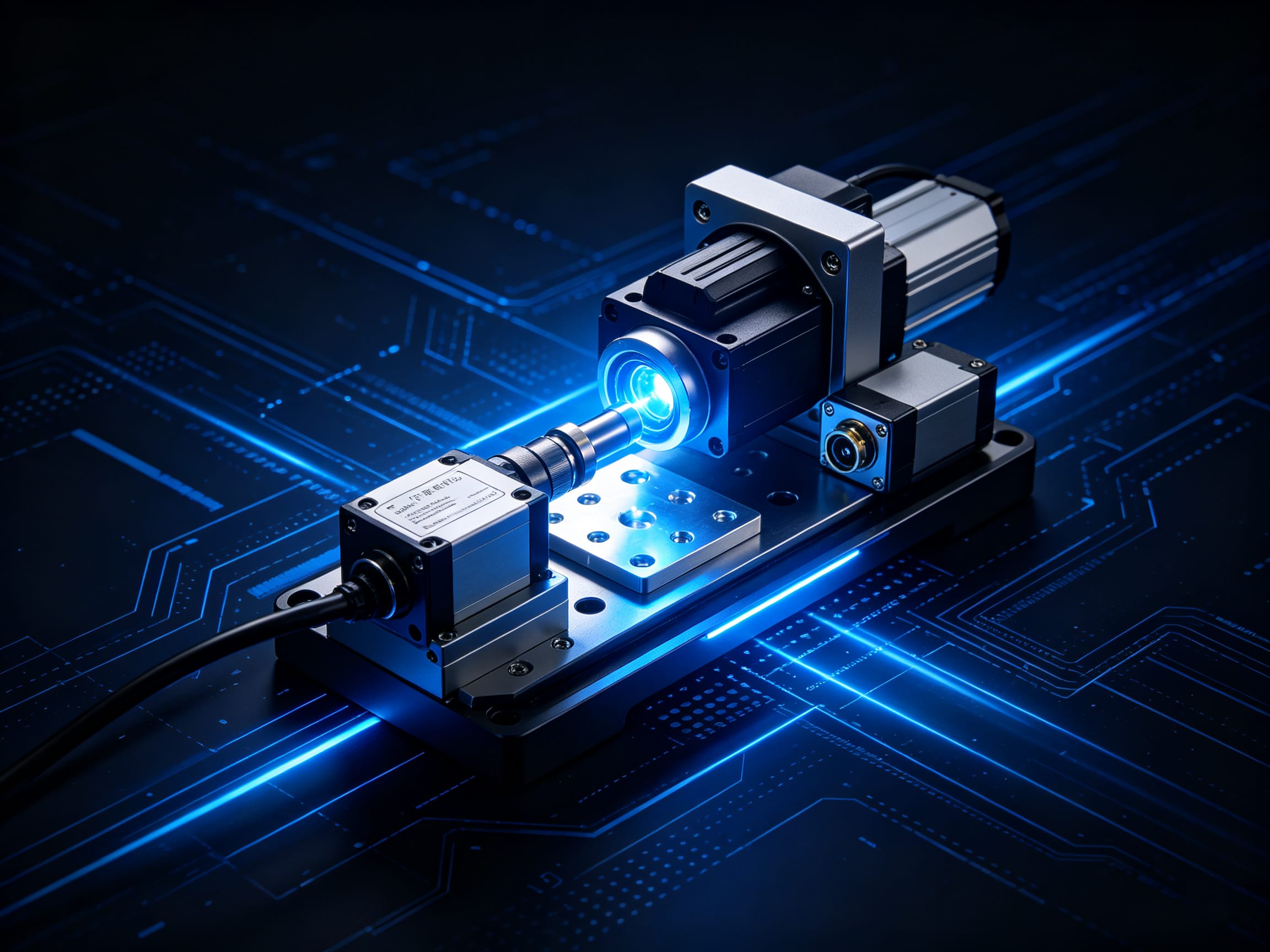
The integrated stepper servo screw motor, by integrating the stepper motor, driver, encoder, and screw into a single design, introduces closed-loop feedback and torque control capabilities of a servo system while maintaining the stepping accuracy of the stepper motor. This effectively improves the system's micrometer-level (and even sub-micrometer-level) motion positioning accuracy, response speed, and operational stability, making it the preferred solution for the core drive component of precision observation equipment such as fluorescence microscopes.

I. Equipment Introduction
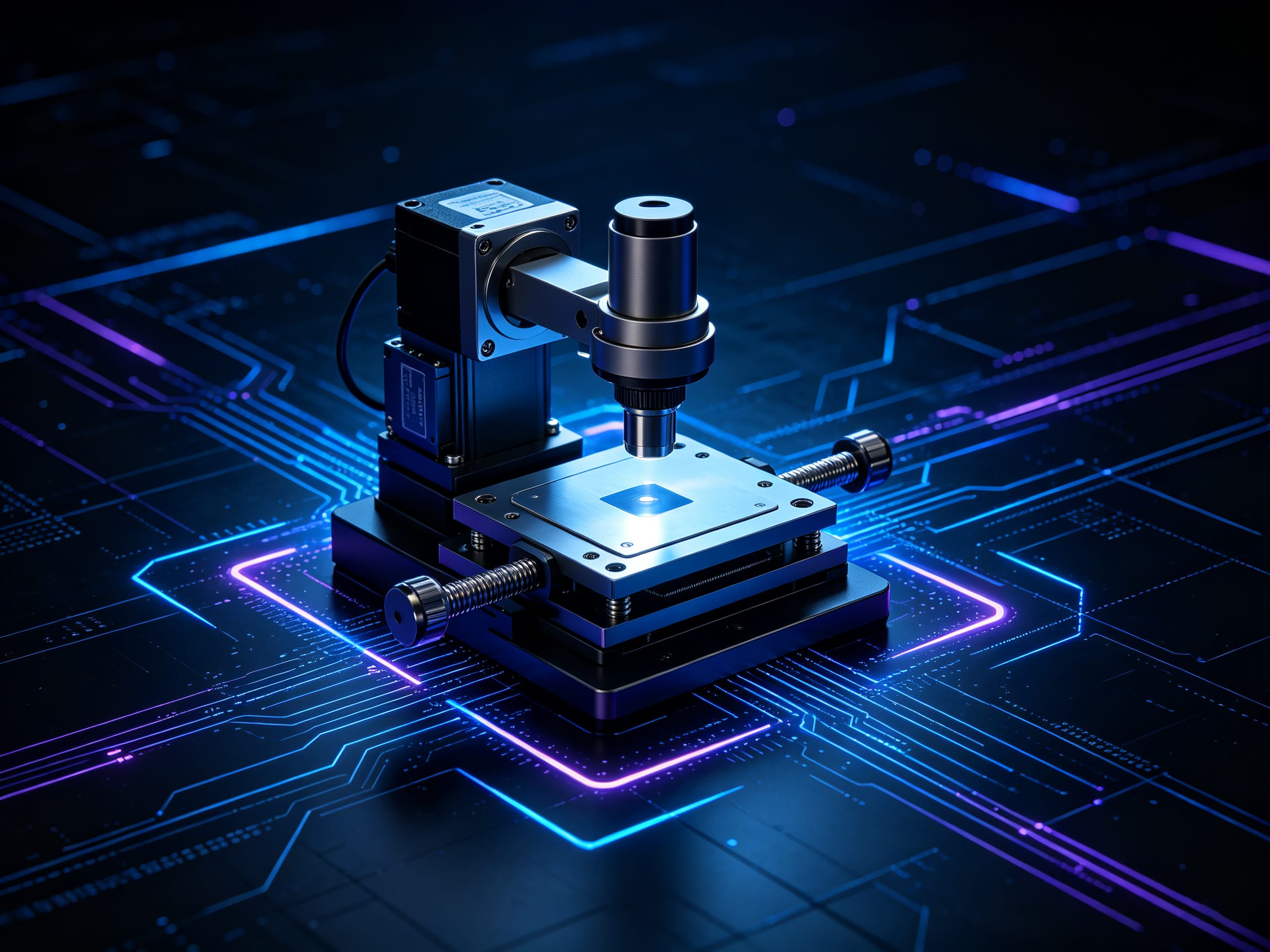
Fluorescence microscopes are mainly used to observe fluorescently labeled samples. They generate fluorescence signals by excitation light, which are then collected and amplified to obtain high-contrast images of the microstructure. One of its core mechanical components—the stage—is responsible for carrying the sample and moving it precisely in the horizontal and vertical directions to center the observation area in the objective lens's field of view. This is especially crucial in applications such as high-magnification 3D imaging and multi-field stitching (full-slide scanning), where the accuracy, stability, and repeatability of stage positioning are extremely important.
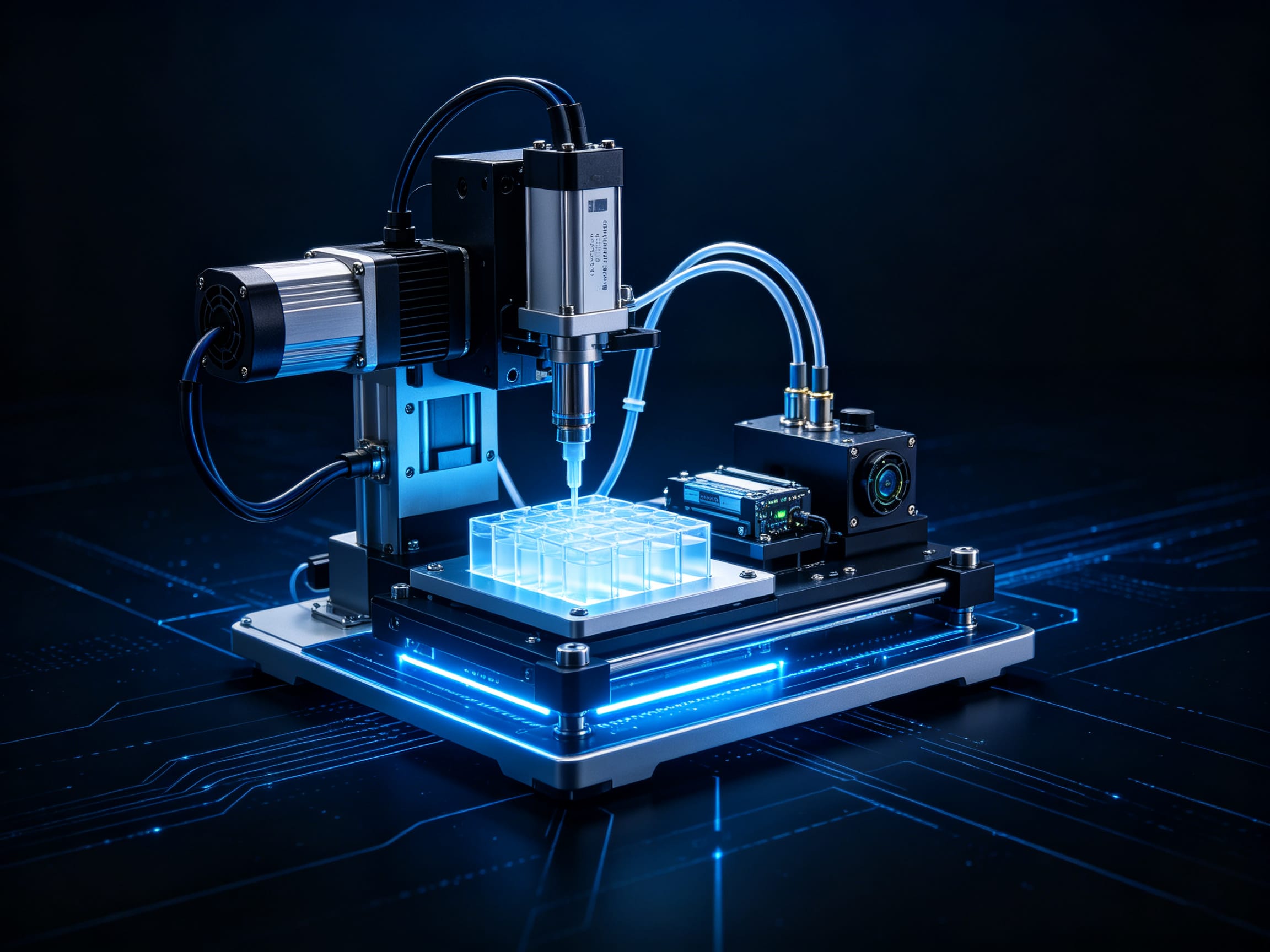
In microscope stages, integrated stepper servo motors are primarily used to drive the X and Y axes (and some high-precision models also include Z-axis focusing motion) of the stage. By precisely controlling the motor's stepping angle and speed, micron-level or even nanometer-level precise movement of the stage can be achieved. This high-precision motion control allows the microscope to clearly observe the fine structures of the sample, providing researchers and physicians with more accurate and reliable observation results.
Regarding the performance of stepper motors, solutions commonly used in stage applications can achieve positioning accuracy from tens to hundreds of nanometers and rapid acceleration response, while also offering lower purchase and maintenance costs in open-loop mode. For applications requiring higher precision and dynamic response, stepper servo solutions with closed-loop feedback or integrated stepper servo lead screw motors can significantly improve motion stability, making them particularly suitable for long-duration continuous imaging tasks and effectively suppressing phenomena common in traditional stepper platforms, such as low-speed crawling (speed fluctuations).
II. Application Scheme

• Equipment Name: Fluorescence Microscope
• Product Model:
Model 1: STM2834B-CANopen-M-1ZB-4.77-1.27-L215-Y-ZJLM
Model 2: STM28348-CANopen-M-1ZB-4.77-1.27-L100-Y (Controlled by Host Computer) / Direct-drive lead screw
• Number of Units Used: 4
• Control Mode Used: PP (Position Control Mode)
III. Application Product

IV. Problems and Solutions
1. Problems Encountered
Problem: During the equipment debugging phase, users reported uneven movement of the stage. Specifically, given the same 0.1mm movement command, the actual end-effector movement distance varied each time, affecting imaging positioning accuracy.
2. Analysis and Solutions
Preliminary Analysis and Confirmation: Through online debugging and data monitoring, control and execution issues with the integrated stepper servo motor itself were initially ruled out. The observed pulse commands were accurately issued, and the actual number of pulses executed by the motor matched the controller's commands.
Problem Attribution: Further investigation revealed the root cause to be clearances in the equipment's structural components. Specifically, this could be caused by backlash between the lead screw and nut, minor movement at the coupling connection, or play in the platform guide rails. Although the motor itself achieves precise step angle control, backlashes in the mechanical transmission chain consume a small amount of travel during repeated forward and reverse movements, resulting in a deviation and uncertainty between the final physical position of the load (i.e., the platform) and the command.
Solutions:
Hardware Level: Recalibrate and tighten the transmission mechanism, or select higher-precision transmission components with preload design (such as preloaded lead screws and backlash-free nuts) to reduce mechanical backlash.
Software/Control Level: In terms of control strategy, the motor is required to maintain the direction of final approach to the target (unidirectional gap elimination) during precise positioning, avoiding short-distance bidirectional switching; or, in positions requiring extremely high positioning accuracy, a method of multiple slow approach steps followed by final clamping with a set force is adopted for positioning.
Solution Confirmation: In this case, by optimizing the mechanical assembly process and adjusting the control algorithm, the problem of inconsistent terminal movement distance of the equipment was effectively solved, ensuring the accuracy of the motor drive at the system level.
V. Summary and Overview
By successfully applying the integrated stepper servo screw motor to the stage drive of a fluorescence microscope, the project achieved significant results:
• Improved Accuracy: The motor's inherent closed-loop control characteristics, combined with seamless integration with the microscope control system, bring micron-level positioning accuracy and extremely high repeatability, significantly improving the accuracy of fluorescence observation results.
• Enhanced Stability and Reliability: The highly integrated design reduces wiring, lowers potential electrical fault points, and, combined with the motor's self-diagnostic and safety protection functions, ensures the stability of the equipment for long-term continuous imaging in scientific research scenarios.
• Debugging and Optimization Experience: Problems encountered during project execution highlighted the importance of mechanical structure precision as well as control system design in precision systems. Solving problems caused by mechanical backlash provided valuable experience for the design and integration of similar high-precision platforms in the future.
• Wide Applicability: The integrated stepper servo screw motor solution in this case study, with its excellent precision, flexibility, integration, and high response speed, is not only suitable for fluorescence microscopy but also has the potential to be extended to other fields requiring sub-micron level motion precision, such as microscopic imaging systems and high-precision automated inspection equipment.
In summary, the introduction of the integrated stepper servo screw motor provides a superior drive control solution for high-performance fluorescence microscopy and is an effective technical path to improve the overall performance of precision scientific instruments. It balances high precision, high reliability, and simplified system design, making it an important choice for the automation upgrade of modern scientific instruments.