
What is the service life of an integrated servo motor?
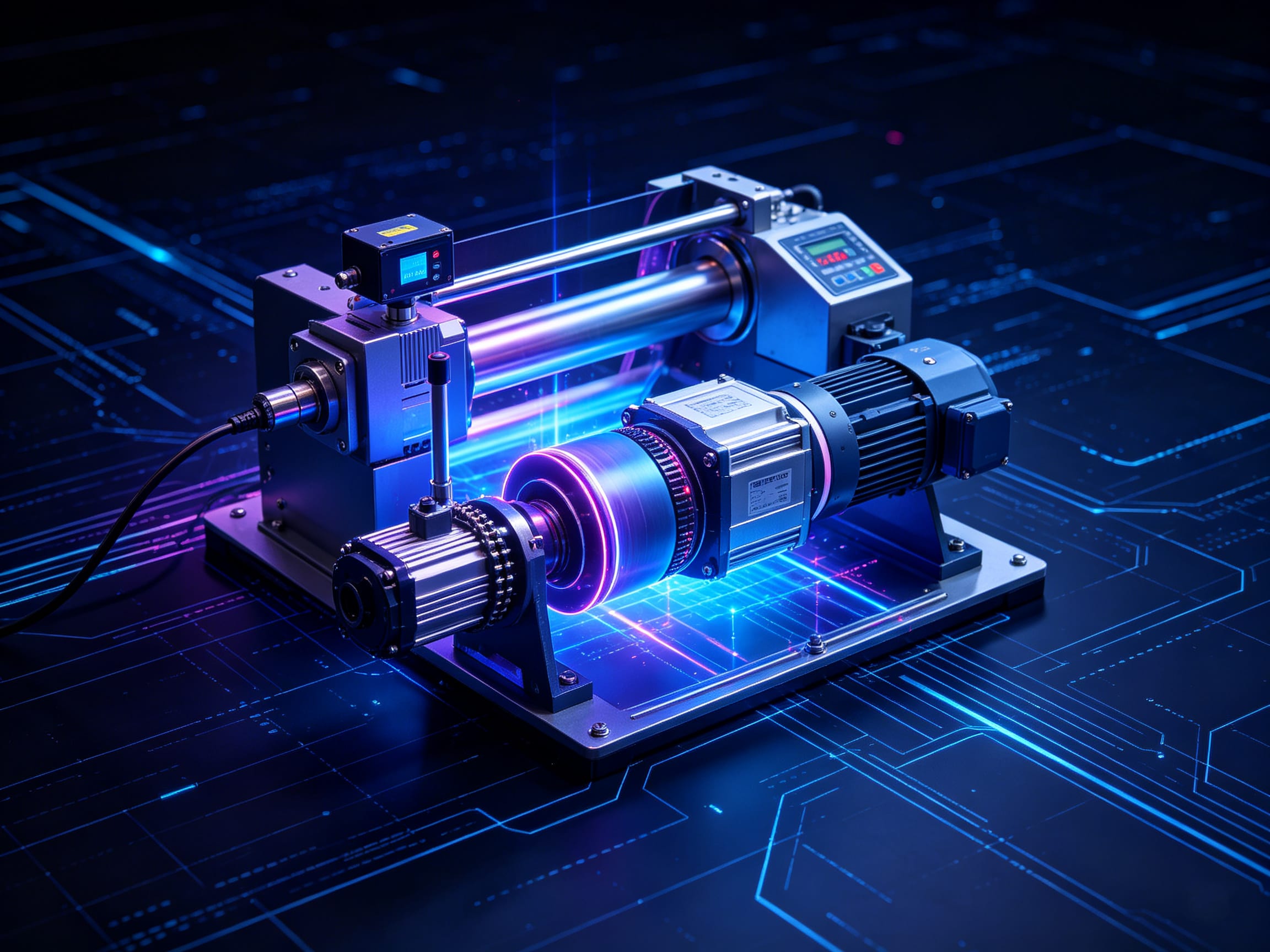
When selecting motion control components for industrial automation, robotics, or precision machinery, one question stands out: What is the service life of an integrated servo motor? Understanding the expected operational lifespan of an Integrated Servo Motor is critical for budgeting maintenance, planning production schedules, and ensuring system reliability. Unlike traditional servo systems where the motor and drive are separate, an integrated servo motor combines the servo drive, controller, and encoder into a single compact unit. This integration offers space savings and simplified wiring, but it also introduces unique considerations for longevity.
In this comprehensive guide, we will explore the typical service life of an integrated servo motor, break down the key factors that influence durability, provide actionable tables and lists to extend lifespan, and answer frequently asked questions. Whether you are a design engineer, maintenance technician, or procurement specialist, this article will help you maximize the return on your investment.
1.What Does “Service Life” Mean for an Integrated Servo Motor?

Service life refers to the total operating time or number of cycles an Integrated Servo Motor can perform before its performance degrades below acceptable levels or it fails completely. Unlike a light bulb with a simple “on/off” failure mode, servo motors experience gradual wear. Manufacturers often rate service life in one of three ways:
- Operating hours (e.g., 20,000 hours)
- Number of revolutions (e.g., 10,000 km of travel for linear applications)
- Number of start/stop cycles (critical for high-dynamic applications)
Most integrated servo motors are designed for 20,000 to 50,000 operating hours under ideal conditions. However, real-world factors can reduce this to as little as 5,000 hours or extend it beyond 100,000 hours. The key is understanding the variables at play.
2.Typical Service Life Ranges by Component
An Integrated Servo Motor is not a single wear component—it contains several sub-systems, each with its own lifespan. The table below summarizes typical expectations:
| Component | Typical Service Life | Failure Mode |
| Bearings (ball/roller) | 20,000 – 40,000 hours | Increased friction, noise, runout |
| Winding insulation (copper) | 30,000 – 50,000 hours (thermal degradation) | Short circuits, phase imbalance |
| Encoder (optical/magnetic) | 50,000 – 100,000 hours | Signal loss, accuracy drift |
| Power electronics (IGBTs, capacitors) | 30,000 – 60,000 hours (temperature dependent) | Switch failure, ripple current damage |
| Brake (holding brake) | 10,000 – 20,000 cycles | Sticking, reduced holding torque |
| Connectors & cables | 5,000 – 10,000 flex cycles | Intermittent connection, corrosion |
Note: The shortest-lived component often determines the overall service life of the Integrated Servo Motor. For most applications, bearings and winding insulation are the limiting factors.
3.7 Critical Factors That Determine Integrated Servo Motor Lifespan
The service life of an Integrated Servo Motor is not fixed—it is a function of application conditions. Below are the seven most influential factors, ranked by impact.
3.1. Operating Temperature (The #1 Killer)

Heat is the enemy of all electronics and mechanical systems. Every 10°C rise above the rated ambient temperature (typically 40°C) halves the life of winding insulation and power electronics. An Integrated Servo Motor packs heat-generating components (drive transistors, brake coils) inside the same housing as temperature-sensitive parts (encoder, magnets).
- Safe zone: Below 40°C housing temperature → expected 50,000+ hours
- Warning zone: 40–70°C → life reduced by 50–80%
- Critical zone: Above 70°C → life measured in weeks or days
tip: Use thermal imaging during commissioning to identify hotspots.
3.2. Load Conditions (Torque and Inertia Mismatch)

Running a motor continuously at or near its rated torque will shorten bearing and winding life. An Integrated Servo Motor is most efficient at 60–80% of rated torque. Overloads cause:
- Higher current → more I²R heat
- Increased magnetic forces on bearings
- Premature insulation breakdown
Inertia mismatch (load inertia more than 10x rotor inertia) forces the servo to work harder during acceleration/deceleration, increasing RMS current by 30–50%.
3.3. Duty Cycle and Speed Profile
A motor running 24/7 at constant speed experiences steady-state wear. A motor performing rapid start-stop cycles (e.g., pick-and-place robots) subjects bearings and power electronics to mechanical and thermal shock.
- S1 duty (continuous) → predictable bearing wear
- S4/S5 duty (intermittent with starting) → 3–5x higher stress on IGBTs and capacitors
3.4. Environmental Contaminants

Dust, moisture, oil mist, and corrosive vapors bypass seals over time. An Integrated Servo Motor with IP54 rating may last 5 years in a clean factory but only 6 months in a foundry or food processing line.
- IP65 offers protection against water jets but not against chemical corrosion.
- IP67 allows temporary immersion but seals degrade with temperature cycling.
3.5. Voltage and Power Quality
Voltage spikes (from poor grounding or VFD reflections) punch through insulation. Harmonic distortion heats up the motor core. An Integrated Servo Motor with built-in drive is less susceptible to cable reflections (short cables) but still vulnerable to mains disturbances.
Install line reactors or surge suppressors if the power supply is noisy.
3.6. Maintenance Practices (or Lack Thereof)
“Sealed for life” bearings still fail if moisture condenses inside. Regularly check:
- Connector tightness (vibration loosens terminals)
- Cooling fan operation (if externally cooled)
- Accumulated debris blocking ventilation fins
3.7. Manufacturing Quality and Design Margin
Not all integrated servo motors are equal. Premium brands (e.g., Beckhoff, Bosch Rexroth, Kollmorgen) use class H insulation (180°C) and oversized bearings, delivering 2–3x longer life than economy units. Always request MTBF (Mean Time Between Failures) data from the manufacturer.
4.How to Calculate the Expected Service Life of Your Integrated Servo Motor

While precise calculation requires manufacturer software, you can estimate remaining life using this simplified method:
Step 1 – Identify the Weakest Link
Based on your application, choose the limiting component from the list above. For most high-speed rotation, bearings dominate. For high-torque/low-speed, winding insulation dominates.
Step 2 – Apply Life Reduction Factors
Use this table to adjust the baseline life (taken as 30,000 hours for an average integrated servo motor):
| Condition | Multiplier |
| Ambient temp < 35°C | x1.2 |
| Ambient temp 45–55°C | x0.5 |
| Load torque < 50% rated | x1.5 |
| Load torque > 90% rated | x0.4 |
| Start/stop cycles > 60 per minute | x0.3 |
| Clean, dry environment | x1.2 |
| Dusty/humid environment | x0.6 |
| Proper maintenance (quarterly inspection) | x1.3 |
| No maintenance | x0.5 |
Example: A motor in a 50°C ambient (x0.5), running at 80% load (x0.6), with 30 start/stops per minute (x0.5) in a dusty environment (x0.6) and no maintenance (x0.5).
Adjusted life = 30,000 × 0.5 × 0.6 × 0.5 × 0.6 × 0.5 = 1,350 hours (less than 2 months continuous operation)
Step 3 – Monitor Key Health Indicators
Instead of waiting for failure, track these parameters:
- Motor current (increase indicates friction or load change)
- Case temperature (trend upward = cooling degradation)
- Vibration velocity (ISO 10816-3: >4.5 mm/s RMS indicates bearing wear)
- Encoder noise margin (drops as optical components age)
5.10 Proven Ways to Extend the Service Life of an Integrated Servo Motor

Following these best practices can double or triple the lifespan of your Integrated Servo Motor.
5.Checklist for Long Life
- Derate for high temperature – Use one frame size larger if ambient exceeds 45°C.
- Add forced cooling – A small fan blowing over the heat sink reduces internal temperature by 15–20°C.
- Avoid 100% duty at stall – If holding torque is needed, use a mechanical brake instead of servo current.
- Implement soft start/stop ramps – Increase acceleration time from 50 ms to 200 ms to reduce IGBT stress.
- Use a line filter – Protects internal drive from mains transients.
- Keep cables strain-relieved – Flex cycles near the motor connector are a common failure point.
- Schedule annual bearing re-greasing – Even “lubricated for life” bearings benefit from fresh grease every 5,000 hours in high-speed applications.
- Monitor humidity – Use a breather drain if the motor is mounted vertically in condensing environments.
- Log runtime and cycles – Replace proactively at 80% of predicted life.
- Choose the right IP rating – IP65 minimum for machine tools; IP67 for washdown areas.
5.When to Replace vs. Repair
An Integrated Servo Motor is often replaced as a unit because internal components are not field-serviceable (encapsulated drives, sealed encoder). However, some brands offer exchange programs. Replace immediately if:
- Bearing noise is audible from 1 meter away.
- Motor runs hot to touch (>80°C) even after cleaning.
- Position error exceeds ±0.5° at constant speed.
- Drive fault codes indicate power stage failure (typically non-repairable).
6.Real-World Service Life Examples by Industry
| Industry | Application | Typical Duty Cycle | Observed Service Life (hours) | Main Failure Mode |
| Packaging | Film wrapping | Continuous, light load | 45,000 – 60,000 | Bearings (dust ingress) |
| CNC machining | Spindle drive | High speed, moderate load | 30,000 – 40,000 | Encoder contamination |
| Robotics (pick-and-place) | Arm joint | 120 cycles/min, 50% load | 15,000 – 25,000 | Brake wear, IGBT fatigue |
| Electric vehicle | Steering assist | Intermittent, high torque | 10,000 – 15,000 (automotive) | Thermal cycling |
| Textile machinery | Spinning frame | 24/7, constant speed | 50,000 – 80,000 | Winding insulation (if hot) |
| Food & beverage | Filling machine | Washdown, frequent stops | 8,000 – 12,000 | Seal failure, corrosion |
Takeaway: The same Integrated Servo Motor can have a 10x difference in service life based purely on the application environment.
7.Frequently Asked Questions About Integrated Servo Motor Longevity

Q1: Can I predict failure before it happens?
Yes. Install a condition monitoring system that tracks vibration, temperature, and electrical signature analysis. A 5–10% increase in RMS current over a month is a reliable precursor to bearing or insulation failure.
Q2: Does running at lower speed extend life?
Not necessarily. Very low speeds (<50 rpm) with high torque can overheat the motor due to poor internal cooling (fans are less effective). Conversely, very high speeds (>80% of max) accelerate bearing wear. The sweet spot is 60–80% of rated speed at 50–70% torque.
Q3: How does the integrated drive affect lifespan compared to a separate drive?
An Integrated Servo Motor removes the long cable between drive and motor, eliminating reflected wave voltage spikes that kill insulation. However, the drive electronics are now exposed to motor heat, potentially reducing capacitor life by 30% compared to a separate drive in a cool cabinet. Trade-off.
Q4: Are there “lifetime” integrated servo motors?
No, but some high-end models (e.g., with silicon carbide MOSFETs and ceramic bearings) claim 100,000 hours under ideal conditions. Always verify with MTBF data per MIL-HDBK-217 or SN 29500 standards.
Q5: What is the warranty period typically offered?
Most manufacturers offer 2 years or 5,000 operating hours (whichever comes first). Extended warranties up to 5 years are available for an additional cost, usually requiring certified maintenance.
8.Conclusion – Maximizing Your Integrated Servo Motor Investment
The service life of an Integrated Servo Motor is not a fixed number printed on a datasheet—it is a dynamic outcome of thermal management, mechanical loading, environmental protection, and maintenance discipline. While the average unit lasts 20,000 to 50,000 hours, proactive users routinely achieve 80,000+ hours by:
- Keeping temperatures below 50°C at the housing
- Running at 60–80% of rated torque
- Implementing predictive maintenance (vibration + current monitoring)
- Selecting the correct IP rating for the environment
If you are designing a new system, always perform a lifecycle cost analysis. Paying 30% more for a premium Integrated Servo Motor with oversized bearings and Class H insulation can deliver 200% longer life, reducing unplanned downtime and replacement labor.
Final recommendation: Document the start date and operating hours of every integrated servo motor in your facility. Set a calendar reminder for bearing inspection every 5,000 hours or 12 months. And when you see a 10% increase in no-load current, order a replacement—don’t wait for catastrophic failure.
References and Further Reading
- IEC 60034-1: Rotating electrical machines – Rating and performance
- ISO 281: Rolling bearings – Dynamic load ratings and rating life
- “Servo Motor Lifetime Estimation Under Cyclic Loads” – IEEE Transactions on Industry Applications, Vol. 56, 2020
- Manufacturer datasheets (Beckhoff AM8000, Kollmorgen AKM2G, Bosch Rexroth IndraDrive)