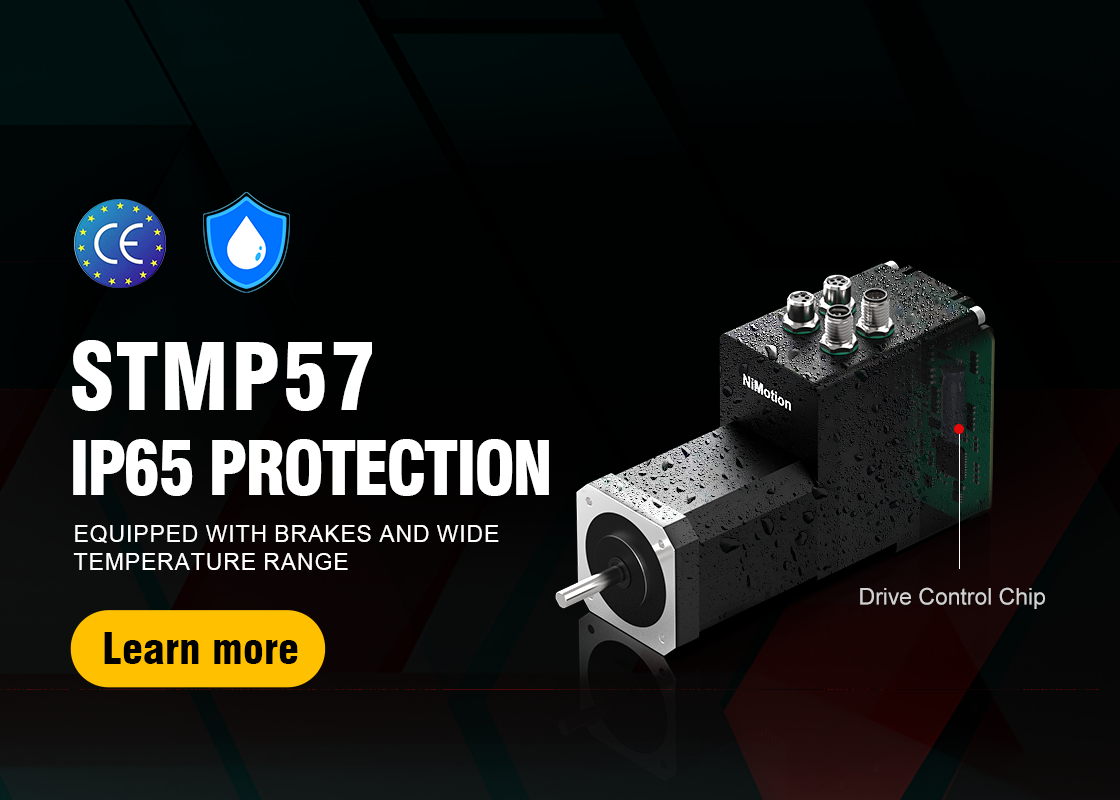

How to Select a Suitable Integrated Servo Motor?
Modern automation systems demand higher precision, smaller footprints, and faster deployment than ever before. The Integrated Servo Motor has emerged as a game‑changing solution that combines a brushless servo motor, drive electronics, encoder feedback, and often an onboard controller into one compact unit. This integration eliminates bulky control cabinets, reduces wiring complexity, and accelerates machine commissioning.

But with dozens of brands, communication protocols, torque ratings, and environmental specifications available, how do you choose the right Integrated Servo Motor for your application?
This guide walks you through a systematic, step‑by‑step selection process. You’ll learn the critical performance parameters, mechanical and environmental considerations, communication bus choices, and cost‑benefit trade‑offs that separate a successful integration from a costly mistake.
1. What Is an Integrated Servo Motor? (And Why It Matters)
Before diving into selection criteria, let’s define exactly what an Integrated Servo Motor is and how it differs from a traditional servo system.

A conventional servo system consists of three separate components:
-
A servo motor (the mechanical actuator)
-
An external servo drive (power electronics cabinet)
-
Feedback cables connecting the two
An Integrated Servo Motor, by contrast, houses the motor, drive, encoder, and sometimes the motion controller inside a single housing. It connects directly to industrial Ethernet (EtherCAT, PROFINET, EtherNet/IP) or fieldbus (CANopen, Modbus) networks, transmitting move commands while receiving real‑time feedback from the built‑in encoder.
Key advantages of an Integrated Servo Motor include:
| Feature | Benefit |
|---|---|
| Reduced footprint | No external drive cabinet needed |
| Lower wiring complexity | One cable (or two) instead of a dozen |
| Faster commissioning | Plug‑and‑play installation |
| Higher reliability | Fewer connectors and cable runs |
| Lower total system cost | Less hardware, less labor, smaller enclosures |
| Decentralized intelligence | Each axis has its own controller |
Global market research values the smart integrated servo motor market at US$829 million in 2024, projected to reach US$1.31 billion by 2031, growing at a CAGR of 6.8%. This growth reflects the industry’s accelerating shift toward integrated motion architectures.
2. Step‑by‑Step Selection Process
Selecting a suitable Integrated Servo Motor is not a one‑click decision. It requires a methodical, application‑driven approach. Follow these six steps.
Step 1:Define Your Performance Requirements
Start by answering three fundamental questions about your motion application.
Torque
Torque is the rotational force the motor must produce. You need both peak torque (for acceleration, overcoming friction, or handling momentary overloads) and continuous torque (for sustained operation).

How to calculate:
-
List all moving masses (payload, linkages, gears)
-
Determine acceleration and deceleration rates
-
Add external forces (gravity for vertical axes, cutting forces, friction)
-
Compute peak torque at the worst‑case point in the motion profile
-
Compute RMS (root‑mean‑square) torque over the entire cycle
The selected motor must deliver peak torque within its torque‑speed curve (discussed below) and continuous torque within its nominal rating to avoid overheating.
Speed
Determine the maximum rotational speed required, typically in revolutions per minute (rpm). Some applications demand high speed (e.g., spindle drives), while others prioritize low‑speed smoothness and precision.
Important note: When you add a gear reducer, motor speed multiplies by the gear ratio while output torque multiplies and reflected load inertia divides by the square of the ratio. This trade‑off is central to proper sizing.
Acceleration
Acceleration defines how quickly the motor can reach commanded speed. Pick‑and‑place machines, high‑speed sorting lines, and robotics require high acceleration (often >10,000 rad/s²). Conveyors and indexing tables may need only moderate acceleration.
Step 2: Perform Inertia Matching
Inertia matching is arguably the most misunderstood yet critical factor in servo selection. Load inertia (JL) is the resistance of all moving parts to changes in rotational velocity. Motor inertia (JM) is the rotor’s own rotational resistance.

The inertia ratio = JL / JM
General guidelines:
-
≤ 10:1 – Acceptable for most applications
-
≤ 5:1 – Ideal for high‑performance motion
-
≤ 3:1 – Required for demanding positioning with tight settling times
-
≥ 20:1 – Likely to cause oscillations, overshoot, or unstable motion-
Why does this matter? When load inertia is much larger than motor inertia, the control loop struggles to respond quickly. The motor may overshoot, oscillate, or fail to settle precisely. Conversely, an overly large motor (very low inertia ratio) wastes cost and energy without improving performance.
What if you cannot achieve a good inertia ratio? Add a gear reducer. A planetary reducer reduces reflected load inertia by the square of the reduction ratio, often bringing a problematic ratio into the ideal range.
Step 3: Analyze the Torque‑Speed Curve
Every Integrated Servo Motor has a torque‑speed curve—a graph showing how much torque the motor can deliver at different speeds.

Two critical boundaries:
-
Continuous duty zone (green line) : Operating points within this curve keep motor temperature within limits indefinitely at rated ambient temperature. Your RMS torque and speed must fall here.
-
Intermittent duty zone (red line) : The motor can operate here for short periods (typically a few seconds) before overheating. Your peak torque point must fall within this envelope.
Common mistake: Selecting a motor whose peak torque falls inside the curve but whose RMS torque exceeds the continuous rating. The motor will overheat during repetitive cycles, leading to thermal shutdown or premature failure.
Step 4: Verify Environmental Compatibility
An Integrated Servo Motor that works perfectly on a test bench may fail immediately in a harsh industrial environment. Evaluate these environmental factors before purchase.
Temperature:
-
Standard industrial range: 0°C to +40°C
-
Extended temperature models: −20°C to +60°C (or wider)
-
Derating required at elevated temperatures
Ingress Protection (IP rating):
-
IP20 – Indoor, clean, control cabinet (least protected)
-
IP54 – Dust‑protected, splashing water (industrial floor)
-
IP65 – Dust‑tight, water jets (washdown environments)
-
IP67 – Temporary immersion
Other environmental hazards:
-
Vibration and shock (check datasheet limits)
-
Humidity and condensation (IP rating plus conformal coating)
-
Corrosive atmospheres (chemicals, salt spray, food processing chemicals)
-
Dust and debris (sealed connectors, smooth housing)
Expert tip: When selecting for harsh environments, consider not just the performance specs but also the ingress protection rating and thermal management design-.
Step 5: Choose Communication Protocol

The communication interface determines how your Integrated Servo Motor talks to the PLC or motion controller. This choice affects real‑time performance, network topology, and compatibility with existing infrastructure.
| Protocol | Best for | Key characteristics |
|---|---|---|
| EtherCAT | High‑performance, multi‑axis systems | Fastest cycle times (≤125 µs), precise synchronization |
| PROFINET | Siemens‑centric factories | Broad adoption in Europe, real‑time classes |
| EtherNet/IP | Rockwell/Allen‑Bradley environments | CIP Motion, ODVA conformance |
| CANopen | Cost‑sensitive, lower axis counts | Four‑wire simplicity, CiA DS402 profile |
| Modbus RTU/TCP | Legacy integration, simple applications | Ubiquitous, slower, less deterministic |
Real‑world wiring comparison: A typical servo drive solution for a robot arm requires 12 to 14 wires per axis. With CANopen, only four wires are needed for communications and power-. EtherCAT daisy‑chaining further reduces cabling by connecting multiple motors in series-.
Many modern Integrated Servo Motors support multiple protocols on a single unit, offering flexibility for machine builders who serve diverse customer requirements.
Step 6: Evaluate Form Factor and Mounting
The physical shape and mounting style of the motor must fit your machine’s mechanical design.
Form factor considerations:
-
Flange size (e.g., 40 mm, 60 mm, 80 mm, 110 mm, 130 mm) – Standardized NEMA or metric flanges
-
Motor length – Longer stacks provide more torque within same frame size
-
Integrated drive location – Rear‑mounted drives preserve standard motor length; side‑mounted or top‑mounted drives alter footprint significantly
Mounting options:
-
Flange mounting (most common)
-
Foot mounting (larger frames)
-
Shaft mounting (custom applications)
Shaft configuration:
-
Keyed shaft (high torque transmission)
-
Smooth shaft (with clamping collar)
-
Hollow shaft (for through‑cables or pneumatics)
-
Custom shafts (flats, pins, screw threads, cross‑drilled holes)
3. Types of Integrated Servo Motors
Not all integrated motors are the same. Understanding the different types helps you narrow the selection field.

3.1 BLDC Integrated Servo Motors (Brushless DC)
Most common type. Combines a brushless DC motor, built‑in driver, and encoder in one unit.
Key features: High efficiency, low noise, high torque‑to‑weight ratio, excellent for battery‑powered systems
Typical applications: AGVs, mobile robots, medical devices, aerospace
3.2 AC Integrated Servo Motors
Use AC permanent magnet synchronous motors. Offer higher power density and lower maintenance than DC types.
Key features: Smooth operation, high continuous torque, excellent thermal stability
Typical applications: CNC machinery, industrial robotics, packaging lines, semiconductor manufacturing
3.3 Integrated Hybrid Servo Motors
Combine stepper motor construction with closed‑loop servo control. Offer superior holding torque at zero speed and dramatically lower heat generation compared to conventional servos-.
Key features: Very low heat at standstill (≈20W vs 90W for conventional), lower cost, compact
Typical applications: Direct‑drive positioning, laboratory automation, 3D printing
3.4 Integrated Hub Motors (for AGVs/AMRs)
Specialized wheel motors that integrate the motor, drive, encoder, and sometimes the wheel itself-.
Key features: Eliminates transmission components, direct drive, space‑saving
Typical applications: Automated guided vehicles, service robots, medical carts
3.5 Integrated Stepper Servo Motors
Upgrade from traditional stepper motors, offering closed‑loop feedback without losing position. Provide higher accuracy and reliability than open‑loop steppers at a competitive price-.
Key features: No missed steps, improved efficiency, quieter operation
Typical applications: 3D printers, labeling machines, small pick‑and‑place units
4. Key Selection Criteria at a Glance
Use this checklist when evaluating any Integrated Servo Motor for your application.

Performance Checklist
-
Peak torque > calculated maximum required torque (with safety margin, typically 1.5–2×)
-
Continuous torque > RMS torque of motion cycle
-
Maximum speed ≥ required operating speed
-
Inertia ratio ≤ 10:1 (≤ 5:1 for high performance)
-
Peak torque point lies within intermittent zone of torque‑speed curve
-
RMS torque point lies within continuous zone
Mechanical Checklist
-
Frame size (flange dimensions) matches mounting interface
-
Shaft diameter and configuration compatible with load coupling
-
Motor length fits available space
-
Mounting style (flange, foot, custom) matches design
-
Holding brake included if required for vertical loads or safety holds
Electrical & Communication Checklist
-
Supply voltage matches available power (e.g., 24 VDC, 48 VDC, 230 VAC, 400 VAC)
-
Communication protocol(s) supported (EtherCAT, CANopen, PROFINET, EtherNet/IP, Modbus)
-
I/O count meets local control needs (digital inputs/outputs, analog inputs)
-
Safety features included (STO – Safe Torque Off, SS1) – STO is increasingly mandatory-
-
Encoder resolution sufficient for positioning accuracy (e.g., 12‑bit, 14‑bit, 18‑bit)
Environmental Checklist

-
Operating temperature range covers ambient conditions
-
IP rating sufficient for installation environment (IP20 indoor cabinet → IP65 washdown → IP67 submersion)
-
Vibration/shock rating meets application demands
-
Conformal coating required for corrosive or humid environments
-
EMC compliance (CE, FCC) for regional regulatory approval
Certification Checklist
-
CE mark (European market)
-
UL/cUL listing (North American market)
-
RoHS compliance (hazardous substance restriction)
-
Reach compliance (chemical registration)
Supplier Checklist
-
Technical support availability (phone, email, on‑site)
-
Sizing and selection software provided
-
Lead times meet project schedule
-
Inventory availability for spares
-
Customization capabilities (shafts, windings, connectors, brakes, gearboxes)
-
Warranty terms and length
-
Application engineering expertise in your industry
5. Common Selection Mistakes (And How to Avoid Them)
Even experienced engineers make these mistakes when selecting an Integrated Servo Motor.
Mistake 1: Ignoring RMS Torque
What happens: The motor appears correctly sized for peak torque but overheats during repetitive cycles.
How to avoid: Always calculate RMS torque over the full motion cycle, not just peak torque. Use manufacturer sizing software or spreadsheet calculations.
Mistake 2: Overlooking Inertia Ratio
 What happens: The motor is powerful enough but control is sluggish or oscillatory. Tuning becomes impossible.
How to avoid: Calculate JL/JM before selecting the motor. Add a gear reducer if the ratio exceeds 10:1. If you cannot achieve a good ratio, consider a motor with higher rotor inertia (e.g., “medium inertia” vs “low inertia” series).
Mistake 3: Forgetting Environmental Derating
What happens: The motor runs fine in the factory but fails on the customer’s hot, dusty, or humid production floor.
How to avoid: Add 20% torque margin for ambient temperatures above 40°C. Add 15–25% margin for dusty or washdown environments. Specify IP65 or higher for food, beverage, or outdoor applications.
Mistake 4: Assuming All Communication Protocols Are Equal
What happens: The motor has “Ethernet” but does not support your required real‑time protocol (e.g., PROFINET IRT).
How to avoid: Verify the exact protocol version (e.g., EtherCAT CoE, PROFINET RT vs IRT, CANopen CiA DS402). Some integrated motors support only cyclic communication; confirm acyclic parameter access if needed for configuration.
Mistake 5: Underestimating Installation and Commissioning Time
What happens: The motor arrives but mounting holes don’t align, cables are too short, or software configuration is cryptic.
How to avoid: Request a sample unit for mechanical fit check. Review cable lengths and connector types before ordering. Ask about setup software—some suppliers provide free, intuitive tuning tools; others require paid licenses.
6. Applications by Industry
Different industries prioritize different Integrated Servo Motor attributes. Understanding these priorities helps you match the motor to the application.

Robotics (Collaborative, Industrial, Mobile)
Key requirements: High torque‑to‑weight ratio, compact form factor, multiple communication options, STO safety
Typical power range: 50W – 2kW
Selection emphasis: Inertia matching, low cogging torque, high encoder resolution (≥18‑bit)
Integrated servo motors enable smoother, more responsive robotic arms with reduced cabling, eliminating the need for external drives and complex wiring--.
CNC Machinery
Key requirements: High continuous torque at moderate speeds, excellent thermal management, high encoder resolution
Typical power range: 400W – 5kW+
Selection emphasis: Speed loop bandwidth, torque ripple minimization, absolute encoder (multiturn)
Packaging Machinery

Key requirements: High acceleration, fast cycle times, IP65 washdown rating, EtherCAT or PROFINET
Typical power range: 100W – 1.5kW
Selection emphasis: Peak torque for rapid starts/stops, sealing for washdown environments
Packaging applications benefit from integrated servo motors that eliminate bulky stepper drivers, reduce control cabinet space, and speed up changeovers-.
AGVs / AMRs / Mobile Robots
Key requirements: Low voltage (24–48 VDC), high torque‑to‑weight, regenerative braking, compact all‑in‑one design
Typical power range: 100W – 1kW
Selection emphasis: Hub motor or integrated wheel solutions, battery efficiency, communication over CANopen or EtherCAT
For AGV applications, integrated hub motors combine motor, driver, and encoder in a compact chassis that mounts directly to the wheel, eliminating external drivers and complex wiring-.
Medical Devices
Key requirements: Low noise, low vibration, high precision, regulatory certifications (IEC 60601), compact size
Typical power range: 20W – 400W
Selection emphasis: Smooth low‑speed operation, low electromagnetic interference, sterilization compatibility
Compact form factor and low weight reduce mechanical stress, improving reliability in sensitive medical environments-.
Semiconductor Manufacturing
Key requirements: Sub‑micron positioning, ultra‑low vibration, cleanroom compatibility (ISO Class), high bandwidth
Typical power range: 50W – 500W
Selection emphasis: High encoder resolution (≤1 µm linear or ≤1 arc‑min rotational), non‑outgassing materials, smooth torque output
7. Cost‑Benefit Analysis: Integrated vs. Traditional Servo
When is an Integrated Servo Motor the right financial choice?
Upfront Cost Comparison
| Cost component | Traditional servo | Integrated servo |
|---|---|---|
| Motor | ✓ | ✓ (included) |
| External drive | ✓ | ✗ (integrated) |
| Drive cabinet/enclosure | ✓ | Reduced or eliminated |
| Power cables | Motor + feedback cables | One hybrid cable (or two) |
| Installation labor | Higher (multiple components) | Lower (plug‑and‑play) |
| Commissioning time | Days to weeks | Hours to days |
| Spare parts inventory | Motor + drive separate | Single unit |
Traditional systems often have higher overall costs when cabinet space, wiring, and labor are fully accounted for-.
Long‑Term Cost Savings
Integrated servo motors deliver savings beyond the purchase price:
-
Energy efficiency: Some integrated systems use load‑based adaptive power output, reducing energy consumption compared to traditional drives that run at fixed switching frequencies-. Hybrid integrated servos consume ≈20W to hold a 1.2 Nm load at standstill, compared to ≈90W for conventional servos-.
-
Reduced cooling requirements: Lower heat dissipation means smaller control cabinets and less HVAC load in sealed enclosures-.
-
Lower maintenance: Fewer connectors and cable runs means fewer failure points. Integrated units are typically sealed (IP54 to IP67), reducing dust‑ and moisture‑related failures.
-
Faster troubleshooting: Smart integrated motors with built‑in diagnostics and status LEDs simplify fault finding.
When Traditional Servo May Be Better
Despite the advantages of integration, traditional separate servo systems remain preferable in certain scenarios:
-
Very high power (>5 kW per axis) – Integrated drives at these power levels are less common and generate significant heat that is difficult to dissipate within the motor housing
-
Extreme heat dissipation – Separating drive and motor allows each to be cooled independently
-
Centralized control preference – Some machine builders prefer all drives in a single cabinet for maintenance access
-
Existing inventory – If you already stock multiple drive models for different motors, switching to integrated units may not be cost‑effective
8. Leading Integrated Servo Motor Manufacturers (2026)
The market for integrated servo motors includes both established global brands and specialized suppliers. The following companies offer proven integrated motor solutions.

Global Tier 1 Manufacturers
| Manufacturer | Key strengths |
|---|---|
| Yaskawa | Market leader in servo technology; extensive integrated drive portfolio |
| Mitsubishi Electric | High‑precision integrated servos; Melservo series |
| Siemens | SIMOTICS integrated drives; deep integration with TIA Portal |
| Beckhoff | AMP8000 distributed servo system; one‑cable technology; rear‑mounted drives |
| Schneider Electric | Lexium integrated drives; ILM series (IP65, up to 4.4 Nm)- |
| ABB | Comprehensive motion portfolio; integrated safety features |
| Fanuc | Alpha i series; dominant in CNC and robotics |
| Kollmorgen | High‑performance integrated servos; AKD and AKM families |
| Rockwell Automation | Kinetix integrated motors; seamless with Logix controllers |
| Bosch Rexroth | IndraDrive integrated solutions |
Specialized & Niche Suppliers
| Supplier | Specialization |
|---|---|
| Teknic (ClearPath) | Popular integrated servos for machine builders; combines motor, encoder, drive, and controller in compact package- |
| MOONS‘ Industries | Integrated stepper servos and motion solutions |
| NiMotion | Cost‑effective integrated servos |
| FAULHABER | Miniature integrated servos (down to 6 mm diameter); medical and laboratory |
| JVL A/S | MacMotor integrated servos; extensive fieldbus support |
| Oriental Motor | AZ series integrated drivers; easy setup |
| Nidec | Broad portfolio; acquisitions include many legacy brands |
| Elmo Motion Control | Ultra‑compact integrated servos; gold Twitter series |
| Phase Motion Control | TWX integrated servos for AGV/AMR applications- |
Selection tip: When comparing suppliers, evaluate not only product specifications but also sizing software quality, application engineering support, local inventory availability, and lead times. A slightly lower‑spec motor from a supplier with excellent support often outperforms a higher‑spec motor with poor documentation.
9. Future Trends in Integrated Servo Motors
Understanding where the technology is heading helps future‑proof your selection.

Trend 1: Higher Integration
Modern integrated servos increasingly embed drives, controllers, feedback systems, and safety logic directly into motor housings. Some units include an internal PLC capable of managing an entire machine cycle.
Trend 2: Smart Diagnostics & Predictive Maintenance
Next‑generation systems feature built‑in sensors for early fault detection, automatic parameter optimization, and remote health monitoring. Status words provide real‑time information about motor health and operation-.
Trend 3: One‑Cable Technology (OCT)
Hybrid cables combining power and industrial Ethernet communication reduce both commissioning time and machine footprint. Beckhoff’s AMP8000 series exemplifies this approach.
Trend 4: Wireless Communication
IO‑Link Wireless technology is being integrated into servo motors for packaging machines, rotary tables, industrial robotics, and AGVs. This eliminates communication cables entirely for certain applications-.
Trend 5: Enhanced Energy Efficiency
Stricter 2025 efficiency standards drive regenerative energy recovery, 50%+ reduction in standby power, and optimized light‑load efficiency.
Trend 6: Digital Twin Integration
Integrated servos with cloud synchronization and digital twin interfaces allow offline programming, virtual commissioning, and remote adjustment.
10. Frequently Asked Questions (FAQ)

Q1: Can I use an Integrated Servo Motor without a PLC?
Yes. Many integrated servo motors have programmable onboard controllers. You can store complete motion sequences, handle I/O, and operate in standalone mode. The iBMD series, for example, includes an internal PLC system that can manage an entire machine cycle.
Q2: What is the typical lifespan of an Integrated Servo Motor?
With proper sizing and environmental protection, 20,000–30,000 operating hours is typical for brushless integrated servos. Lifespan is primarily limited by bearing wear and encoder degradation, not the integrated electronics.
Q3: Are Integrated Servo Motors more expensive than traditional servos?
Upfront component cost may be similar or slightly higher for integrated units. However, total system cost (cabinet + cables + labor + commissioning) is often lower with integrated servos, especially for multi‑axis systems-.
Q4: Can I repair an Integrated Servo Motor in the field?
Repair is more challenging than with separate components because the drive is embedded. Most manufacturers recommend unit replacement rather than field repair. For critical applications, stock a spare unit.
Q5: How do I tune an Integrated Servo Motor?
Most manufacturers provide free PC‑based tuning software (e.g., MotionLAB for Beckhoff, SMI tools for Animatics). Auto‑tuning features are increasingly common, automatically measuring load inertia and setting gains--.
Q6: What safety functions are available on Integrated Servo Motors?
Safe Torque Off (STO) is the most common integrated safety function. Some models also include SS1 (Safe Stop 1), SBC (Safe Brake Control), and safe limited speed-.
Q7: Can I retrofit an Integrated Servo Motor into an existing machine?
Yes, but verify mechanical fit (flange dimensions, shaft size) and communication compatibility. Many integrated motors support multiple fieldbus protocols, easing retrofit challenges. Some suppliers offer direct retrofit replacements for popular traditional servo models.
Q8: How do I know if I need a holding brake?
You need a holding brake if the load can back‑drive the motor when power is removed (vertical axes, inclined conveyors, or any application where gravity or external force would move the load). Also required for safety‑critical holds where load must remain stationary during power loss.
Conclusion
Selecting a suitable Integrated Servo Motor requires balancing performance requirements, mechanical constraints, environmental conditions, communication needs, and budget. The trend toward higher integration, smarter diagnostics, and one‑cable technology continues to accelerate, making integrated servos the preferred choice for most new automation designs.

By following the step‑by‑step process outlined in this guide—defining torque, speed, and acceleration requirements; calculating inertia ratio; analyzing the torque‑speed curve; verifying environmental compatibility; choosing the right communication protocol; and evaluating supplier capabilities—you can confidently select an Integrated Servo Motor that delivers reliable, high‑precision motion for years to come.
Next steps for your project:
-
Document your motion profile (positions, speeds, accelerations, cycle time)
-
Calculate required torque, speed, and inertia ratio
-
Identify top 3–5 candidate suppliers
-
Request datasheets and sizing software
-
Validate candidate motors with your application data
-
Request a sample unit for mechanical fit and performance testing
-
Commission and tune with manufacturer software
For complex or high‑risk applications, consider engaging a motion control specialist or system integrator who can provide application‑specific sizing and validation. The right Integrated Servo Motor is not just a component—it is the foundation of your machine’s precision, productivity, and reliability.