
What is the Difference Between Integrated Servo Motor and Servo Motor?
Motion control technology has undergone a fundamental transformation over the past decade. What once required a control cabinet full of separate components can now be packed into a single compact unit. At the center of this evolution lies a critical decision for design engineers: choosing between a traditional servo motor system and an Integrated Servo Motor.

Motor selection is no longer just about torque and speed comparisons. The choice directly affects system architecture, control complexity, integration efficiency, and long-term operational reliability. A drive solution suitable for mobile robots may not meet the needs of a multi-axis robotic arm, while humanoid robots and exoskeletons demand higher torque density, faster response, and compact integration.
This comprehensive guide will help you understand the differences between traditional servo motor systems and Integrated Servo Motors, providing detailed technical comparisons, performance analyses, and application-specific recommendations to support your engineering decisions.
1.Understanding the Basics

1.1 What Is a Servo Motor?
A servomotor is a closed-loop system designed for precise movement control, utilizing position feedback to achieve accurate final positions. The hallmark of any servomotor is the presence of feedback and closed-loop control. Servomotors provide precise control of torque, speed, or position using closed-loop feedback. They can also operate at zero speed while maintaining enough torque to hold a load in a given position.
All servomotors have essentially three components:
- An electric motor (AC or DC type)
- A feedback device (typically an encoder or resolver)
- Some type of electronic control circuitry
The electric motor itself can be either an AC or a DC motor. Under the DC heading, brushed DC servomotors are generally less expensive than brushless servos but require more maintenance due to the brushes needed for motor commutation. Brushless servomotors are more expensive but highly reliable and virtually maintenance-free, though their drives are more complex because commutation is done electronically rather than mechanically.
Servomotors are used across diverse industrial applications—from machine tools, packaging machinery, communications, and robotics to newer applications such as solar panel control and a broad range of automation systems.
1.2 What Is an Integrated Servo Motor?
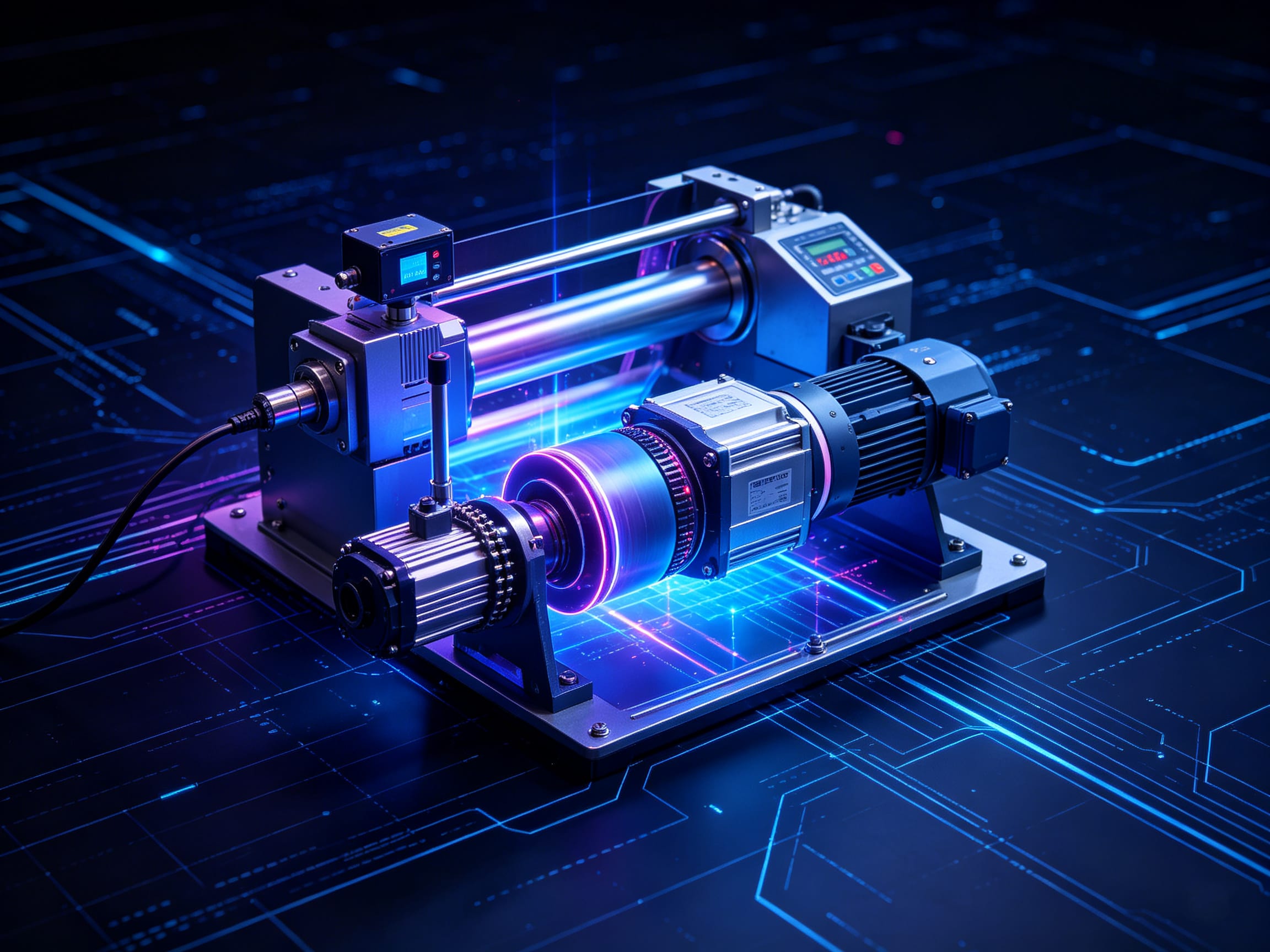
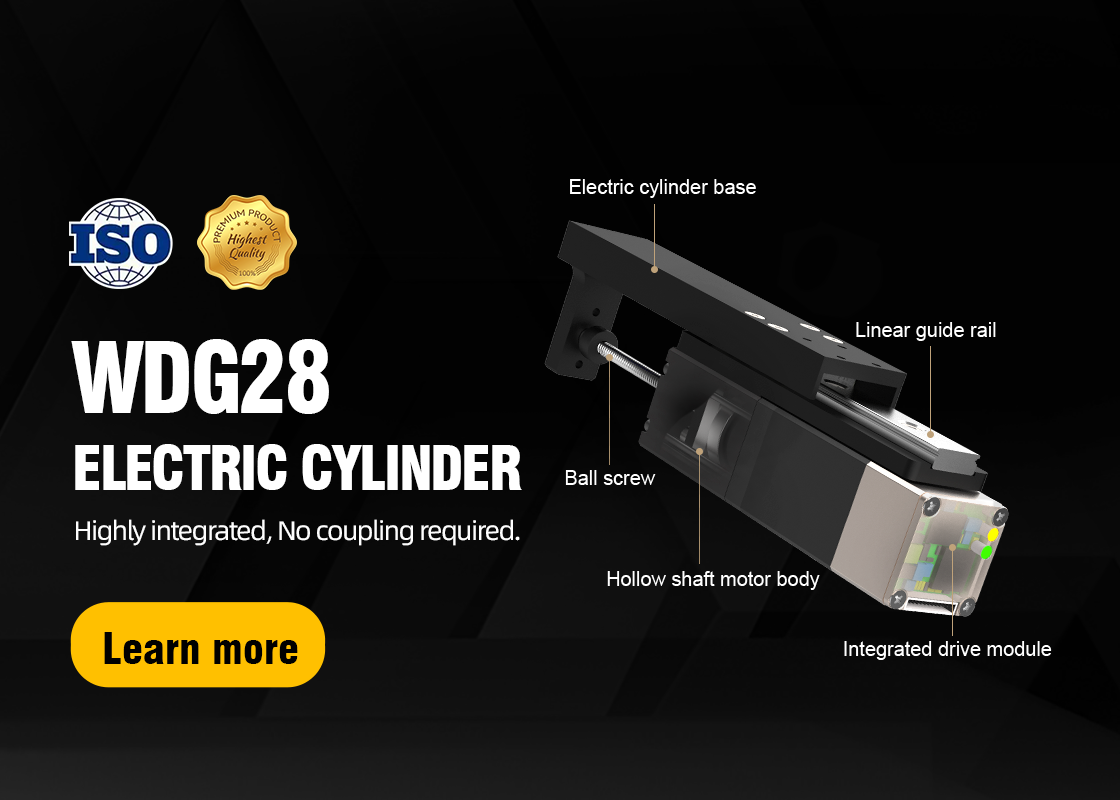
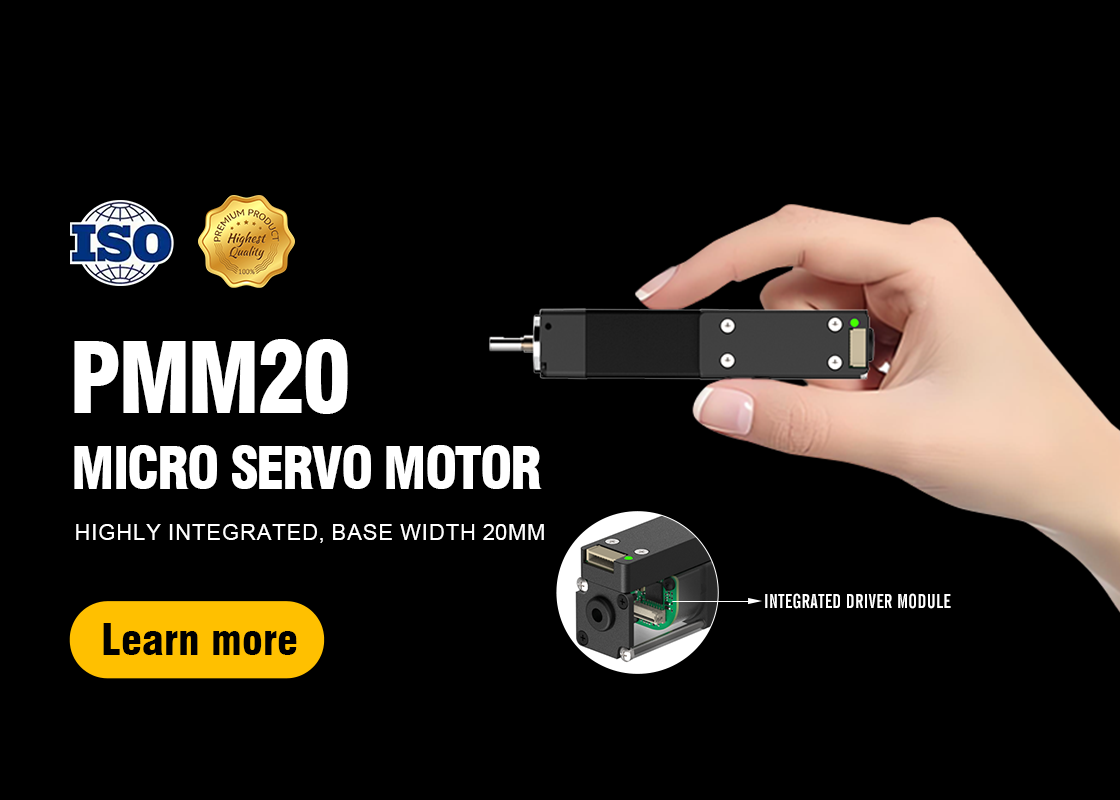
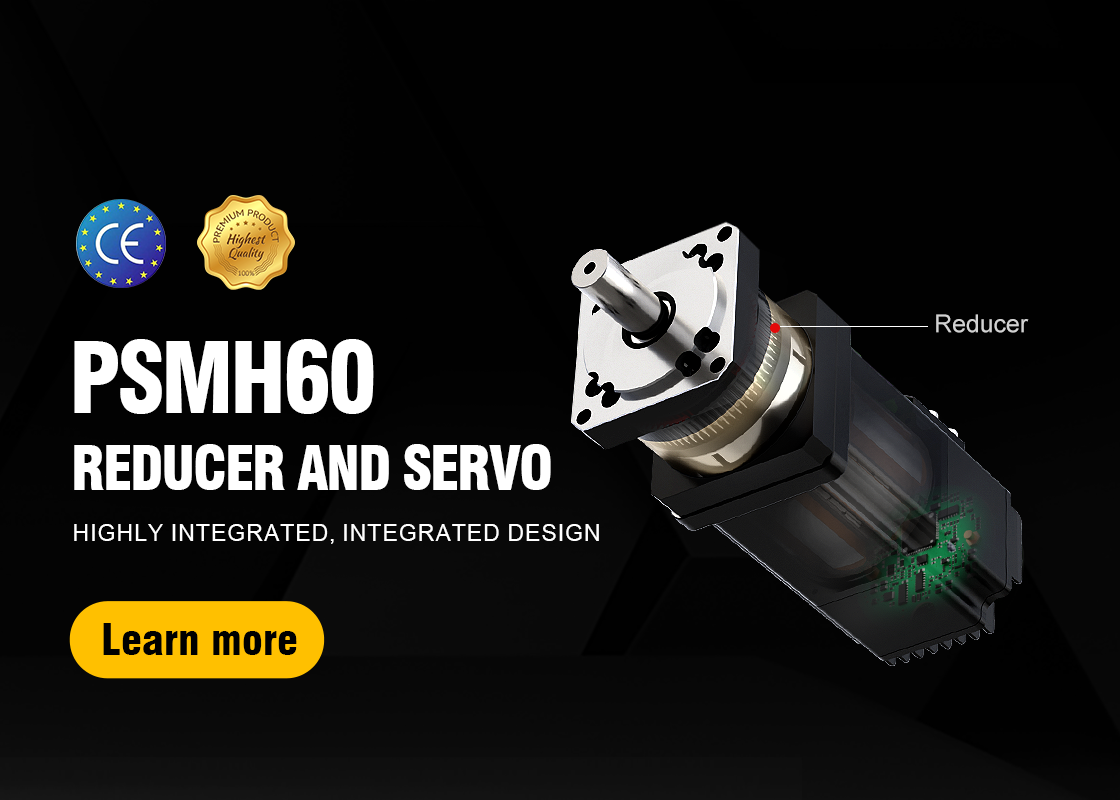
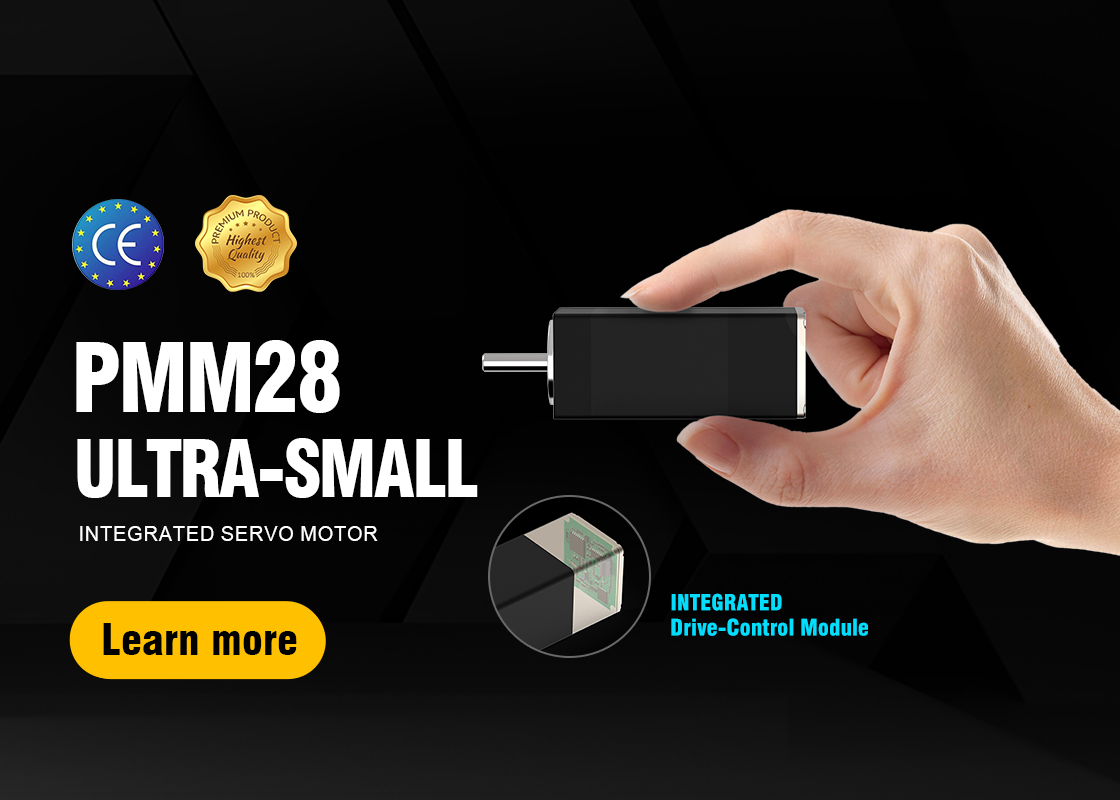
An Integrated Servo Motor represents a newer subcategory of servomotor. In this type of design, the motor itself is combined with the other essential components of a complete motion control system into a single, unified package.
An Integrated Servo Motor combines the motor, drive electronics, and often the encoder and controller into a single unit. This means everything needed to control the motor‘s movement is built directly into the motor housing.
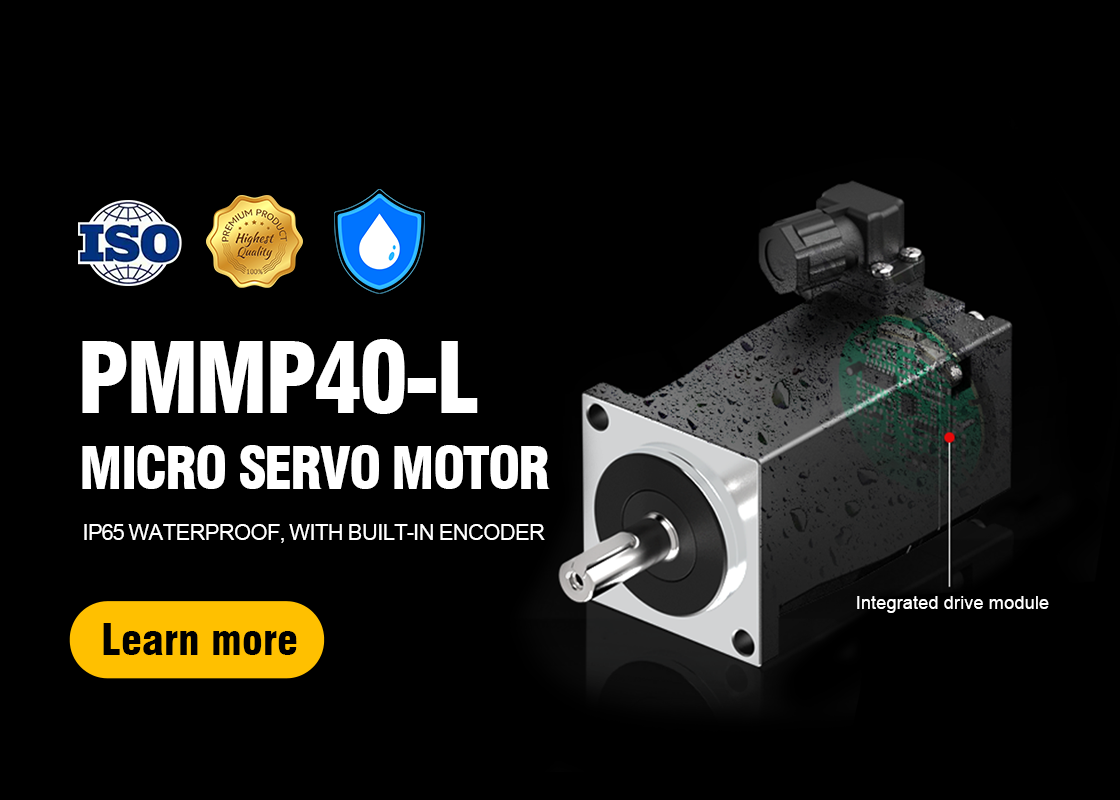
An integrated servo motor is the motor and drive integrated together. Integrated servo motors offer a space-saving solution by combining a servo motor with an onboard drive and controller, which eliminates the need to connect motor power and feedback cables to an external motor controller.
The components consolidated within one Integrated Servo Motor package typically include:
- A brushless servo motor
- An encoder (feedback device)
- A drive/controller
- Connectors for digital and analog I/O
- A connector for DC power (usually 24 or 48 VDC)
- Communications connectors for programming, configuration, and industrial networking
2.The Fundamental Difference Between Integrated Servo Motor and Traditional Servo Motor

2.1 Structural Architecture
The most fundamental difference lies in physical architecture.
A traditional servo motor system employs a separate drive architecture where the motor, drive, controller, and feedback encoder are independent components connected by cables. The drive is typically installed inside a control cabinet, with power and feedback cables running from the cabinet to the motor mounted on the machine.
An Integrated Servo Motor, by contrast, embeds the drive and control electronics directly into the motor housing. The drive module is installed inside the motor end cover, resulting in much shorter signal transmission paths and stronger anti-interference capability.
The table below summarizes the architectural differences:
| Aspect | Traditional Servo Motor System | Integrated Servo Motor |
| Drive location | Separate control cabinet | Integrated into motor housing |
| Motor-drive distance | Long (cables required) | Zero (direct integration) |
| Number of components | 3+ separate units | 1 unified unit |
| External cabling | Extensive (power + feedback + control) | Minimal (power + communication only) |
| Signal transmission path | Long, susceptible to interference | Short, improved signal integrity |
2.2 Closed-Loop Control Principles
Both traditional servo motors and Integrated Servo Motors rely on closed-loop control to achieve precision. However, the implementation differs.
In a traditional system, the control loop spans physical distance: the controller sends commands to the drive, which powers the motor, while the encoder feedback travels back through separate cables to the controller. This round trip introduces latency and potential noise susceptibility.
In an Integrated Servo Motor, the control loop is closed within a few centimeters. The encoder is mounted directly on the motor shaft, and the drive/controller resides immediately adjacent. This ultra-short feedback path enables faster response times and reduces the risk of signal degradation from electromagnetic interference (EMI).
3. Key Differences at a Glance — Complete Comparison Table
| Feature Dimension | Traditional Servo Motor System | Integrated Servo Motor |
| Installation Wiring | Complex; requires motor power, feedback, and control cables between cabinet and motor | Extremely simple; only DC power and communication cable needed |
| Space Utilization | Large; requires control cabinet space for drive + motor mounting space | Compact; no cabinet space needed for drives |
| Control Method | External controller; algorithms can be fully customized | Built-in control algorithms; intelligent bus interfaces |
| Thermal Management | Excellent; heat from drive and motor are separated | Limited; all heat sources concentrated in one housing |
| Reliability | Depends on cable quality and connection integrity | High integration; strong anti-interference; fewer connection points |
| Flexibility | High; motor, drive, and encoder can be independently selected and upgraded | Low; designed as fixed configuration |
| Initial Cost | Lower component cost but higher system integration cost | Higher unit cost but lower overall system cost |
| Maintenance | Components replaceable individually; easier to diagnose | Entire unit replacement required for drive failure |
| Performance Ceiling | Extremely high; supports unlimited customization | Good for most applications but may be limited for extreme demands |
| Communication Support | Wide range (EtherCAT, PROFINET, CANopen, etc.) | Same protocols but often with pre-configured profiles |
| Typical Applications | High-power CNC, large multi-axis systems, heavy industry | Robotics, AGVs, medical devices, packaging, distributed automation |
4. In-Depth Comparison by Key Criteria

4.1 Installation and Wiring Complexity
Traditional Servo Motor Systems require significant engineering time for:
- Routing motor power cables from the cabinet to the motor
- Routing feedback encoder cables (often shielded, with strict length limits)
- Routing I/O and control cables
- Managing cable bends, strain relief, and EMC compliance
- Providing adequate cabinet space for drives, cooling, and cable entry
An Integrated Servo Motor dramatically simplifies this process. Without the need for cables or wire harnesses between motor and drive, integrated motors simplify the bill of materials and enable faster design cycles over traditional motion control systems. Machine designers can focus less on controller placement and wiring and more on non-motor system components for faster iterations.
Smaller diameter cables used for connecting DC power, communications, and I/O to the integrated motor are easier to route and require less space. In many cases, the elimination of external drives reduces the size of control panels and even the need for them entirely.
Practical Impact: For a machine with 8 axes of motion, a traditional system might require 8 motor power cables + 8 feedback cables + control wiring running between cabinet and machine—potentially 30–40 individual cables. An Integrated Servo Motor system requires only DC power distribution and communication cabling—often just 8–10 cables total.
4.2 Space and Footprint
Space savings represent one of the most compelling advantages of the Integrated Servo Motor.
Traditional systems force designers to allocate space for:
- A control cabinet (often a significant portion of the machine footprint)
- Drives mounted inside the cabinet (requiring spacing for cooling)
- Cable trays and routing pathways
- Service access around the cabinet
Moving the drives out of the cabinet reduces the cabinet size and can even help shrink the machine footprint. Integrated servo motors are available in small packages that allow system designers to fit them in tight spaces and enable them to shrink the size of their system.
The integration of drive and motor improves power density with smaller and more efficient electrical components and optimizes axis performance.
In one documented example, an integrated construction saves cabinet space, avoids interference being induced in long cables, reduces cabling errors, cuts the number of components needed by 30%, and makes servicing easier.
4.3 Performance Characteristics
4.3.1 Precision and Response Speed
Integrated Servo Motors utilize advanced digital control technology, offering higher precision and faster response speed, better dynamic performance, and lower electromagnetic interference. Traditional servo motors typically need to be installed in a control cabinet, which may introduce signal transmission delay and EMI problems. The Integrated Servo Motor integrates the controller and motor to address these issues.
4.3.2 Thermal Management
This is where traditional systems hold a clear advantage. Traditional servo systems have the drive and motor heat sources separated, making overall thermal management more efficient—particularly suitable for high-power or long-duration continuous operation scenarios such as stamping machinery, printing presses, and AGV drive units.
The Integrated Servo Motor faces a fundamental challenge: all heat-generating components (motor windings, power transistors, control electronics) are concentrated in one housing. Heat dissipation is limited, and performance may be restricted by voltage constraints. However, advanced designs have addressed this through improved thermal engineering.
4.3.3 Torque Density and Power Range
Integrated Servo Motors are available across a wide power spectrum. For example, a 400W integrated DC servo motor delivers 1.27 Nm rated torque and 3.81 Nm peak torque at 3000 rpm. Other integrated models range from 120 W to 3.2 kW, with various sizes and industrial-grade interfaces suitable for demanding automation tasks. Some high torque-density integrated servo motors combine high torque density with low rotor-inertia brushless motor design.
Traditional systems can scale to much higher power levels—the Lexium servo drives and motors portfolio includes ranges up to 24 kW for independent or synchronized motion control.
4.3.4 Reliability
Integrated Servo Motors offer greater reliability mainly because there are fewer parts to connect together. Fewer external connections mean less cabling and wiring. The integrated drive module inside the motor end cover provides shorter signal transmission paths and stronger anti-interference capability. Modular integration significantly reduces the risk of loose connections or signal attenuation, resulting in superior operational stability and vibration resistance.
4.4 Flexibility and Customization
Traditional servo systems excel in flexibility. The separate drive and motor design allows engineers to freely select motor specifications, power ratings, and drive functions according to application requirements, enabling highly adaptable system configurations. For ultra-high-precision CNC machine tools, users can match higher-resolution encoders with custom drive algorithms.
An Integrated Servo Motor typically has fewer options than a traditional servo system, including four I/O per motor, fewer available motor sizes, and fewer secondary encoder options onboard. However, this limitation is by design—the trade-off for simplicity and compactness.
4.5 Cost Analysis
The cost comparison requires careful analysis of total system cost, not just component prices.
Integrated Servo Motor cost structure:
- Higher unit cost for the motor itself
- Lower integration labor cost
- Reduced cabling and connector cost
- Smaller (or eliminated) control cabinet cost
- Lower commissioning cost
- Simpler spare parts inventory
Traditional servo system cost structure:
- Lower individual component costs (motor + drive)
- Higher integration labor cost
- Significant cabling and connector cost
- Control cabinet and cooling infrastructure cost
- Higher commissioning time cost
- More complex spare parts management
Integrated designs can provide a significant increase in overall system reliability and lower overall cost when all factors are considered.
5: Advantages and Disadvantages of Integrated Servo Motor
Advantages of Integrated Servo Motor
| Advantage | Description |
| Space Savings | Combines motor, drive, and controller into a single package; eliminates need for external drive cabinet |
| Simplified Wiring | No motor power or feedback cables to external drive; only DC power and communication required |
| Reduced Component Count | Eliminates external drive electronics; reduces total number of motion control components by up to 30% |
| Faster Commissioning | Pre-tuned drive matched to motor; plug-and-play capability |
| Improved Signal Integrity | Shorter signal paths reduce EMI susceptibility and transmission delay |
| Smaller Control Panels | Eliminating external drives reduces or removes control panel requirements |
| Distributed Intelligence | Enables decentralized control architectures; each axis can operate autonomously |
| Easier Maintenance | Fewer components and connections mean fewer potential failure points |
Disadvantages of Integrated Servo Motor
| Disadvantage | Description |
| Limited Thermal Dissipation | All heat sources concentrated in one housing; may require derating in high-ambient environments |
| Lower Flexibility | Fixed configuration; cannot independently upgrade motor, drive, or encoder |
| Higher Replacement Cost | Drive failure requires entire motor replacement rather than just the drive |
| Power Limitations | Performance limited by voltage and thermal constraints; typically below 3–5 kW |
| Limited Options | Fewer available motor sizes, I/O configurations, and encoder options compared to traditional systems- |
| Troubleshooting Complexity | Diagnosing internal drive faults requires specialized knowledge or complete replacement |
6: Types of Integrated Servo Motors
6.1 AC Integrated Servo Motors
AC integrated servo motors are widely adopted in industrial automation due to their reliability, smooth operation, and ability to maintain consistent performance under variable loads.

Advantages:
- High efficiency and power density
- Excellent thermal performance
- Smooth torque delivery with minimal ripple
- Supports advanced feedback systems
Best for: Industrial automation, CNC machines, conveyor systems, and applications requiring continuous duty cycles
6.2 DC Integrated Servo Motors
DC integrated servo motors use direct current and feature a simpler internal design, making them easier to control and maintain in less demanding environments.
Advantages:
- Simplified control circuitry
- Excellent speed and position control
- Lower electromagnetic interference (EMI)
- Ideal for battery-powered or portable systems
Best for: Medical devices, portable equipment, light-duty automation, and cost-sensitive applications
6.3 Closed-Loop Integrated Servo Motors
These advanced motors incorporate real-time feedback sensors (such as encoders or resolvers) to monitor position, speed, and torque, enabling precise closed-loop control.
Advantages:
- Exceptional accuracy and repeatability
- Self-correcting behavior under load changes
- High dynamic response and stability
- Minimizes positioning errors
Best for: Robotics, precision assembly, 3D printing, and applications requiring micron-level positioning
6.4 Integrated Hybrid Servo Motors
A newer type of integrated hybrid servo motor is finding use in direct-drive applications where it offers lower cost, smaller size, and higher efficiency than conventional servo motors. This leads to 160% to 450% more heat being dissipated by a conventional integrated servo motor as compared to a similarly sized NEMA 23-frame integrated hybrid servo motor.
7: Application Guide — When to Choose Which
When to Choose an Integrated Servo Motor
| Application Scenario | Why Integrated Servo Motor Is Preferred |
| Mobile Robotics (AGV/AMR) | Compact size, reduced cabling, battery efficiency, no cabinet space |
| Collaborative Robots | Integrated design matches human-safe form factors |
| Medical Devices | Clean, compact, reliable with minimal external wiring |
| Packaging Machinery | Distributed architecture with many axes, each independent |
| Laboratory Automation | Space-constrained environments requiring quick reconfiguration |
| Automated Test Equipment | Simplified integration, faster design cycles |
| Small-Scale CNC | Desktop or benchtop machines with limited enclosure space |
| Retrofit Projects | Minimal mechanical changes required; fits standard servo flanges |
When to Choose a Traditional Servo Motor System
| Application Scenario | Why Traditional System Is Preferred |
| High-Power Applications (>5 kW) | Integrated designs have thermal and power limitations |
| High-Volume Multi-Axis Systems | Centralized drives offer better cost scaling |
| Extreme Environment Applications | Separate drive can be placed in protected cabinet |
| Ultra-High Precision Requirements | Custom encoder and drive combinations possible |
| Applications Requiring Frequent Drive Upgrades | Drives can be upgraded without changing motors |
| Heavy Industrial Machinery | Better thermal management for continuous operation |
| Systems with Legacy Components | Compatibility with existing infrastructure |
| Cost-Sensitive High-Volume Production | Lower per-axis component cost at scale |
8: Communication Protocols and Networking

8.1 Protocol Support for Integrated Servo Motors
Modern Integrated Servo Motors widely support EtherCAT, CANopen, Modbus, RS-485, and other communication protocols, allowing easy integration into industrial Ethernet networks or intelligent terminal systems like AGVs and robots.
Communication options range from simple serial communication links such as RS232 or RS485 to more advanced network topologies suited to complex motion control tasks such as CANopen, DeviceNet, or Ethernet protocols.
8.2 Decentralized vs. Cascaded Architectures
When multiple Integrated Servo Motors are deployed, engineers must choose between cascaded (daisy chain) or distributed architectures.
A cascaded system daisy-chains the servomotors together. The first unit connects directly to power and I/O terminals, then shares with subsequent units. However, this presents a major downside: if a single error occurs in one motor, power cable, or Ethernet cable, the entire motion control architecture could stop.
Distributed systems use a distribution module to manage multiple servomotors, supporting cascaded architectures while limiting points of failure. This approach ensures that if one cable is damaged, it usually does not stop operations across the system.
8.3 One-Cable Technology (OCT)
One-cable technology provides both power and industrial Ethernet communication for high-performance servo drives. This one-cable solution reduces both commissioning time and machine footprint, which is critically important in any manufacturing environment. Combining OCT with a distributed servo drive system can provide the cleanest and most efficient motion control solution.
9: Selection Considerations and Best Practices
9.1 Key Selection Criteria
When choosing between traditional and Integrated Servo Motor systems, consider these factors:
- Available Space — Is there room for a control cabinet? Can drives be distributed?
- Power Requirements — Does the application exceed 3–5 kW continuous power?
- Environmental Conditions — Is the motor exposed to high temperatures, dust, or moisture?
- Number of Axes — How many motion axes are required?
- Required Precision — What positioning accuracy is needed?
- Maintenance Strategy — Is modular replacement important?
- Development Timeline — How critical is fast commissioning?
- Budget Structure — Is the focus on component cost or total installed cost?
9.2 Integration Best Practices
For successful Integrated Servo Motor deployment:
- Plan for thermal management — Ensure adequate airflow around integrated motors, especially in multi-axis configurations.
- Use appropriate cable types — Even with reduced cabling, use shielded Ethernet cables for industrial environments.
- Consider distributed power — For multi-axis systems, plan DC power distribution carefully to avoid voltage drop.
- Leverage pre-configured profiles — Most integrated motors come with manufacturer-provided configuration files for major PLC platforms.
- Test communication latency — For high-speed synchronized motion, verify network performance with all axes active.
9.3 Common Mistakes to Avoid
| Mistake | Consequence | Prevention |
| Overcrowding integrated motors | Overheating and derating | Provide adequate spacing and cooling |
| Underestimating power supply requirements | Voltage sag during acceleration | Size DC power supply for peak current demands |
| Ignoring communication topology | Unexpected latency or network failures | Design and test network architecture before deployment |
| Selecting integrated motor for overpowered application | Premature failure or thermal shutdown | Stay within manufacturer’s continuous torque rating |
| Mixing brands without compatibility testing | Communication conflicts | Test interoperability before system integration |
10: Market Overview and Leading Manufacturers

10.1 Market Size and Growth
The global servo motor market in 2025 is approximately USD 14.57 billion (Mordor Intelligence), with North America being the largest market and the Asia-Pacific region the fastest-growing. By 2030, the servo motor market may reach USD 19.33 billion as manufacturers replace old legacy systems with newer energy-efficient systems and advancements in robotics and automation continue.
The global Smart Integrated Servo Motor market reached sales of USD 856 million in 2025 and is projected to reach USD 1.366 billion by 2032, with a compound annual growth rate (CAGR) of 7.0% (2026–2032).
10.2 Leading Manufacturers
Top Integrated Servo Motor Manufacturers include:
| Manufacturer | Key Strengths |
| Yaskawa | Global leader; comprehensive integrated servo portfolio |
| Siemens | Strong industrial automation ecosystem integration |
| Mitsubishi Electric | Advanced motion control features |
| Rockwell Automation (Allen-Bradley) | Kinetix integrated motion series |
| NiMotion | High-performance integrated solutions |
| Beckhoff | Distributed servo drive systems with OCT; AMP8000 series |
| Parker Hannifin | Broad industrial motion portfolio |
| Delta | Cost-effective integrated servo solutions |
| Smooth Motor | Specialized in compact integrated servos with up to 20-bit encoders |
| ABB | Robotics and automation integration |
| Bosch Rexroth | High-end industrial motion control |
| Panasonic | Reliable integrated servo systems |
| Nidec | High-volume manufacturing capability |
10.3 Regional Outlook
- Asia-Pacific is the fastest-growing region, led by China, Japan, and South Korea
- North America remains the largest market by value
- Europe shows steady growth driven by Industry 4.0 adoption and automation modernization
11: Future Trends and Technology Outlook

11.1 Industry 4.0 and IIoT Integration
Integrated Servo Motors are uniquely positioned for Industry 4.0 applications. With built-in intelligence and communication capabilities, they serve as edge devices capable of local control, condition monitoring, and predictive maintenance reporting.
11.2 Higher Power Density
Advancements in power electronics and thermal management are pushing the power limits of Integrated Servo Motors. New wide-bandgap semiconductors (SiC, GaN) enable higher switching frequencies with lower losses, allowing more power to be packed into smaller volumes.
11.3 Enhanced Safety Integration
Safety functions such as Safe Torque Off (STO) are increasingly integrated directly into Integrated Servo Motors. For example, the Cyber-Simco-Drive-2 controllers feature STO safety functions that fulfill SIL3 and PL e safety requirements.
11.4 AI-Enabled Motion Control
Future Integrated Servo Motors will incorporate AI capabilities for adaptive tuning, predictive maintenance, and autonomous optimization of motion profiles based on real-time operating conditions.
11.5 Wireless Communication
Emerging wireless industrial protocols may eventually eliminate even the communication cable from Integrated Servo Motors, enabling truly wire-free motion control nodes for specific applications.
12: Frequently Asked Questions (FAQ)

Q1: Can an Integrated Servo Motor replace any traditional servo motor?
A: Not directly. Integrated Servo Motors are best suited for applications requiring compact size, simplified wiring, and moderate power (typically under 5 kW). High-power applications, extreme environments, and systems requiring maximum customization are better served by traditional separate drive systems.
Q2: Are Integrated Servo Motors more expensive than traditional servo systems?
A: The unit cost of an Integrated Servo Motor is generally higher than the motor alone in a traditional system. However, when factoring in drive cost, cabinet cost, cabling cost, installation labor, and commissioning time, the total system cost is often lower for integrated solutions.
Q3: How is heat managed in an Integrated Servo Motor?
A: Integrated Servo Motors manage heat through careful thermal design, including heat sinks, thermal conduction paths, and in some cases, forced air cooling. For demanding applications, manufacturers offer extended-length housings to provide more surface area for heat dissipation.
Q4: What communication protocols are supported by Integrated Servo Motors?
A: Most Integrated Servo Motors support EtherCAT, PROFINET, EtherNet/IP, CANopen, Modbus RTU/TCP, and RS-485/RS-232 serial communications.
Q5: Can I use multiple Integrated Servo Motors in a synchronized multi-axis system?
A: Yes. Integrated Servo Motors can be synchronized using industrial Ethernet protocols with distributed clock synchronization (e.g., EtherCAT DC). Performance for high-speed coordinated motion should be verified with the manufacturer.
Q6: What happens if the drive electronics fail in an Integrated Servo Motor?
A: The entire unit typically requires replacement. This is a key trade-off: simplicity and compactness come at the cost of modular repairability.
Q7: Are Integrated Servo Motors suitable for outdoor or washdown environments?
A: Many Integrated Servo Motors are available with IP65 or higher ratings, featuring M12 connectors and sealed housings suitable for washdown environments and outdoor use.
Q8: How do I program an Integrated Servo Motor?
A: Most Integrated Servo Motors can be programmed via PC software over USB or Ethernet, with manufacturer-provided configuration tools. Many support standard PLCopen motion control blocks when integrated with a PLC via fieldbus.
Conclusion: Making the Right Choice

The choice between a traditional servo motor system and an Integrated Servo Motor ultimately depends on your specific application requirements.
Choose an Integrated Servo Motor when:
- Space is limited and you want to eliminate the control cabinet
- Fast commissioning and simplified wiring are priorities
- You are building mobile robots, medical devices, or compact automation equipment
- Total installed cost matters more than component cost
- You need distributed intelligence with decentralized control
Choose a traditional servo motor system when:
- Power requirements exceed 3–5 kW continuous
- You need maximum flexibility to customize components
- The application runs continuously at high power and requires optimal thermal management
- Modular repair and upgrade capability is essential
- You have existing infrastructure that requires compatibility
The trend in motion control is clearly toward greater integration. As power electronics continue to shrink and improve in efficiency, the power range and application scope of Integrated Servo Motors will expand. For many applications today, the Integrated Servo Motor represents the optimal balance of performance, simplicity, and total cost of ownership.
By understanding the differences outlined in this guide, you can make an informed decision that aligns with your technical requirements, budget constraints, and long-term system goals.
References and Further Reading
Cubemars Robot Actuator & Servo Motor Selection Guide
Motion Control Tips: Servomotors and Integrated Servomotors
Jkong Motor: Integrated Servo Motor vs Traditional Drive+Motor Comparison
ADVANCED Motion Controls: Integrated Drive Motor & Motion Control
Beckhoff Blog: Servomotors with Integrated Drives
AutomationMag: Integrated Motors 101
Wanming Technology: Integrated Servo Motor vs Regular Servo Motor
RobotAnno: Integrated Servo Motor vs Industrial Servo Motor
STMicroelectronics EVLSERVO1 Reference Design
Texas Instruments TIDM-02006 Distributed Multi-Axis Servo Drive
STEPPERONLINE: 400W Integrated DC Servo Motor Specifications
Smooth Motor: Top 10 Integrated Servo Manufacturers
Valuates Reports: Global Integrated Servo System Market
Alibaba Product Insights: Exploring Integrated Servo Motors