
How to Select Servo Actuators for Precision Positioning Systems: A Comprehensive Guide
In modern industrial automation, Servo Actuators have become indispensable components for achieving high-precision motion control in positioning systems. Whether applied in robotic arms, CNC machining centers, or aerospace flight controls, the performance of servo actuators directly determines the accuracy, responsiveness, and reliability of the entire system. This guide provides a systematic framework for selecting servo actuators, covering key parameters, application scenarios, and advanced optimization strategies.

1. Core Components and Working Principles of Servo Actuators
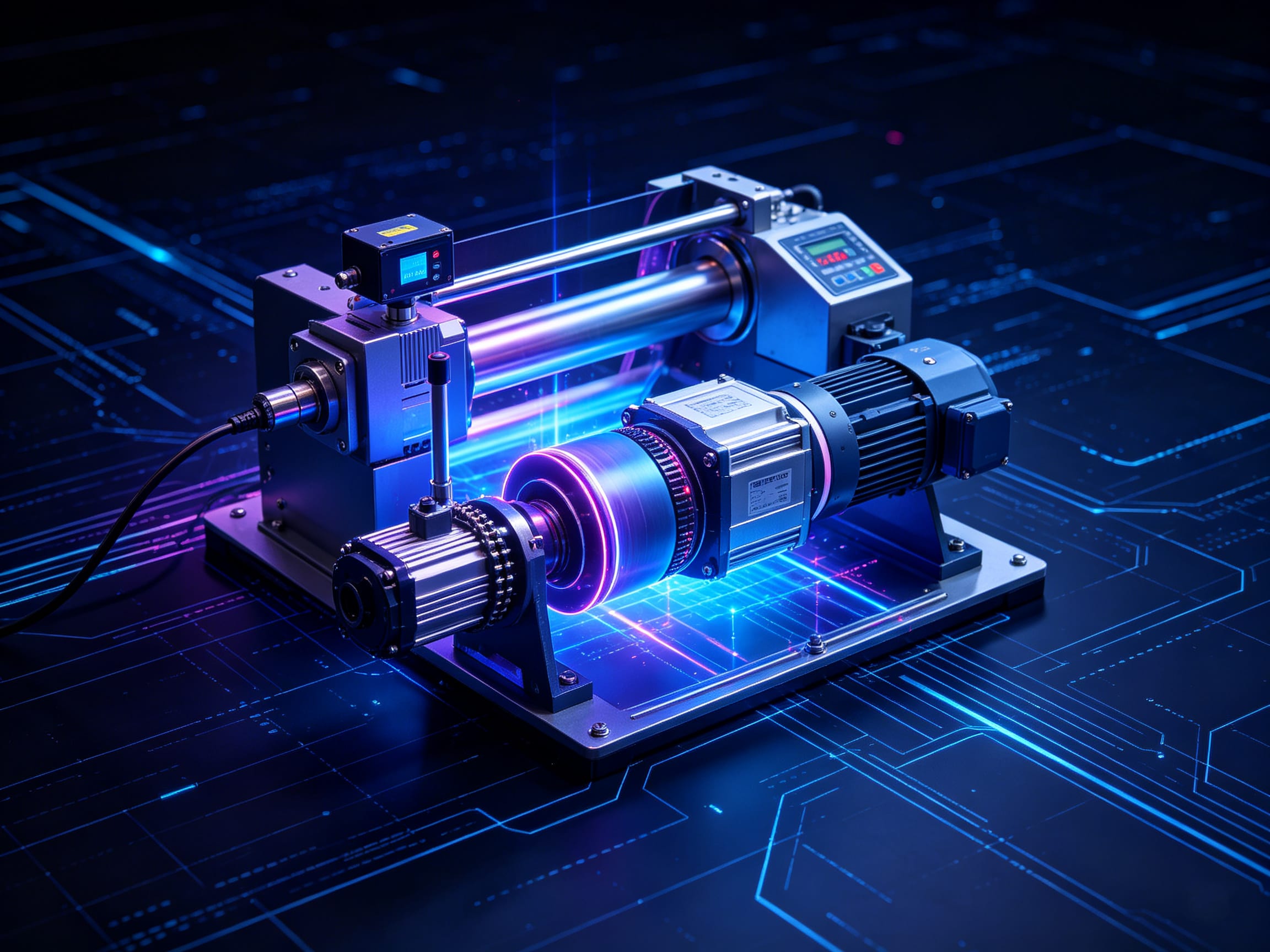
Servo actuators integrate three essential elements:
- Servo Motor: Converts electrical energy into rotational motion (e.g., permanent magnet synchronous motors, brushless DC motors).
- Drive Mechanism: Transforms rotational motion into linear displacement (e.g., ball screws, belt drives, harmonic drives).
- Feedback System: Monitors position, velocity, and torque through encoders or resolvers to enable closed-loop control.
Example: In aerospace applications, electro-hydraulic servo actuators use servo valves to precisely regulate hydraulic fluid flow, achieving sub-millimeter positioning accuracy for flight control surfaces.
2. Key Selection Criteria for Positioning Systems
2.1 Performance Parameters
| Parameter | Importance Level | Selection Criteria |
| Position Accuracy | ★★★★★ | ±0.001mm to ±0.1mm depending on application (e.g., semiconductor manufacturing requires ±0.001mm) |
| Repeatability | ★★★★☆ | ≤±0.005mm for robotic assembly tasks |
| Resolution | ★★★★☆ | 16-bit to 24-bit encoders (16-bit = 65,536 positions/revolution) |
| Max Speed | ★★★☆☆ | 3000–10,000 RPM for high-speed machining centers |
| Max Acceleration | ★★★★☆ | 5–50 m/s² for pick-and-place robots |
| Torque/Force | ★★★★★ | Continuous torque: 0.1–1000 Nm; Peak torque: 2–3× continuous torque |
2.2 Environmental Adaptability
- Temperature Range: -40°C to +85°C for automotive applications
- Protection Class: IP65 (dust/water resistance) for food processing
- Vibration Resistance: 5–20 Grms for aerospace applications
- EMC Compliance: IEC 61800-3 for industrial environments
2.3 Mechanical Interface
- Mounting Type: Flange-mounted (B5/B14) or foot-mounted designs
- Shaft Configuration: Keyway, hollow shaft, or direct-drive couplings
- Backlash: <1 arcmin for high-precision gearboxes
- Lead Screw Pitch: 1–50 mm/rev for linear actuators
3. Application-Specific Selection Strategies

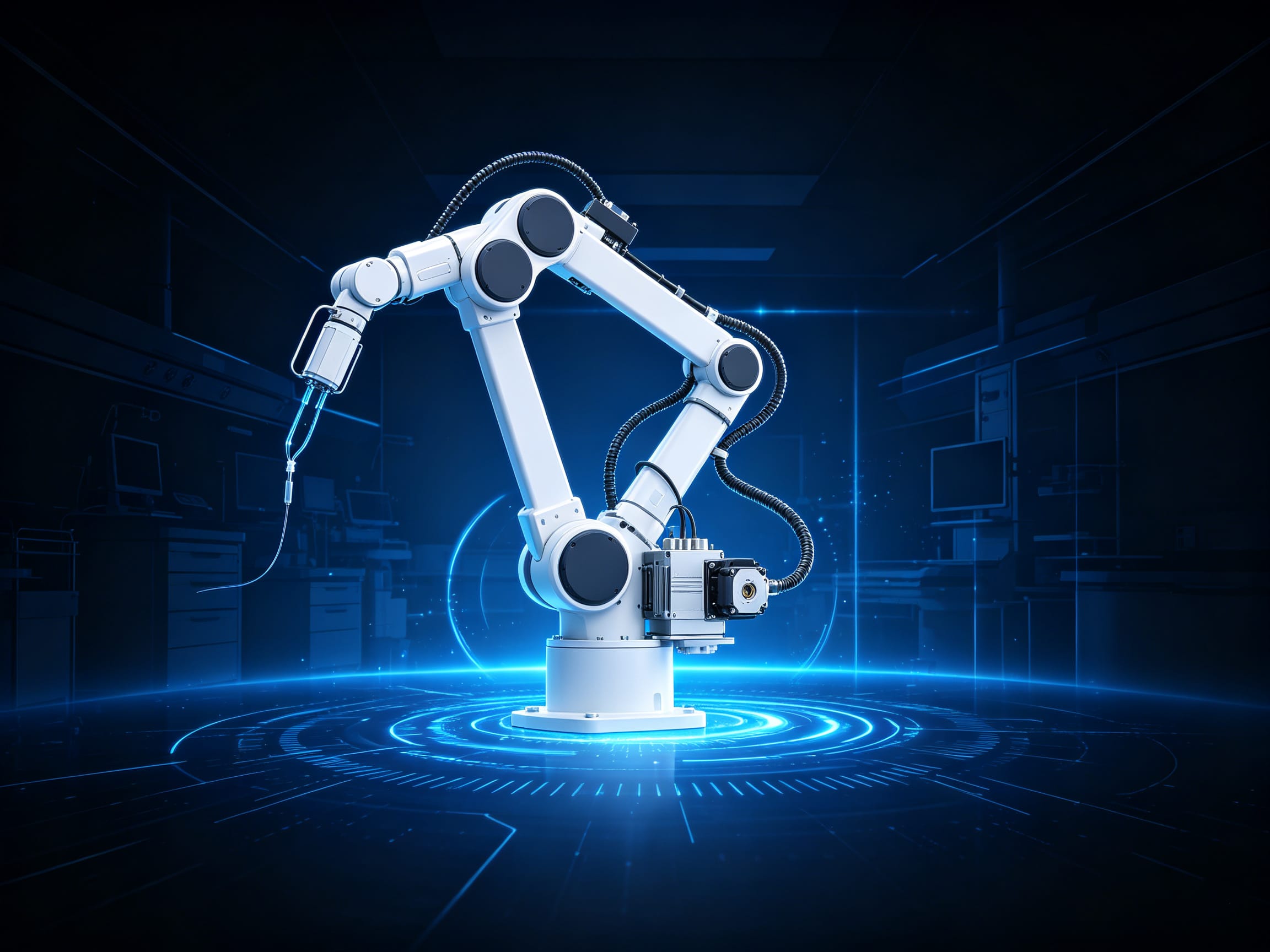
3.1 Robotic Systems
Challenge: High dynamic response requirements during trajectory tracking
Solution:
- Select harmonic drive servo actuators with zero backlash
- Implement feedforward polynomial trajectory planning to reduce settling time by 40%
- Use adaptive fuzzy control to compensate for Coulomb friction at low speeds
Case Study: KUKA KR AGILUS robot achieved 0.03mm path accuracy by integrating SIMOTICS 1FT7 servo motors with DRIVE-CLiQ real-time communication.
3.2 CNC Machining Centers
Challenge: Suppressing mechanical vibrations during high-speed cutting
Solution:
- Choose water-cooled servo motors for thermal stability
- Add feedforward notch filters at resonant frequencies (typically 50–200 Hz)
- Implement model predictive control (MPC) for multi-axis synchronization
Data: A 5-axis machining center using advanced polynomial trajectory control reduced surface roughness (Ra) from 1.6μm to 0.4μm.
3.3 Aerospace Applications
Challenge: Lightweight design with high reliability
Solution:
- Select electro-hydraulic servo actuators with redundant servo valves
- Use MAXWELL-slip model to characterize harmonic drive nonlinearities
- Implement health monitoring systems for predictive maintenance
Example: Airbus A350 flight control system uses dual-redundant servo actuators with 0.001° angular positioning accuracy.
4. Advanced Selection Techniques

4.1 Digital Twin Simulation
Build virtual prototypes in MATLAB/Simulink to:
- Predict thermal drift under continuous operation
- Optimize PID parameters before physical implementation
- Simulate fault injection scenarios (e.g., encoder failure)
Benefit: Reduces hardware testing time by 60% during product development.
4.2 Multi-Objective Optimization
Use genetic algorithms to balance:
- Cost vs. performance
- Size vs. torque density
- Energy efficiency vs. dynamic response
Tool: Siemens NX MCD supports automated actuator sizing through integrated motion simulation.
4.3 Condition-Based Maintenance
- Install vibration sensors on actuator housing
- Monitor bearing temperature via PT100 sensors
- Implement FMEA analysis for critical applications
Data: Predictive maintenance reduced unplanned downtime by 75% in automotive assembly lines.
5. Common Pitfalls and Solutions
| Issue | Root Cause | Solution |
| Position overshoot | High system gain | Tune PID parameters using Ziegler-Nichols method |
| Stiction at zero speed | Coulomb friction | Implement dither signal injection (0.1–1% of command) |
| Thermal drift | Inadequate cooling | Select forced-air or water-cooled motors |
| Cable fatigue | Flexing cycles >10 million | Use servo-grade cables with strain relief |
6. Future Trends in Servo Actuator Technology

6.1 Direct Drive Systems
- Eliminate gearboxes for zero backlash
- Achieve torque densities >20 Nm/kg
- Example: ETEL TorqueDrive series
6.2 Magnetic Bearings
- Enable contactless operation
- Reduce maintenance by 90%
- Application: Vacuum chamber positioning stages
6.3 AI-Powered Control
- Neural network-based friction compensation
- Reinforcement learning for optimal trajectory generation
- Case: FANUC CNC using deep reinforcement learning reduced cycle time by 15%
7. Supplier Selection Checklist
7.1 Technical Capabilities
Does the supplier offer:
- Custom motor winding options?
- Integrated safety functions (STO, SLS)?
- Multi-axis synchronization protocols (PROFINET IRT, EtherCAT)?
7.2 Quality Assurance
- ISO 9001:2015 certification
- 100% final testing of all actuators
- 24/7 technical support availability
7.3 Cost Considerations
Total cost of ownership (TCO) analysis including:
- Energy consumption
- Maintenance intervals
- Spare parts availability
Conclusion
Selecting the optimal servo actuator for positioning systems requires a holistic approach that balances performance requirements, environmental constraints, and lifecycle costs. By leveraging advanced simulation tools, implementing adaptive control strategies, and staying abreast of emerging technologies, engineers can achieve sub-micron positioning accuracy while maintaining system reliability.
Final Recommendation: For mission-critical applications, conduct pilot testing with multiple supplier samples under actual operating conditions before final selection. This empirical validation step often reveals nuances not captured in specification sheets.